
Traveling the American South: A Region-by-Region Orientation for New Visitors
The South is far more diverse than a single stereotype. This guide breaks down its distinct subregions, cities, landscapes, and cultural rhythms.
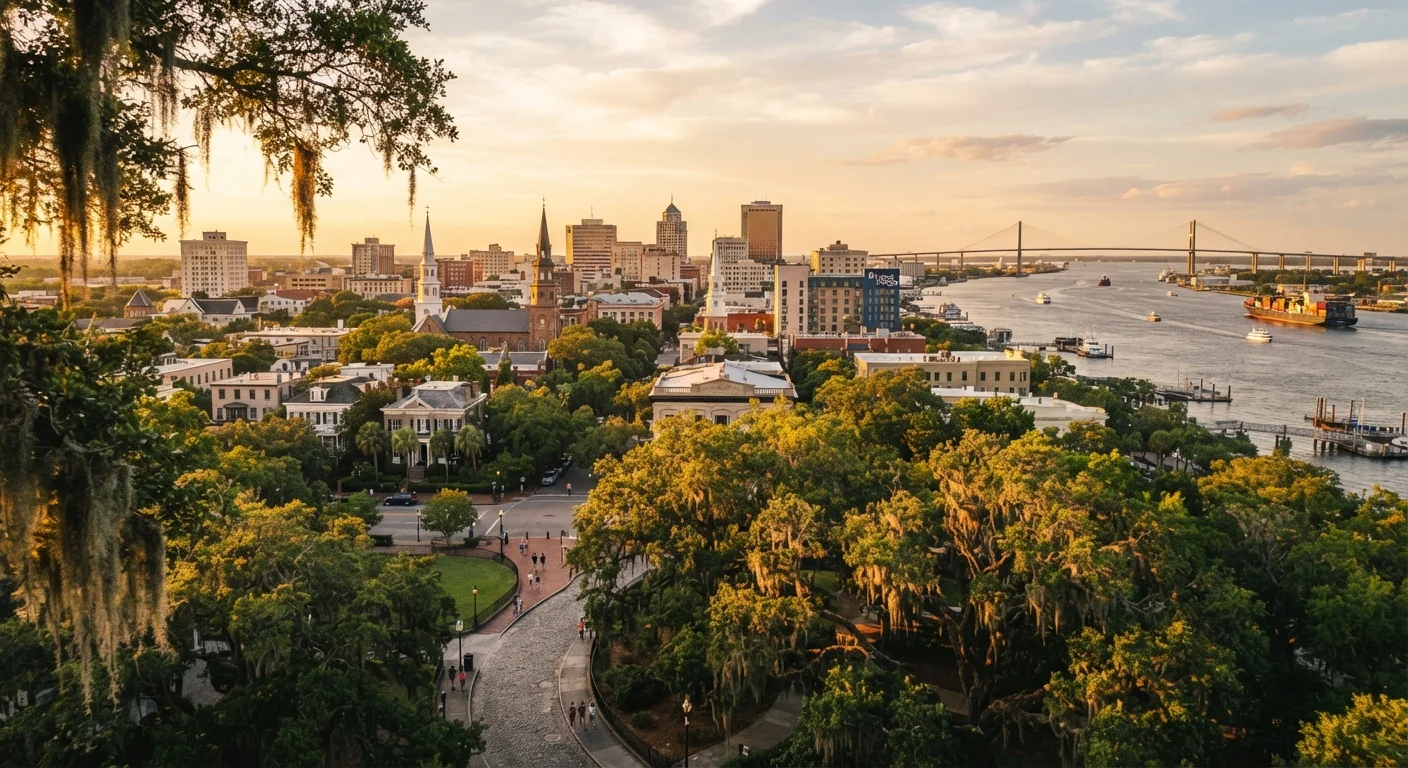
Photo: FaqsDrive.com | Smart Way To Search editorial
—— In This Article
Key Takeaways
- The American South contains at least five distinct subregions, each with its own culture, landscape, and travel character.
- Deep South cities like New Orleans, Memphis, and Birmingham anchor one of the world's great food and music cultures.
- The Carolinas and Georgia offer barrier island beaches, antebellum architecture, and thriving arts scenes.
- Appalachian communities in Tennessee, North Carolina, and Virginia preserve distinct craft, music, and outdoor traditions.
- Summer heat and hurricane season (June–November) along the Gulf and Atlantic coasts are key timing factors for visitors.
- A car is essential for most Southern subregions outside of a handful of walkable city cores.
Why the South Defies a Single Story
Ask ten Americans to describe "the South" and you'll get ten different answers — and nearly all of them will be incomplete. The region that stretches roughly from Virginia to Texas encompasses coastal marshes, Appalachian peaks, bayou country, and sprawling metro areas that are among the fastest-growing in the nation. Treating it as a monolith does every part of it a disservice.
For first-time visitors, the most useful mental shift is to think of the South not as one destination, but as a loose federation of subregions, each shaped by geography, migration history, Indigenous heritage, and economic forces unique to that area. This guide breaks those subregions down so you can match your interests to a place rather than booking based on a vague, postcard-ready impression.
Before diving in, it helps to understand how geography shapes travel experience across any large US region. Our companion piece on reading US travel regions covers the fundamentals of climate zones, time zones, and entry points that apply across the country.
12M+
Annual visitors to Great Smoky Mountains National Park
According to National Park Service visitation data, the Smokies consistently rank as the most-visited national park in the US.
469 miles
Length of the Blue Ridge Parkway scenic drive
The Blue Ridge Parkway connects Shenandoah National Park in Virginia to Great Smoky Mountains National Park in North Carolina — and is free to travel.
22
Public squares in Savannah, Georgia
Savannah's historic district is anchored by 22 tree-shaded public squares, making it one of the most distinctive urban layouts in the American South.
The Deep South: History, Food, and Soul
The Deep South — anchored by Louisiana, Mississippi, Alabama, and parts of Georgia — is the subregion most visitors picture when they imagine Southern travel. It is also the most historically layered, requiring visitors to engage honestly with a past that includes both extraordinary cultural creativity and profound injustice.
New Orleans stands alone as one of the most distinctive cities in North America: a Caribbean-influenced port city where French, Spanish, West African, and Creole cultures fused into an entirely original cuisine, musical tradition, and architecture. The French Quarter is well-known, but neighborhoods like Tremé, Bywater, and the Garden District each reward slower exploration.
Memphis anchors the blues trail along the Mississippi Delta, which stretches south through Clarksdale — a town that has produced a disproportionate share of American musical history. Montgomery and Birmingham have become essential stops on any honest tour of the Civil Rights Movement, with the National Memorial for Peace and Justice and the Birmingham Civil Rights Institute offering rigorous, moving interpretations of that history.
When exploring the Mississippi Delta blues trail, prioritize the stretch between Clarksdale and Greenville — the roadside markers, local juke joints, and small-town museums here tell a richer story than most guidebooks give them credit for.
The Delta's blues heritage is concentrated in small communities where informal venues and locally run sites offer depth that larger tourist attractions rarely match.
In New Orleans, time your neighborhood exploration to avoid the French Quarter's peak hours (10am–4pm). Tremé, the Marigny, and Bywater are most alive in the early evening and reveal a far more authentic version of the city.
Visitor density in the French Quarter during midday can significantly reduce the quality of the experience; surrounding neighborhoods offer the same cultural richness with a fraction of the foot traffic.
Food in the Deep South ranges from slow-smoked BBQ in the Memphis style to crawfish étouffée, fried catfish, and boudin. Eating well here often means ignoring the tourist strip and asking locally — roadside spots and family-owned cafes consistently outperform their higher-profile competitors.
The Atlantic South: Coastal Carolinas and Georgia
South Carolina, North Carolina's southern coast, and coastal Georgia form a quieter, greener counterpoint to Deep South intensity. This is the land of barrier islands, sea oats, and live oaks — a landscape that moves at a pace all its own.
Charleston, South Carolina is frequently cited as one of the most walkable and historically rich cities in the US. Its antebellum architecture, Gullah Geechee cultural heritage, and genuinely world-class restaurant scene draw visitors year-round. Savannah, Georgia rivals it for sheer beauty, with 22 public squares shaded by ancient oaks creating one of the most distinctive urban environments in the country.
Beyond the cities, the Outer Banks of North Carolina offer a starkly different beach experience: long undeveloped stretches, wild horses on Corolla and Shackleford Banks, and the Wright Brothers National Memorial at Kitty Hawk. Further south, Hilton Head Island and Cumberland Island (accessible only by ferry) offer relative seclusion. For a full comparison of Atlantic and Gulf Coast beach character, see our guide to Gulf Coast vs. Atlantic Coast beaches.
Plan Around the Gullah Geechee Cultural Heritage Corridor
The Gullah Geechee Cultural Heritage Corridor runs along the coast from North Carolina to Florida and preserves the living traditions of descendants of enslaved West and Central Africans. Visitor centers, festivals, and guided cultural tours in this corridor offer a depth of historical context that enriches any coastal Carolina or Georgia itinerary. Look for officially designated Gullah Geechee sites when planning stops in the Sea Islands region.
Appalachian South: Mountains and Music
The southern stretch of the Appalachian Mountains — running through western North Carolina, eastern Tennessee, and southwestern Virginia — is one of the most underestimated travel regions in the United States. Elevations here regularly exceed 6,000 feet, meaning cooler summers, spectacular fall foliage, and a distinct cultural identity rooted in Cherokee heritage, Scots-Irish settlement, and generations of craft and musical tradition.
Asheville, North Carolina has become a hub for visitors drawn to its arts scene, independent food culture, and proximity to the Blue Ridge Parkway. The parkway itself — a 469-mile scenic road connecting Shenandoah National Park in Virginia to Great Smoky Mountains National Park — is arguably the most scenic drive in the eastern US and entirely free to travel.
Great Smoky Mountains National Park is the most visited national park in the country, receiving over 12 million visitors in recent years according to National Park Service data. Its accessibility from major Southern and Midwestern cities makes it both a blessing and a planning challenge. If the Smokies are on your list, our guide on getting the most from US national parks offers timing strategies that genuinely help.
Bristol, Tennessee/Virginia and the surrounding region are recognized as the birthplace of country music — a designation that carries real weight for anyone interested in American musical history. The Crooked Road Music Heritage Trail connects key sites across southwest Virginia.
Texas and the Gulf Corridor
Texas occupies its own category — large enough to contain multiple climatic zones and cultural identities within its borders. The Gulf Corridor also includes Louisiana's coast, coastal Mississippi, and Alabama's brief but beautiful shoreline along the Gulf of Mexico.
San Antonio, Austin, and Houston each present radically different versions of Texas urbanism. San Antonio's River Walk and the Alamo draw millions of visitors, while Austin has developed one of the most active live-music ecosystems in the country. Houston is frequently overlooked by leisure travelers despite having one of the most diverse food cultures and a genuinely impressive museum district.
For visitors drawn to coastal experiences, the Gulf's warm, calm water and white-sand beaches along 30A in Florida, Alabama's Gulf Shores, and South Padre Island in Texas offer distinct alternatives to the Atlantic. For a deeper comparison, our guide to Gulf Coast vs. Atlantic Coast walks through the trade-offs in detail.
Big Bend National Park in southwest Texas rounds out the region's outdoor options with landscapes unlike anything else in the South — high desert, canyon country, and the Rio Grande forming a world unto itself. See our piece contrasting the American Southwest for context on how Big Bend fits into the broader desert travel picture.
Practical Orientation: Climate, Timing, and Getting Around
Climate is the most consequential planning variable in Southern travel. Summers across nearly the entire region are hot and humid, with heat indices regularly exceeding 100°F from June through August. This doesn't make summer impossible, but it does mean adjusting expectations: morning activity, afternoon shade, and evening exploration is the rhythm that works.
Hurricane season runs from June through November and is most active August through October. The Gulf Coast and Atlantic South are most exposed, though impacts can extend well inland. Travelers to these areas during this window should monitor official forecasts and understand their accommodation cancellation terms before booking.
Hurricane Season Is Real — Plan Accordingly
If you're visiting Gulf or Atlantic coastal destinations between June and November, check official National Hurricane Center forecasts regularly as your trip approaches. Understand your accommodation's cancellation and refund policy before booking, and consider travel insurance that explicitly covers weather-related trip interruption. Conditions can change with little warning, and local emergency management guidance should always take priority over travel plans.
Fall — particularly September through November — is widely considered the most comfortable window for Southern travel, combining manageable temperatures with harvest season food events, fall foliage in the mountains, and smaller crowds. Off-season and shoulder-season travel comes with genuine trade-offs, but the South often rewards visitors who time trips around these windows.
Getting around requires honest planning. Public transit is functional in a handful of city cores — New Orleans, parts of Atlanta, Nashville — but the South is overwhelmingly car-dependent for anything beyond a single walkable city. Road distances between key destinations are significant: New Orleans to Memphis is roughly five hours, Asheville to Big Bend is a multi-day drive. Budgeting for fuel, rentals, or flights between subregions is part of realistic trip planning.
If the South feels like a lot to process — it is, and productively so. The region contains some of the most genuinely underrated cities in the US, and the reward for curious, engaged travelers is proportional to the curiosity they bring.

Travel & Trips Editorial Team
Travel & Trips Editorial Team is the collective byline for our editorial team and contributor network. Articles published under this byline or an editorial pen name are researched, written, and reviewed according to our editorial standards for clarity, consistency, and independence before publication.
View author profile