
The Gulf Coast vs. the Atlantic Coast: Picking the Right Beach for Your Trip
Gulf and Atlantic beaches feel surprisingly different. Compare water temperature, wave action, crowd levels, and regional character side by side.
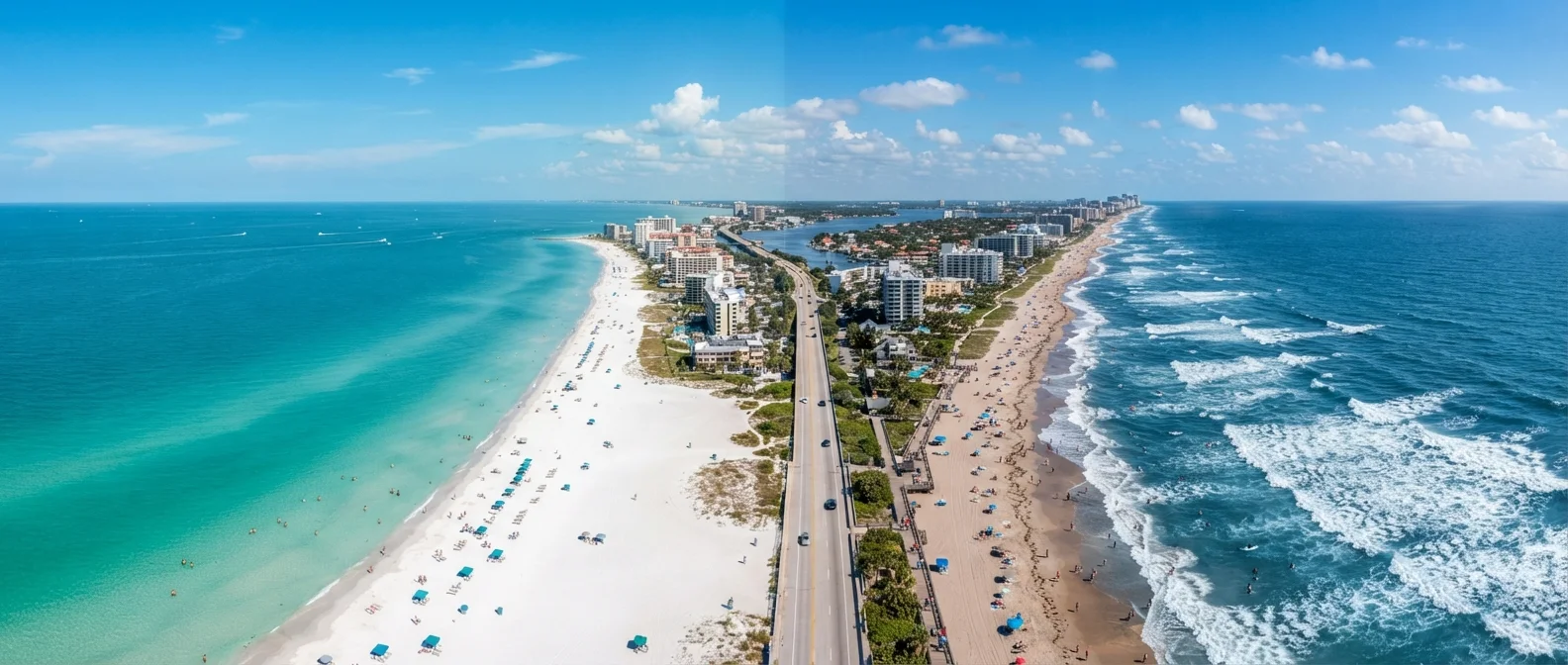
Photo: FaqsDrive.com | Smart Way To Search editorial
—— In This Article
Key Takeaways
- Gulf Coast water is typically warmer and calmer, making it ideal for swimming and wading families.
- Atlantic Coast beaches offer stronger waves, more variety in landscape, and a longer usable coastline.
- Gulf Coast states like Florida, Alabama, and Mississippi offer famously fine white-quartz sand.
- The Atlantic Coast stretches from Maine to Florida, giving travelers vastly different regional flavors.
- Timing your visit wisely can mean smaller crowds and more comfortable conditions on either coast.
- Both coasts carry hurricane-season risk in summer and fall — verify weather conditions before traveling.
Water, Waves, and Sand: The Core Differences
At a glance, a beach is a beach — but spend a few hours on each coast and the differences become obvious. The Gulf of Mexico is a semi-enclosed body of water, which means it heats up faster in summer and stays warmer longer. Water temperatures along Gulf beaches regularly reach the mid-80s°F during summer months. The Atlantic, fed by colder ocean currents, tends to run cooler, particularly north of the Carolinas.
Wave action tells an equally different story. The Gulf's calm waters produce gentle, lapping waves — great for floating and wading, less exciting for surfers. The open Atlantic generates consistent swells that make spots like the Outer Banks and Florida's Space Coast popular with wave riders. As for sand, the Gulf Coast — especially from Pensacola to Destin — is famous for its almost sugar-white quartz sand, a geological quirk from the Appalachian Mountains. Atlantic beaches range from the dark, coarse sands of New England to the golden stretches of the Southeast.
| Criterion | Gulf Coast | Atlantic Coast |
|---|---|---|
| Water Temperature (Summer) | Mid-80s°F, very warm | Upper 60s–low 80s°F, varies by region |
| Wave Action | Gentle, calm | Moderate to strong swells |
| Sand Type | Fine white quartz (Panhandle) | Ranges from coarse dark to golden |
| Coastline Length (US) | ~1,600 miles | ~2,100 miles |
| Regional Vibe | Southern, relaxed, family-friendly | Diverse — from rustic to cosmopolitan |
| Best For | Families, calm swimmers | Surfers, city-beach travelers |
| Hurricane Exposure | June–November risk | June–November risk |
Regional Character and What to Expect
Choosing a coast also means choosing a cultural vibe. The Gulf Coast carries a distinctly Southern flavor — think fresh Gulf seafood, laid-back beach towns, and a slower, friendlier pace. Florida's Panhandle blends Southern hospitality with resort-style amenities, while Louisiana and Mississippi coastlines feel more off-the-beaten-path. For a deeper dive into Southern coastal culture, our regional guide to the American South is a great starting point.
The Atlantic Coast, by contrast, is a mosaic. You can experience the quaint lobster-shack charm of coastal Maine, the colonial history of the Carolinas, or the neon energy of Miami Beach — all on the same coast. This diversity is a genuine advantage for travelers who want variety, but it also means you'll want to research your specific destination rather than assuming one Atlantic beach is like another. The coastal vs. mountain getaways comparison can also help if you're still deciding what kind of trip fits your style.
~85°F
Typical Gulf summer water temperature
NOAA buoy data consistently shows Gulf of Mexico nearshore water reaching the mid-to-upper 80s°F along the Florida Panhandle in peak summer.
2,100+ miles
US Atlantic coastline length
The US Atlantic coast spans from Maine to Florida, offering travelers an enormous range of climates, landscapes, and beach cultures.
Top 3
Gulf Panhandle beaches in US rankings
Beaches in Florida's Panhandle (e.g., Destin, Pensacola Beach) frequently appear near the top of domestic beach rankings by travel publications citing water clarity and sand quality.
Timing, Crowds, and Planning Considerations
Both coasts have peak seasons that bring crowds and higher accommodation demand. Gulf Coast beaches tend to peak in summer (June–August) and during spring break windows. The Atlantic Coast also peaks in summer but sees wider seasonal variation — New England beaches are barely usable before late June, while Florida's Atlantic side welcomes visitors year-round. Hurricane season runs June through November on both coasts, so travelers should monitor forecasts and consider travel insurance if visiting during that window.
Thinking through your timing can genuinely change the experience. Planning around peak vs. off-season travel explores the real trade-offs — from crowd levels to weather windows — and is worth reading before you book. If driving to the coast is part of your plan, our road trip vs. fly-and-explore guide can help you figure out the best way to get there.
A Note on Safety and Entry Conditions
Conditions at any beach can change rapidly due to weather, rip currents, jellyfish blooms, or red tide events. Always check local beach advisories and flag systems before entering the water. For Gulf Coast travelers, red tide — a naturally occurring algae bloom — can periodically affect water quality and air comfort. Verify current conditions through official state environmental agency websites before your trip.

Travel & Trips Editorial Team
Travel & Trips Editorial Team is the collective byline for our editorial team and contributor network. Articles published under this byline or an editorial pen name are researched, written, and reviewed according to our editorial standards for clarity, consistency, and independence before publication.
View author profile