
Underrated US Cities Worth Putting on Your Travel List
Beyond the obvious tourist hubs, these American cities offer compelling history, food scenes, and character that reward curious travelers.
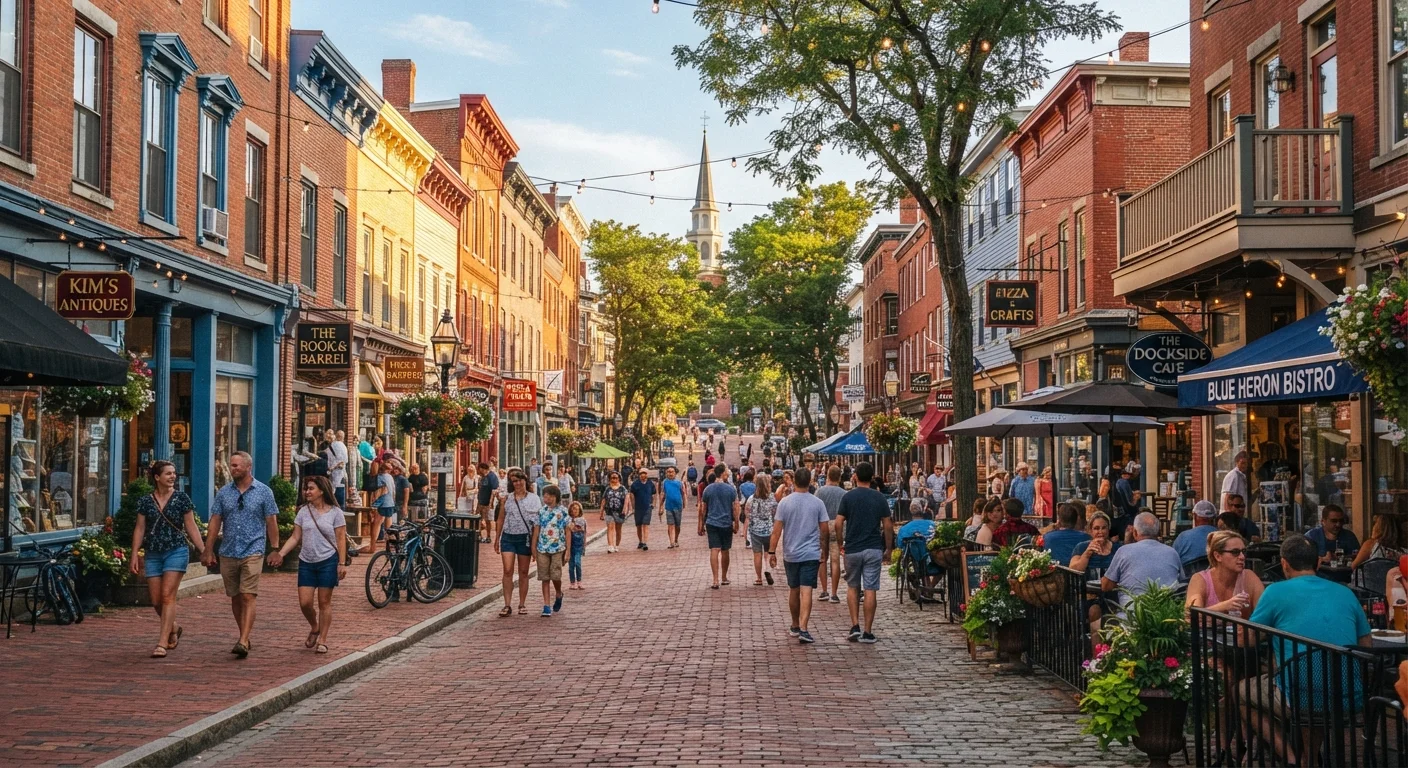
Photo: FaqsDrive.com | Smart Way To Search editorial
Key Takeaways
- Many mid-sized US cities offer rich history, distinctive food scenes, and strong arts culture.
- Visiting lesser-known destinations often means fewer crowds and a more authentic local experience.
- Off-season travel to these cities can stretch your budget even further.
- Each city on this list spans a different region, making it easy to find one that fits your travel style.
- Free cultural institutions and walkable neighborhoods make these destinations accessible for budget travelers.
Why Look Beyond the Obvious Destinations?
New York, Los Angeles, Chicago, and Las Vegas will always draw visitors — and for good reason. But America's travel map extends far beyond those anchors. Dozens of mid-sized cities carry extraordinary stories, distinct regional cuisines, walkable neighborhoods, and cultural institutions that most first-time travelers simply never hear about. These cities tend to reward curiosity over checklist tourism, and many of them are genuinely easier on the wallet than the marquee names.
Whether you're weighing a city break versus a nature retreat or hunting for free and low-cost things to do in a new city, an underrated American city might be exactly the right answer. The six destinations below span six different regions, representing a range of climates, cultures, and travel paces.
Savannah, Georgia
Few American cities wear their history as gracefully as Savannah. Its grid of 22 moss-draped squares — a feature largely intact since the 18th century — gives the city a strolling rhythm that feels nothing like a typical tourist trap. The riverfront district offers a window into the city's mercantile past, while the Victorian District showcases one of the largest collections of intact 19th-century architecture in the country. The local food scene leans hard into Lowcountry traditions: shrimp and grits, she-crab soup, and peach-inflected desserts are fixtures on menus across the city. Art lovers will appreciate the SCAD Museum of Art, which is open to the public and free on certain days. Savannah also rewards visitors who explore on foot — its compact core means you can cover a surprising amount of ground without a car.
Savannah's 22 historic squares create a walking rhythm unlike any other American city.
Albuquerque, New Mexico
Tucked between the Sandia Mountains and the Rio Grande, Albuquerque is frequently overshadowed by Santa Fe — but it offers a fuller, grittier, and arguably more authentic slice of New Mexico culture. Old Town Albuquerque dates to 1706 and clusters around a central plaza where Indigenous artisans sell handcrafted jewelry directly to visitors under the portal of the historic Palace of the Governors' sister building. The city's food scene is driven by green and red chile in nearly every dish, and local spots along Central Avenue — the original Route 66 corridor — serve up some of the most compelling New Mexican cuisine in the state. The National Hispanic Cultural Center and the Indian Pueblo Cultural Center are both world-class institutions that charge modest admission. For those drawn to dramatic landscapes, the Petroglyph National Monument sits right at the city's western edge.
Albuquerque blends Indigenous culture, Route 66 history, and chile-forward cuisine in one accessible city.
Pittsburgh, Pennsylvania
Pittsburgh has quietly reinvented itself from an industrial workhorse into one of the Midwest-adjacent cities most worth exploring. Its dramatic topography — built where three rivers meet — means views are everywhere, and the free Duquesne Incline still carries visitors up to Mount Washington for a panorama that stops conversations cold. The city's museum corridor includes the Carnegie Museums complex, which bundles natural history, fine art, science, and Andy Warhol's archives under an umbrella membership. Strip District, once a wholesale market zone, has evolved into a dense stretch of specialty grocers, international food stalls, and weekend farmers markets. Pittsburgh's neighborhoods — Lawrenceville, Bloomfield, Mexican War Streets — each carry a distinct personality. Getting between them on foot or by bus is genuinely practical for most visitors.
Pittsburgh's three rivers, free incline rides, and world-class museums make it quietly irresistible.
Tucson, Arizona
While Phoenix absorbs most of Arizona's tourist traffic, Tucson rewards the curious traveler with something more layered. The city sits in a valley ringed by five separate mountain ranges — a geography that enables hiking at virtually any skill level within a 30-minute drive. Saguaro National Park surrounds the city on two sides and is free to enter with a national parks pass, putting one of the American Southwest's most iconic landscapes within easy reach. Downtown Tucson has emerged as a genuine food destination, with a James Beard Award-winning chef culture rooted in Sonoran and Tohono O'odham traditions. The Barrio Viejo neighborhood features some of the best-preserved adobe architecture in the US. The University of Arizona's Arizona State Museum offers significant Indigenous artifact collections with free general admission.
Tucson offers Sonoran food culture, desert hiking, and Indigenous history — mostly without the Phoenix crowds.
Providence, Rhode Island
Providence punches well above its weight for a city of its size. It houses one of the country's most celebrated culinary arts programs — Johnson & Wales University — and the dining scene reflects that pedigree, with independent restaurants clustered along Westminster Street and Wickenden Street that rival those in cities twice its size. The Rhode Island School of Design (RISD) Museum holds a genuinely impressive permanent collection spanning Egyptian antiquities to contemporary design, and admission is affordable. College Hill, the neighborhood anchoring Brown University and RISD, features Federal-era houses on cobblestone streets that are extraordinarily well preserved. WaterFire, the city's public art installation involving floating bonfires on the rivers downtown, draws visitors from across New England during warm-weather seasons — check the official schedule before your visit.
Providence's culinary arts scene and RISD museum make it one of the most culturally rich small cities in America.
Boise, Idaho
Boise has grown rapidly but has managed to preserve a downtown character that feels genuinely livable rather than manufactured for tourists. The Basque Block — a short stretch of downtown that reflects Idaho's significant Basque immigrant heritage — is unlike anything else in the American West, with restaurants, a cultural center, and a fronton court. The Boise River Greenbelt runs 25 miles through the city along the river's edge, connecting parks and offering one of the country's more pleasant urban cycling or walking routes. The Treefort Music Fest in early spring draws independent musicians nationally, and the year-round farmers market on Capitol Boulevard showcases the agricultural richness of the Treasure Valley. Boise also sits within a short drive of the Owyhee Mountains and Sawtooth foothills, making it a solid gateway for outdoor enthusiasts.
Boise's Basque Block and river greenbelt offer a combination of cultural depth and outdoor accessibility.
Making the Most of These Destinations
What these six cities share is a depth that reveals itself gradually — meaning a long weekend will be satisfying, but a full week won't feel wasted. Most have compact, walkable cores that make orientation easy for first-time visitors, and several have invested in public transit options that reduce the need for a rental car downtown.
Timing Your Visit Can Make a Big Difference
Many of these cities shine brightest during shoulder seasons — spring and fall — when weather is comfortable and crowds are thinner. Visiting a lesser-known city outside peak summer travel can also make local dining and accommodations easier to navigate. For an honest look at the trade-offs, see our guide on traveling off-season in America.
Travelers interested in regional context will find deeper background in our guides to the American South and the American Southwest, both of which touch on the cultural layers that make cities like Savannah, Albuquerque, and Tucson so compelling. Wherever you end up, the most memorable moments in these cities tend to come not from the top attraction on the list, but from the neighborhood you wander into by chance.
Prices and Conditions Change
Museum admission fees, seasonal hours, and public programs mentioned throughout this article are subject to change. Always verify current details directly with each venue or attraction before your visit. Entry requirements and local conditions can shift, especially around holidays or special events.

Travel & Trips Editorial Team
Travel & Trips Editorial Team is the collective byline for our editorial team and contributor network. Articles published under this byline or an editorial pen name are researched, written, and reviewed according to our editorial standards for clarity, consistency, and independence before publication.
View author profile