
Building Your First Budget From Scratch
New to budgeting? This beginner-friendly guide walks through every step — from listing income to tracking spending — without assuming prior experience.
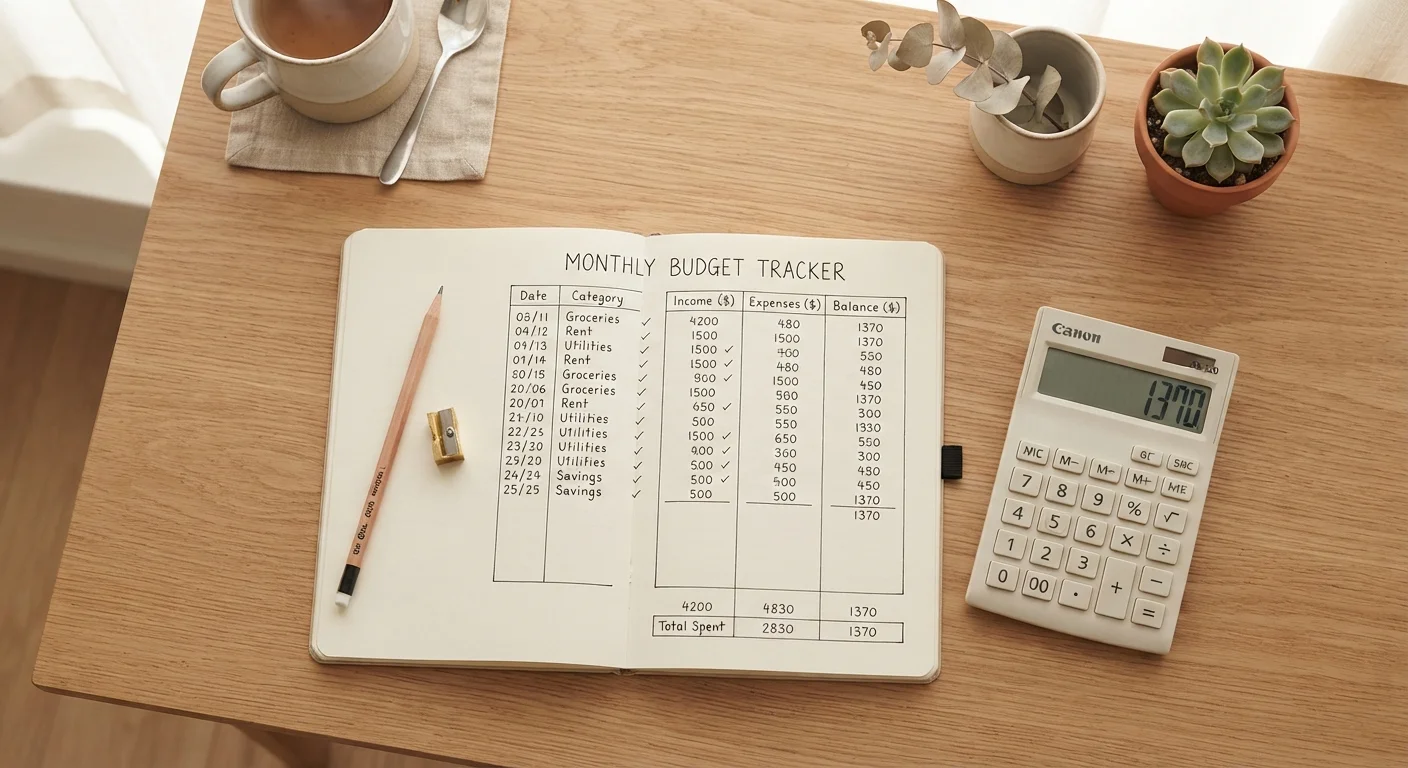
Photo: FaqsDrive.com | Smart Way To Search editorial
—— In This Article
Key Takeaways
- Start with your real take-home pay, not your gross salary, when building a budget.
- Fixed expenses are predictable; variable expenses are where most budgets go off track.
- No single budgeting method works for everyone — pick one that fits how you think.
- Reviewing your budget monthly is more valuable than getting the first draft perfect.
- Irregular expenses like car registration are among the most common first-budget blind spots.
Why a Budget Is Worth Building
A budget is simply a written plan for your money. Nothing more. It doesn't require a finance degree, a large income, or special software — just an honest look at what comes in and what goes out each month. For a deeper overview of what budgeting actually involves, see our complete introduction to budgeting.
Without a plan, most people spend reactively: bills get paid, whatever's left gets used, and savings happen only if something remains at the end. A budget flips that sequence. You decide in advance where each dollar goes, which means your priorities — not random spending habits — shape your financial life.
Even a rough first budget built on estimates beats no budget at all. You'll refine it over time.
Net income
The amount of money you actually receive after taxes and deductions are taken out of your paycheck. This is the number your budget should be built on.
Fixed expense
A cost that stays the same amount every month, like rent or a car loan payment. These are the easiest to plan for because they don't change.
Variable expense
A cost that changes from month to month, such as groceries, gas, or dining out. These categories typically offer the most room to adjust spending.
Discretionary spending
Money spent on non-essential wants — entertainment, hobbies, restaurants. It's flexible, meaning you can increase or reduce it based on your financial goals.
Emergency fund
A savings reserve set aside specifically for unexpected expenses like a car repair or medical bill, so you don't have to go into debt when surprises happen.
Step 1: List Your Income
Your budget starts with what you actually bring home — your net (take-home) pay, not the gross figure on your offer letter. Taxes, benefits deductions, and retirement contributions come out before you ever see the money, so building a budget on gross income sets you up to overspend from day one.
List every reliable income source:
- Primary job take-home pay
- Part-time or gig earnings (use a conservative average)
- Regular freelance payments
- Child support or alimony received
If your income varies, estimate based on your lowest typical month rather than your best. Windfalls — a big gig month, a tax refund — can be planned for separately as a bonus. For definitions of terms like gross income and net income, our personal finance glossary is a handy quick reference.
Step 2: Map Your Expenses
Pull up two or three months of bank and credit card statements. You're looking for two types of spending:
- Fixed expenses
- Same amount, same time every month. Rent, car payment, insurance premiums, loan minimums.
- Variable expenses
- Change month to month. Groceries, gas, dining out, entertainment, clothing.
List every fixed expense first — these are non-negotiable amounts you must cover. Then estimate your average variable spending by category using your statements as evidence, not memory. Memory almost always underestimates spending.
One of the most common mistakes new budgeters make is forgetting irregular expenses entirely: car registration, annual subscriptions, holiday gifts, or a once-a-year insurance premium. These are predictable costs that simply don't occur every month. Our article on spending categories first-time budgeters forget covers exactly what to watch for.
Don't Skip Irregular Expenses
Annual and semi-annual costs are real expenses even when they don't appear on this month's statement. Divide each irregular expense by 12 and set that amount aside monthly so you're never caught off-guard. Ignoring these costs is the single most common reason a first budget falls apart in month three or four.
Step 3: Choose a Budgeting Method
Once you know your income and expenses, you need a framework to organize them. Three approaches suit beginners well:
- 50/30/20 rule: Allocate roughly 50% of take-home pay to needs, 30% to wants, and 20% to savings and debt repayment. Simple and forgiving.
- Zero-based budgeting: Every dollar of income is assigned to a category until the difference between income and planned spending equals zero. No dollar is left unaccounted for. See how zero-based budgeting works for a full explanation.
- Envelope method: Cash or digital envelopes limit how much you can spend in each category. When a category's envelope is empty, spending in that area stops for the month.
None of these is universally superior. The right method is the one you'll actually stick with. If your first choice feels unworkable after 30 days, switch — the goal is a sustainable habit, not methodological purity. For a structured walkthrough of the setup process, your first budget in seven steps offers a plain-language guide.
Start Simple, Then Refine
Your first budget doesn't need to be perfect — it needs to be done. Start with five to eight spending categories rather than tracking every micro-expense. As you get comfortable, you can break categories down further. Overcomplicating a first budget is one of the most common reasons people abandon it within a few weeks.
Step 4: Track, Review, and Adjust
A budget written once and never revisited is a wishful to-do list. The real work — and real benefit — comes from comparing what you planned against what you actually spent, then making corrections.
Set aside 15–20 minutes at the end of each month to ask three questions:
- Did my spending match my plan? Which categories ran over or under?
- Did anything unexpected happen that I need to account for going forward?
- Am I making progress on my savings or debt goals?
Consistent review turns your budget from a static document into a living tool. Most people find their budget becomes significantly more accurate after the third or fourth month, once they've captured a fuller picture of how they actually spend. When you're ready to take the next step — building an emergency fund or tackling debt — our beginner's roadmap to saving and debt management picks up where this guide leaves off.
Explore more strategies at our Budgeting Basics hub or dive into the broader Saving & Debt resource center.
This article is for general informational and educational purposes only and does not constitute personalized financial advice. Please consult a qualified financial professional for guidance specific to your situation.
Frequently Asked Questions

Smart Shopping Editorial Team
Smart Shopping Editorial Team is the collective byline for our editorial team and contributor network. Articles published under this byline or an editorial pen name are researched, written, and reviewed according to our editorial standards for clarity, consistency, and independence before publication.
View author profile