
Your First Budget in Seven Steps
Never budgeted before? This plain-language walkthrough shows you exactly how to set up a spending plan that reflects your real life.
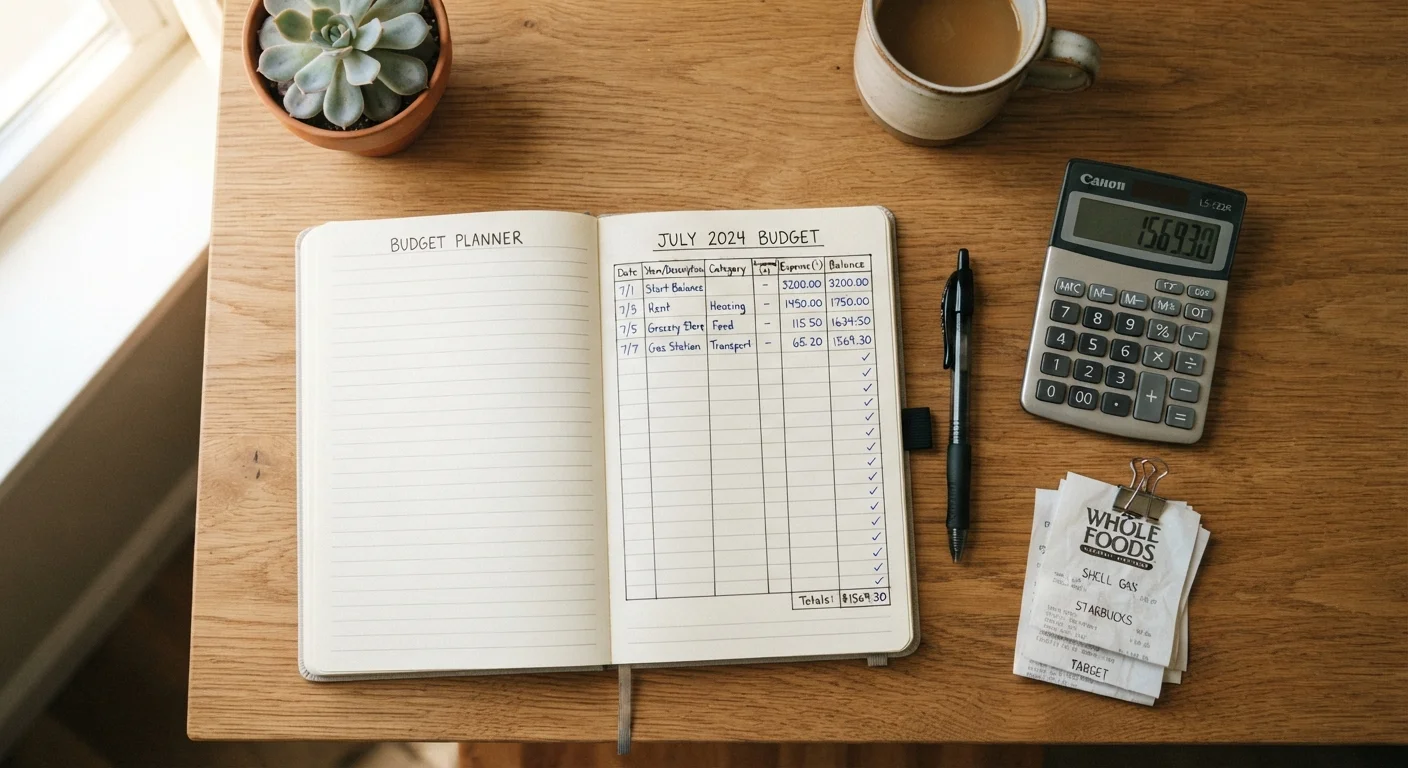
Photo: FaqsDrive.com | Smart Way To Search editorial
—— In This Article
Key Takeaways
- A budget is simply a written plan for where your money goes each month.
- Start with your real take-home income, not your gross salary.
- Separate fixed expenses from variable ones to see where flexibility exists.
- Every budget needs a savings line — even a small one — from day one.
- Your first budget will be imperfect; adjusting it regularly is part of the process.
Why a Budget Is Worth Your Time
A budget isn't a punishment or a restriction — it's a map. Without one, most people genuinely don't know where their money is going until it's already gone. With one, you can make deliberate choices about spending, saving, and debt payoff instead of reacting to whatever comes up. For a deeper look at the big picture, see our complete introduction to budgeting.
The seven steps below walk you through building a functional first budget from scratch. You don't need special software or financial knowledge — just your income information, recent bank or credit card statements, and about an hour.
What you will need
The Seven Steps
Work through these steps in order. If a number surprises you, write it down anyway — accuracy matters more than comfort at this stage.
Calculate Your Real Monthly Take-Home Income
Write down every dollar that actually lands in your bank account each month after taxes, health insurance premiums, and any other payroll deductions. If your income varies — tips, freelance work, hourly shifts — use the lowest typical month as your baseline. Building a plan on a low-income month means you'll always have a buffer when income is higher.
List Every Fixed Expense
Fixed expenses are bills that stay the same amount each month: rent or mortgage, car payment, insurance premiums, loan minimums, and subscription services billed at a set rate. Pull these from your bank statements and list each one with its exact monthly amount. Add them up to get your total fixed costs.
Estimate Your Variable Expenses
Variable expenses change month to month: groceries, gas, dining out, clothing, household supplies, and entertainment. Look at two or three months of statements and average the amounts in each category. Be honest — rounding down to feel better about your spending defeats the purpose.
First-time budgeters frequently miss irregular costs like car registration, annual subscriptions, and holiday gifts. Our article on spending categories beginners forget walks through the most common oversights.
Add a Savings Line
Savings isn't what's left over after spending — it's an expense you pay yourself first. Decide on a monthly savings amount, even if it's small, and write it in your budget alongside your other expenses. Over time, you can grow this figure as your spending picture becomes clearer. For more on building savings alongside debt, see our beginner's roadmap to saving and debt.
Subtract Total Expenses From Income
Add up everything: fixed expenses, variable expenses, and your savings contribution. Subtract that total from your take-home income. A positive number means you have unallocated money to direct intentionally. A negative number means your current spending exceeds your income — a signal to review variable categories for adjustments before the month begins.
[important_callout]Choose a Simple Budgeting Framework
A framework gives your numbers structure. Two popular options for beginners:
- 50/30/20: Allocate roughly 50% of take-home income to needs, 30% to wants, and 20% to savings and debt payoff. Learn more in our overview of the 50/30/20 rule.
- Zero-based budgeting: Assign every dollar of income a specific purpose so your income minus all allocations equals zero. See how it works in our guide on zero-based budgeting.
Neither approach is universally right. Pick the one that matches how you think about money and that you'll actually stick with.
Track Spending and Revisit the Budget Monthly
Your first budget is a draft, not a finished document. Track actual spending throughout the month — by checking your bank app weekly, keeping receipts, or logging purchases in a spreadsheet. At month's end, compare what you planned to what you actually spent. Adjust category amounts based on what you learned. Most budgets stabilize after two or three months of real data.
Your Budget Will Evolve — That's Normal
No first budget is perfect, and that's expected. The goal in month one is to have a plan written down and to track against it. As you gather real spending data over two or three months, your category amounts will become increasingly accurate. Treat each revision as progress, not failure.
Once your budget is running, a few consistent habits will keep it working month after month. Our guide on habits that keep a budget on track covers exactly that. You may also want to run a monthly budget health check at the end of each month to spot patterns and make small corrections before they become bigger problems.
This article is for general informational and educational purposes only and does not constitute personalized financial advice. For guidance specific to your situation, consider consulting a qualified financial professional.

Personal Finance Editorial Team
Personal Finance Editorial Team is the collective byline for our editorial team and contributor network. Articles published under this byline or an editorial pen name are researched, written, and reviewed according to our editorial standards for clarity, consistency, and independence before publication.
View author profile