
Nine Spending Categories That First-Time Budgeters Almost Always Forget
Annual subscriptions, car registration, gifts — these predictable costs trip up new budgeters. Here's what to account for from the start.
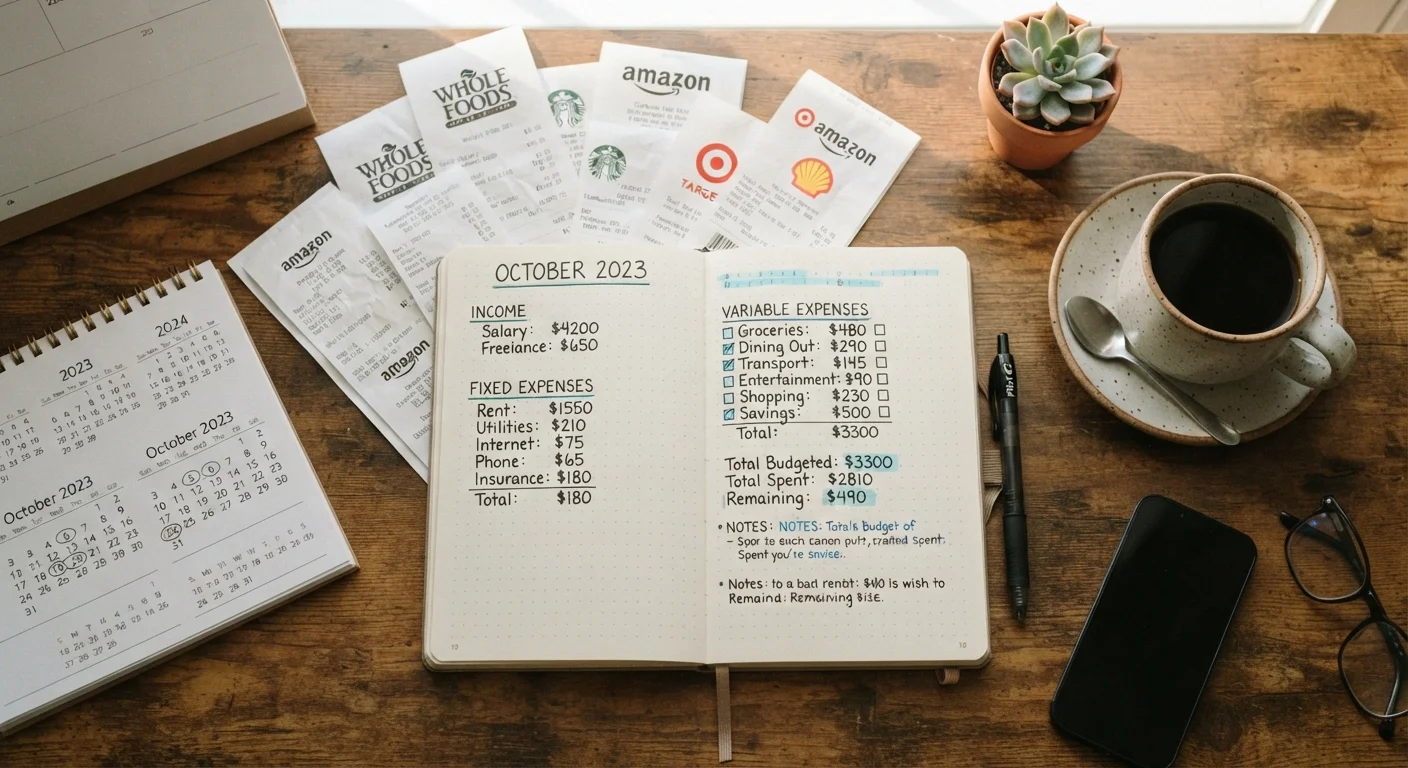
Photo: FaqsDrive.com | Smart Way To Search editorial
—— In This Article
Key Takeaways
- Annual and irregular expenses are the most common blind spots for first-time budgeters.
- Costs like car registration, gifts, and medical copays hit predictably — build them in early.
- Dividing annual expenses by 12 and saving monthly is a simple way to stay ahead.
- Subscriptions and memberships can quietly accumulate into a significant monthly drain.
- A realistic budget accounts for life's irregular rhythm, not just monthly recurring bills.
Why Forgotten Categories Derail New Budgets
Most first-time budgeters do a solid job listing rent, groceries, and utilities. The trouble comes later — when the car registration bill arrives in October, or holiday gifts appear on the credit card statement in December, and there's no money set aside. These aren't surprise expenses; they're predictable ones that simply weren't planned for.
This is one of the most common reasons new budgets break down. If you're wondering why budgets often fail after the first month, missed spending categories are almost always part of the story. The good news: once you know what to look for, these gaps are easy to plug. If you're still setting up your plan, building your first budget from scratch is a helpful place to start.
Annual subscriptions and memberships
Streaming services, gym memberships, software licenses, and professional memberships often bill annually. Individually they seem manageable, but together they can add up to several hundred dollars. List every subscription you hold and note whether it bills monthly or annually so nothing sneaks up on you.
Annual subscriptions rarely feel expensive until they all hit at once.
Vehicle registration and licensing fees
Car registration fees are billed once a year in most states, and the amount varies widely. New budgeters often treat this as a surprise when it's actually one of the most predictable costs of owning a vehicle. Check your state's schedule and divide the fee into monthly savings. For more on routine vehicle costs, see the car maintenance hub.
Car registration is an annual certainty — plan for it like a monthly bill.
Gifts and celebrations
Birthdays, weddings, baby showers, holidays — the social calendar generates real costs throughout the year. Many people underestimate gift spending by a significant margin. A rough annual estimate divided by 12 gives you a reliable monthly line item instead of scrambling each time an occasion arrives.
Gift spending is easy to underestimate and hard to ignore once it's due.
Medical and dental out-of-pocket costs
Even with health insurance, copays, prescription costs, glasses, and dental work add up. These costs don't hit every month, but they hit often enough to warrant a standing category. An annual estimate of what you typically spend on healthcare — even a conservative one — is far better than no estimate at all.
Healthcare copays and prescriptions rarely disappear — budget for them steadily.
Home and renter maintenance
Homeowners know about repair costs, but renters face them too: replacing a broken item, buying household supplies in bulk, or covering pest control. A general rule of thumb for homeowners is to budget roughly 1% of the home's value annually for maintenance — though actual costs will vary. Both renters and owners benefit from keeping a small maintenance reserve. This is one of the hidden costs that blow up even careful budgets.
Home upkeep costs are irregular but unavoidable — a reserve cushions the blow.
Pet expenses
Routine vet visits, vaccinations, flea and tick prevention, food, grooming, and the occasional emergency visit all belong in the budget. Pet costs tend to be lumpy — quiet for a few months, then significant when a vet appointment or supply run hits. A monthly estimate based on your pet's typical annual costs keeps this category from feeling random.
Pet care costs are real and recurring — they deserve their own budget line.
Clothing and personal care
Clothing rarely dominates a monthly budget, but over a year the spending is real: seasonal wardrobe updates, work attire, shoes, haircuts, and personal care products. Because none of these hit on a fixed schedule, they're easy to overlook. Reviewing last year's bank statements is the fastest way to arrive at a realistic annual estimate.
Clothing and grooming add up quietly — a yearly audit reveals the true total.
Travel and vacation
Even modest travel — a road trip, a long weekend visit to family — carries costs: gas, lodging, meals, and incidentals. If travel matters to you, treat it as a planned expense rather than something you'll figure out later. Setting aside a fixed monthly amount toward travel gives you flexibility without debt.
Treating travel as a planned expense prevents it from becoming an impulse debt.
Bank fees and financial charges
Overdraft fees, ATM fees, annual credit card fees, and wire transfer charges are easy to dismiss as minor — until you add them up. Review your last 12 months of statements and total what you've paid in financial charges. For some households, this is a surprisingly large number that's easy to reduce once it's visible in the budget.
Financial fees are avoidable costs that only become visible once you look for them.
Making Room for the Irregular
Plugging these categories into your budget doesn't have to be complicated. For annual or semi-annual costs, divide the total by 12 and set that amount aside each month into a dedicated savings buffer — sometimes called a sinking fund. When the bill arrives, the money is already waiting.
Try a Simple Sinking Fund Approach
For each irregular expense category, estimate the annual total and divide by 12. Set that monthly amount aside in a labeled savings bucket or envelope. When the expense arrives — car registration, holiday gifts, vet bills — you draw from that bucket rather than your general checking account. This one habit eliminates most budget-busting surprises.
A monthly budget review checklist can help you catch anything that's shifted before it becomes a problem. And if you want to build the longer-term habits that keep a budget working well beyond month one, explore habits that keep a budget running month after month.
This article is for general informational purposes only and does not constitute personalized financial advice. For guidance specific to your situation, consider consulting a qualified financial professional.

Personal Finance Editorial Team
Personal Finance Editorial Team is the collective byline for our editorial team and contributor network. Articles published under this byline or an editorial pen name are researched, written, and reviewed according to our editorial standards for clarity, consistency, and independence before publication.
View author profile