
Personal Finance Glossary: Budgeting Terms Every Beginner Should Know
From gross income to discretionary spending, this quick-reference glossary defines the budgeting vocabulary you'll encounter most.
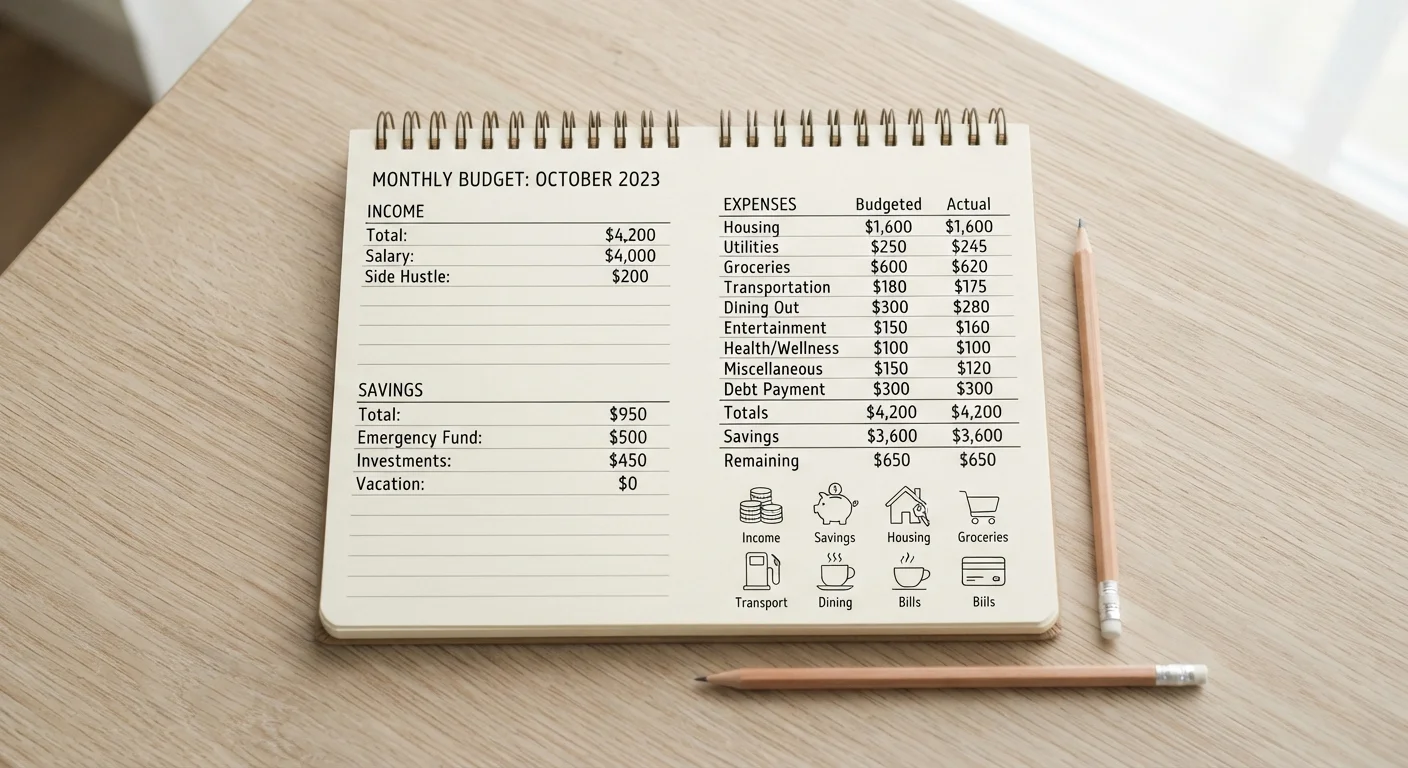
Photo: FaqsDrive.com | Smart Way To Search editorial
—— In This Article
Why Budgeting Language Matters
When you pick up a budgeting article or open a personal finance app for the first time, you're likely to run into terms that feel unfamiliar. Words like net income, discretionary spending, and cash flow get used constantly — and if you're not sure what they mean, the whole process feels harder than it needs to be.
This glossary defines the budgeting vocabulary you'll encounter most, in plain everyday language. Bookmark it as a quick reference whenever a term stops you in your tracks. If you're also looking for a broader foundation, our complete introduction to budgeting walks through the full process from start to finish.
Gross Income
The total amount you earn before any taxes or deductions are taken out. This is the number on your offer letter or contract, not the number on your paycheck.
Net Income
What you actually take home after taxes, Social Security, Medicare, and any other deductions are subtracted from your gross income. Your budget should always be built around your net income.
Fixed Expenses
Recurring costs that stay the same amount each month, such as rent, a car loan payment, or a monthly subscription. Because they don't change, they're the easiest to plan for.
Variable Expenses
Costs that occur regularly but fluctuate in amount, like groceries, utilities, or gas. You can estimate these, but the exact total changes from month to month.
Discretionary Spending
Money spent on non-essential wants — dining out, entertainment, hobbies, or impulse purchases. This category is usually the first place to look when you need to cut back.
Cash Flow
The movement of money in and out of your budget over a period of time. Positive cash flow means you're bringing in more than you're spending; negative cash flow means the opposite.
Budget Deficit
When your total spending exceeds your total income in a given period. Running a deficit means you're either dipping into savings or taking on debt to cover the gap.
Budget Surplus
When your income exceeds your total expenses, leaving money left over. A surplus gives you room to save, pay down debt, or build an emergency fund.
Emergency Fund
A dedicated pool of savings set aside for unexpected expenses, like a medical bill or car repair. Financial educators commonly suggest working toward three to six months of essential expenses, though the right amount varies by individual circumstance.
Zero-Based Budget
A budgeting method where you assign every dollar of income to a specific category — expenses, savings, or debt repayment — until you reach zero unallocated dollars. The goal is intentional allocation, not spending everything.
Pay Yourself First
A savings strategy where you move money into savings automatically at the start of each pay period, before spending on anything else. It treats saving as a non-negotiable expense rather than an afterthought.
Net Worth
The total value of everything you own (assets) minus everything you owe (liabilities). It's a snapshot of your overall financial position, not just your monthly cash flow.
Key Concepts in Context
Definitions become much more useful once you see how these terms connect to each other in a real budget. Here's a quick map of how the core ideas fit together.
| Gross vs. Net Income | Gross is before taxes; net is what you take home |
| Fixed Expense Example | Rent, mortgage, car payment |
| Variable Expense Example | Groceries, utilities, gas |
| Discretionary Spending Example | Dining out, streaming services, hobbies |
| Common Emergency Fund Target | 3–6 months of essential expenses (Commonly cited general guideline; individual needs vary) |
| Zero-Based Budget Goal | Every dollar assigned a purpose |
Your gross income is your starting number, but your budget has to be built around your net income — what actually hits your account after taxes and deductions. From there, you subtract fixed expenses first (because those don't change), then variable expenses, and whatever remains is either discretionary spending or money available to save.
Understanding the difference between fixed, variable, and discretionary costs is one of the most practical skills in personal finance. See how these three expense types break down and why the distinction matters when you're tightening a budget.
Two terms that beginners often mix up are cash flow and savings. Positive cash flow means more money is coming in than going out in a given period — but that doesn't automatically mean you're saving. Learn how cash flow and savings differ so you're not caught off guard.
Net Worth Is Not the Same as Income
Many beginners use net worth and income interchangeably, but they measure different things. Income is what flows in each month; net worth is the cumulative result of years of earning, spending, and saving. See a plain-language breakdown of net worth, income, and wealth to understand how each fits into your financial picture.
For a deeper look at terms beyond budgeting — things like APR, amortization, and equity — this broader financial vocabulary glossary covers 30 essential terms in plain language. And if you want to understand how your overall financial picture fits together, assets and liabilities explained simply is a natural next step.
This article is for informational purposes only and does not constitute personalized financial advice. For guidance tailored to your situation, consider consulting a qualified financial professional.

Personal Finance Editorial Team
Personal Finance Editorial Team is the collective byline for our editorial team and contributor network. Articles published under this byline or an editorial pen name are researched, written, and reviewed according to our editorial standards for clarity, consistency, and independence before publication.
View author profile