
Feeding Your Cat at Every Life Stage
Kittens, adults, and seniors have different nutritional needs. Here's a plain-language breakdown of what changes and why.
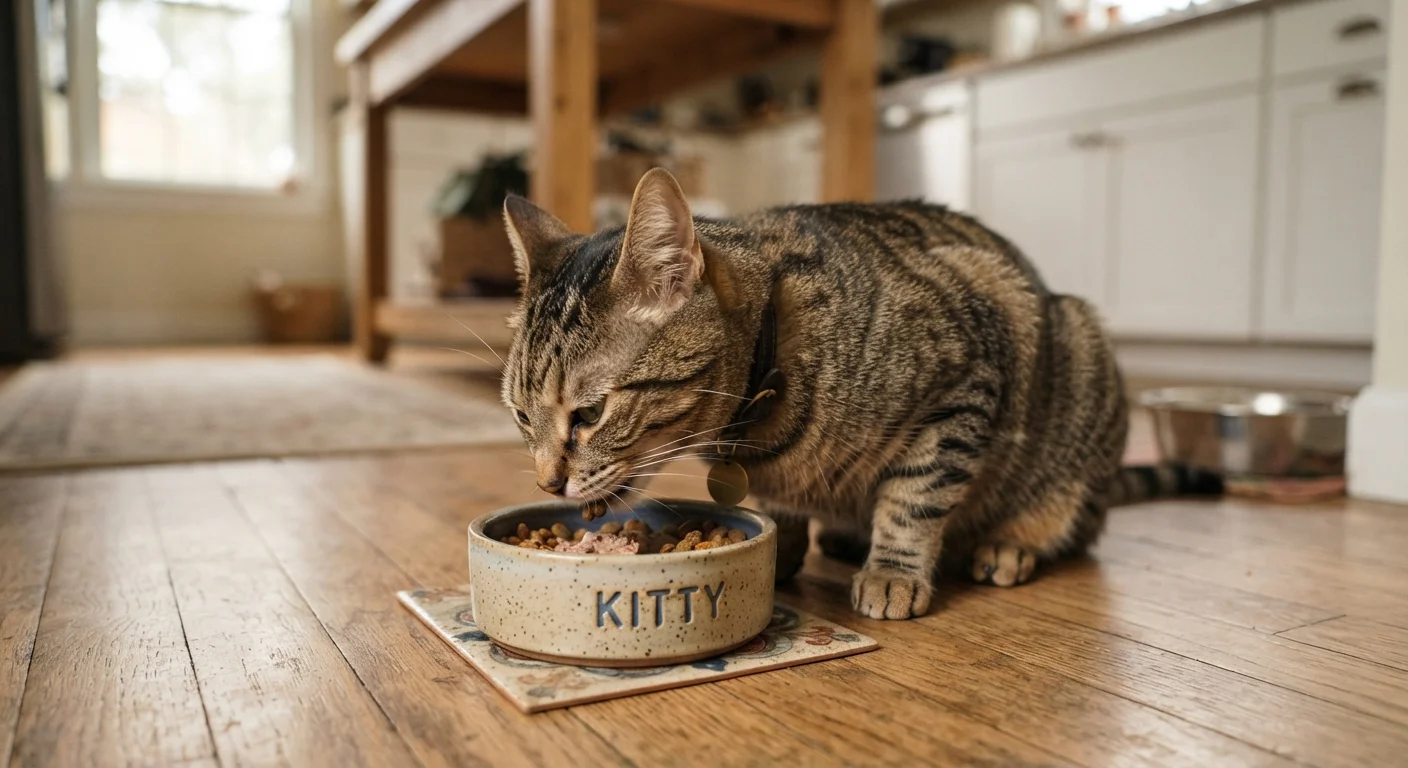
Photo: FaqsDrive.com | Smart Way To Search editorial
—— In This Article
Key Takeaways
- Kittens need calorie-dense, protein-rich food to support rapid growth and development.
- Adult cats thrive on consistent, balanced meals — portion control prevents obesity.
- Senior cats often need more protein and fewer calories as metabolism slows.
- Always choose food labeled for your cat's specific life stage.
- A veterinarian is the best resource for cats with health conditions affecting diet.
Why Life Stage Nutrition Matters
Cats are obligate carnivores — meaning they require nutrients found only in animal tissue, like the amino acid taurine, to survive. But beyond that baseline, what a cat needs from food shifts dramatically as it ages. A kitten's body is building muscle, bone, and organ systems from scratch. A senior cat's kidneys may work less efficiently. Feeding the wrong formula for the wrong stage doesn't just miss the mark nutritionally — it can actively cause harm over time.
The good news is that life-stage feeding doesn't have to be complicated. Once you understand the core differences between kitten, adult, and senior nutrition, choosing appropriately becomes straightforward. This guide walks you through each phase so you can make informed choices at every bowl.
~60%
Estimated overweight or obese pet cats in the U.S.
Veterinary surveys consistently report that a majority of domestic cats are above their ideal body weight, largely due to overfeeding.
12 months
Age when most cats transition to adult food
Most veterinary nutritionists recommend switching from kitten to adult formula at or around one year of age for typical domestic cats.
7 years
Age at which cats are generally considered senior
The American Association of Feline Practitioners classifies cats aged 7–10 as "mature" and those 11 and older as "senior" or "geriatric."
Feeding Kittens (0–12 Months)
Kittens grow at a remarkable rate — most reach close to their adult size within their first year. That growth demands significantly more calories, protein, and fat per pound of body weight than an adult cat requires. Kitten-formulated foods are designed with a higher calorie density and enriched with nutrients like DHA (an omega-3 fatty acid that supports brain and vision development) and calcium for bone formation.
Key guidelines for kittens:
- Frequency: Young kittens (under 6 months) generally do best with three to four small meals daily. After 6 months, twice daily is typically sufficient.
- Wet vs. dry food: Both can be appropriate, and many owners mix the two. Wet food adds hydration, which is valuable at any age. Our guide to wet vs. dry food covers the trade-offs in detail.
- Avoid adult food: Adult formulas lack the caloric and nutrient density kittens need during this critical window.
Weigh your kitten weekly for the first several months and log it. Consistent weight gain is the clearest signal that a kitten's diet is working.
Kittens can mask nutritional shortfalls outwardly while falling behind on growth milestones — a simple weekly weigh-in on a kitchen scale catches problems early.
Transition between formulas gradually over 7–10 days by mixing increasing amounts of the new food with the old. Abrupt switches are a leading cause of digestive upset in cats.
A cat's gut microbiome adapts to its regular diet; sudden changes can cause vomiting or diarrhea even when the new food is nutritionally sound.
Kittens that are nursing from their mother should not be supplemented with solid food before about 3–4 weeks of age. If you're caring for orphaned kittens, consult a veterinarian about appropriate kitten milk replacers — cow's milk is not a safe substitute.
Feeding Adult Cats (1–7 Years)
Once a cat reaches about 12 months of age, its growth rate levels off and its caloric needs stabilize. This is the longest life stage and, for most healthy cats, the most nutritionally straightforward. Adult maintenance diets are formulated to deliver balanced protein, fat, and micronutrients without the extra calorie density kittens require.
Portion control matters most here
Obesity is one of the most common preventable health problems in pet cats. Free-feeding (leaving food out all day) can lead to overeating, especially for indoor cats with limited activity. Measured meals twice a day give you a clearer view of how much your cat is actually consuming.
If your cat is spayed or neutered — which affects metabolism — ask your vet whether a standard adult formula or a lower-calorie maintenance diet is more appropriate. You can learn more about how spaying and neutering affects cats in our overview of spaying and neutering.
Track Portions With a Kitchen Scale
Measuring cups are imprecise — the same "half cup" can vary significantly depending on kibble size and how tightly it's packed. A simple kitchen scale makes portions consistent and takes the guesswork out of daily feeding. This matters most for adult cats where small daily overages accumulate into weight gain over months.
Activity level also plays a role. Indoor and outdoor cats have meaningfully different calorie needs — an outdoor cat patrolling a yard will burn more energy than one napping on a couch all day.
Feeding Senior Cats (7+ Years)
The veterinary community generally considers cats to be "senior" starting around age 7, with cats over 11 sometimes classified as "geriatric." Aging brings changes that directly affect nutritional needs: reduced kidney efficiency, decreased muscle mass, and often a slower metabolism paired with decreased appetite.
What changes in senior nutrition:
- Protein: Counterintuitively, senior cats often need more protein, not less, to maintain muscle mass — unless a specific health condition like kidney disease requires restriction.
- Phosphorus: Kidney health becomes a priority. Some senior formulas are lower in phosphorus to reduce strain on aging kidneys.
- Calories: Many senior cats become less active and gain weight, but others lose weight as appetite and digestion decline. Monitor body condition rather than age alone.
- Hydration: Older cats are more prone to dehydration and kidney issues. Wet food or water fountains can help encourage adequate fluid intake.
Don't Dismiss Senior Weight Loss
Unexplained weight loss in a cat over age 7 is a clinical red flag, not a normal part of aging. Conditions like hyperthyroidism and kidney disease are common in senior cats and are often manageable when caught early. Schedule a vet appointment rather than simply switching foods if you notice your older cat thinning out.
Weight loss in a senior cat should never be assumed to be simply "old age." It can signal treatable conditions like hyperthyroidism, diabetes, or dental pain affecting the ability to eat. Regular checkups matter — our guide to annual vet visits explains what your vet is screening for at each stage.
Reading Cat Food Labels
Cat food labels in the U.S. are regulated by the Association of American Feed Control Officials (AAFCO). Knowing how to read them helps you cut through marketing language and identify genuinely appropriate nutrition.
What to look for:
- "Complete and balanced"
- This phrase means the food meets AAFCO's minimum nutrient profiles for the stated life stage. It's a meaningful standard — look for it.
- Life stage designation
- Labels must state which life stage the food is appropriate for: "kitten," "adult maintenance," "all life stages," or "senior." Note that "all life stages" formulas meet kitten requirements, making them calorie-dense — not ideal for sedentary adult cats.
- Ingredient list
- Ingredients are listed by weight before processing. A named animal protein (e.g., "chicken," "salmon") appearing first is generally a positive sign, though total nutrient balance matters more than any single ingredient's position.
"All Life Stages" Isn't a Universal Choice
Foods labeled "all life stages" are formulated to meet kitten-level nutrient and calorie requirements, which makes them appropriate for growing cats but too calorie-dense for many adults. If your cat is an average healthy adult, an "adult maintenance" formula is typically a better fit. When in doubt, ask your vet.
When to Talk to Your Vet About Diet
General life-stage guidelines work well for healthy cats, but several situations warrant a conversation with your veterinarian rather than a label-reading session at the store:
- Your cat has a diagnosed health condition (kidney disease, diabetes, food allergies, inflammatory bowel disease)
- Your cat is significantly overweight or underweight
- You're considering a raw, homemade, or grain-free diet
- Your senior cat is losing weight despite eating
- Your kitten is not gaining weight appropriately
A vet can assess your cat's body condition score — a hands-on measure of whether your cat is under, over, or appropriately nourished — and recommend adjustments based on real clinical information rather than general guidance.
Diet intersects with nearly every aspect of cat health. Pairing smart feeding with consistent enrichment (see our indoor cat enrichment guide) and a regular grooming routine (our home grooming guide is a good starting point) gives your cat the best foundation at any age.
This article is for general informational purposes only and is not a substitute for professional veterinary advice. Always consult a licensed veterinarian for guidance specific to your cat's health and nutritional needs.

Pets & Animals Editorial Team
Pets & Animals Editorial Team is the collective byline for our editorial team and contributor network. Articles published under this byline or an editorial pen name are researched, written, and reviewed according to our editorial standards for clarity, consistency, and independence before publication.
View author profile