
How to Keep an Indoor Cat Mentally Stimulated
Boredom shows up as destruction, overeating, and aggression. Explore enrichment strategies that match how cats actually think.
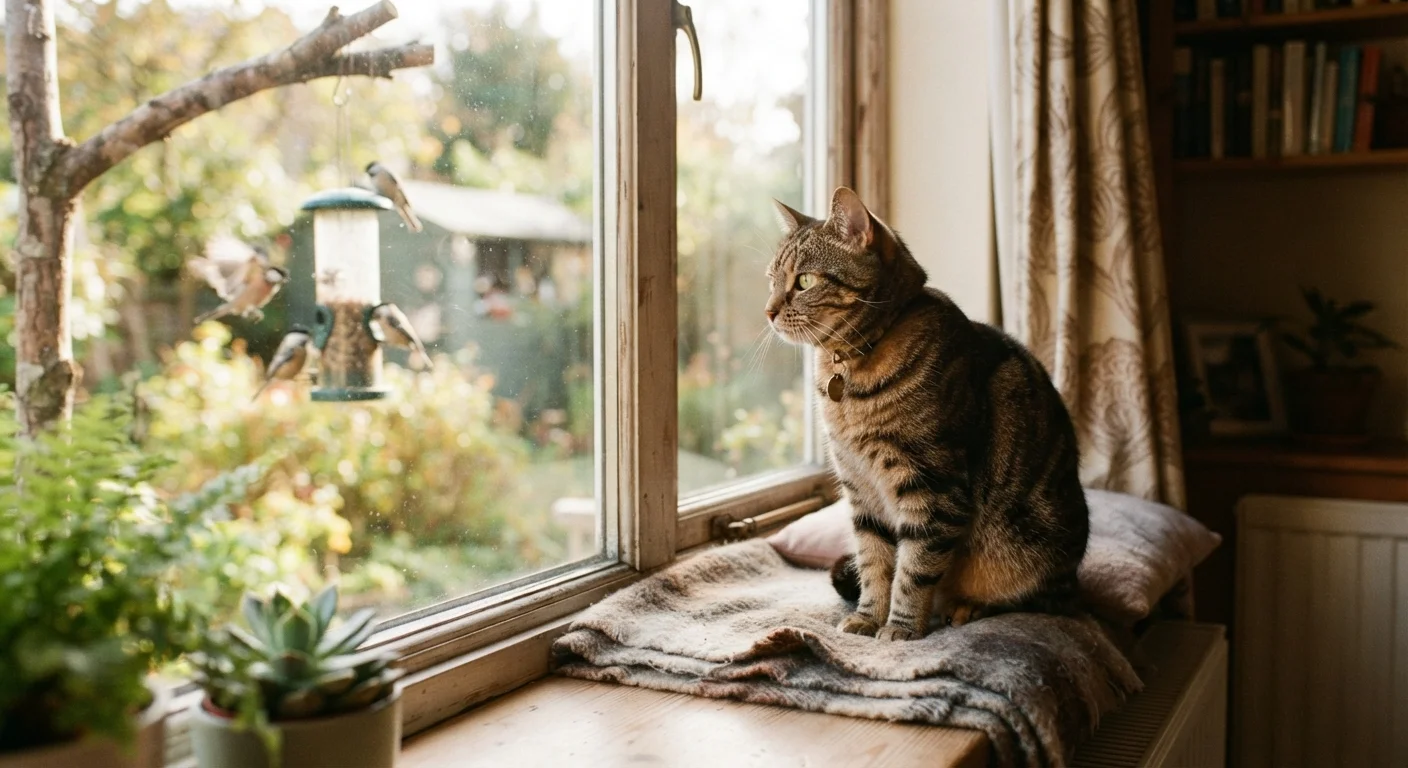
Photo: FaqsDrive.com | Smart Way To Search editorial
—— In This Article
Key Takeaways
- Boredom in indoor cats often appears as destructive behavior, overeating, or aggression — not just lethargy.
- Enrichment should mimic natural feline behaviors: hunting, climbing, hiding, and exploring.
- Rotating toys and activities regularly prevents habituation and keeps stimulation effective.
- Even short daily play sessions — around 10 to 15 minutes — can significantly improve a cat's mood and behavior.
- Environmental setup matters as much as active play; vertical space and hiding spots reduce stress.
- Mental enrichment supports physical health by curbing obesity linked to inactivity and boredom eating.
Why Indoor Cats Get Bored — and Why It Matters
Cats are natural hunters. Even a well-fed indoor cat carries millions of years of instinct that compel it to stalk, chase, pounce, and problem-solve. Without outlets for those drives, indoor cats don't simply zone out — they redirect that energy into behaviors that frustrate owners: scratching furniture, knocking objects off shelves, overeating out of boredom, or picking fights with housemates.
Understanding the why behind these behaviors makes solutions much clearer. For instance, that shelf-clearing habit is actually a sign of understimulation, not random mischief. Mental enrichment isn't a luxury — it's a core part of responsible indoor cat care. The strategies below are grounded in how cats actually think and what their brains genuinely need.
Boredom Symptoms vs. Medical Issues
Some signs of understimulation — lethargy, overeating, overgrooming, or sudden aggression — can also indicate underlying health conditions. If behavioral changes appear suddenly or persist despite enrichment efforts, consult a veterinarian to rule out medical causes before assuming boredom is the sole factor. This article provides general enrichment guidance and is not a substitute for professional veterinary advice.
7 Proven Ways to Keep Your Indoor Cat Mentally Engaged
Rotate Toys Instead of Buying More
Cats habituate quickly — a toy that thrilled them on Monday may be ignored by Wednesday. Instead of accumulating more toys, divide what you already have into two or three groups and rotate them every few days. When a toy reappears after a week's absence, it registers as novel again and triggers genuine interest. Simple toys like crinkle balls, feather wands, and foil balls are often more engaging than elaborate gadgets because their motion is unpredictable.
Rotating existing toys is more effective than constantly buying new ones.
Use Puzzle Feeders and Food Foraging
Cats in the wild spend a significant portion of their day hunting for food — a process that requires focus, strategy, and physical effort. Replicating this with puzzle feeders or by hiding small portions of kibble around the home transforms mealtime into a mental workout. Start with simple puzzles and increase complexity as your cat gains confidence. This also helps slow down fast eaters, which can benefit digestion. See our guide to feeding your cat at every life stage for more on how to structure meals healthily.
Puzzle feeders turn every meal into a hunt, satisfying deep feline instincts.
Create Vertical Space and Climbing Opportunities
Cats feel safest — and most stimulated — when they can survey their environment from height. Cat trees, wall-mounted shelves, and cleared-off bookcases all give your cat the ability to climb, jump, and perch. Vertical space also reduces conflict in multi-cat households by giving each cat its own territory without requiring more floor area. Even a single well-placed cat tree near a window can dramatically reduce restless, destructive behavior.
Vertical space satisfies a cat's instinct to survey and claim territory safely.
Schedule Daily Interactive Play Sessions
No amount of environmental enrichment replaces the bond and stimulation that comes from playing with your cat directly. Wand toys and laser pointers (always end laser play with a physical toy the cat can catch) mimic prey movement in ways that automated toys cannot replicate. Aim for two sessions of 10–15 minutes per day, ideally once in the morning and once before bed when cats are naturally more active. Consistency matters more than duration.
Two short daily play sessions do more for a cat's wellbeing than one long occasional one.
Offer Window Access and Bird Feeders Outside
A window with an outdoor view is essentially free television for a cat. Placing a bird feeder or bird bath within sightline of a window perch gives your cat hours of visual stimulation — watching prey animals move triggers the same neurological engagement as active hunting without any physical risk to wildlife. If privacy screens or furniture block windows, rearranging the room to open up a viewing spot is one of the simplest enrichment upgrades you can make.
A window perch with an outdoor bird feeder provides hours of free, effortless enrichment.
Introduce Scent Enrichment
Cats experience the world heavily through smell, yet scent enrichment is one of the most overlooked strategies. Rotating safe herbs like dried catnip, silver vine, or valerian root can trigger playful, energized behavior in cats that respond to them (not all cats do — responsiveness is genetic). You can also introduce novel scents by placing a paper bag from outdoors, or a pinecone, in the room for investigation. Always ensure any introduced material is free from pesticides or toxic residues.
Scent enrichment taps into a cat's most powerful sense and costs almost nothing.
Teach Simple Tricks Through Positive Reinforcement
Cats are entirely capable of learning cued behaviors — sit, high-five, spin, or target a stick with their nose. Training sessions of just three to five minutes work the brain intensely and strengthen the bond between cat and owner. Use a small, high-value treat and a clicker or consistent verbal marker. Short, frequent sessions outperform longer sporadic ones. Beyond the cognitive workout, training gives shy or anxious cats a structured, low-pressure way to engage with humans on their own terms.
Even a five-minute training session gives a cat's brain a more focused workout than most toys.
Start With One Change at a Time
Introducing too many enrichment strategies simultaneously can overwhelm a timid or older cat. Pick one item from this list — ideally puzzle feeding or a window perch — and let your cat adjust for a week before adding another. Gradual layering works better than a complete environmental overhaul and makes it easier to notice what your cat actually enjoys.
Building a Routine That Sticks
Enrichment works best when it's consistent rather than occasional. Just as you might reference our guide to building a grooming routine your cat will accept, the key to enrichment is habit-building — short, predictable sessions your cat can anticipate. Pair active play with feeding times, rotate puzzle feeders weekly, and refresh the vertical landscape every month or two by rearranging cat trees or adding a new perch.
If you share your home with another small pet, many of the same enrichment principles apply across species — see our overview of enrichment for hamsters, rabbits, and birds for comparison. A mentally engaged cat is calmer, healthier, and far more rewarding to live with — and the investment of time is genuinely small relative to the payoff.

Pets & Animals Editorial Team
Pets & Animals Editorial Team is the collective byline for our editorial team and contributor network. Articles published under this byline or an editorial pen name are researched, written, and reviewed according to our editorial standards for clarity, consistency, and independence before publication.
View author profile