
Wet Food vs. Dry Food: Understanding the Trade-Offs for Cats
Neither is universally right. Compare hydration, dental health, cost, and palatability to understand what fits your cat's situation.
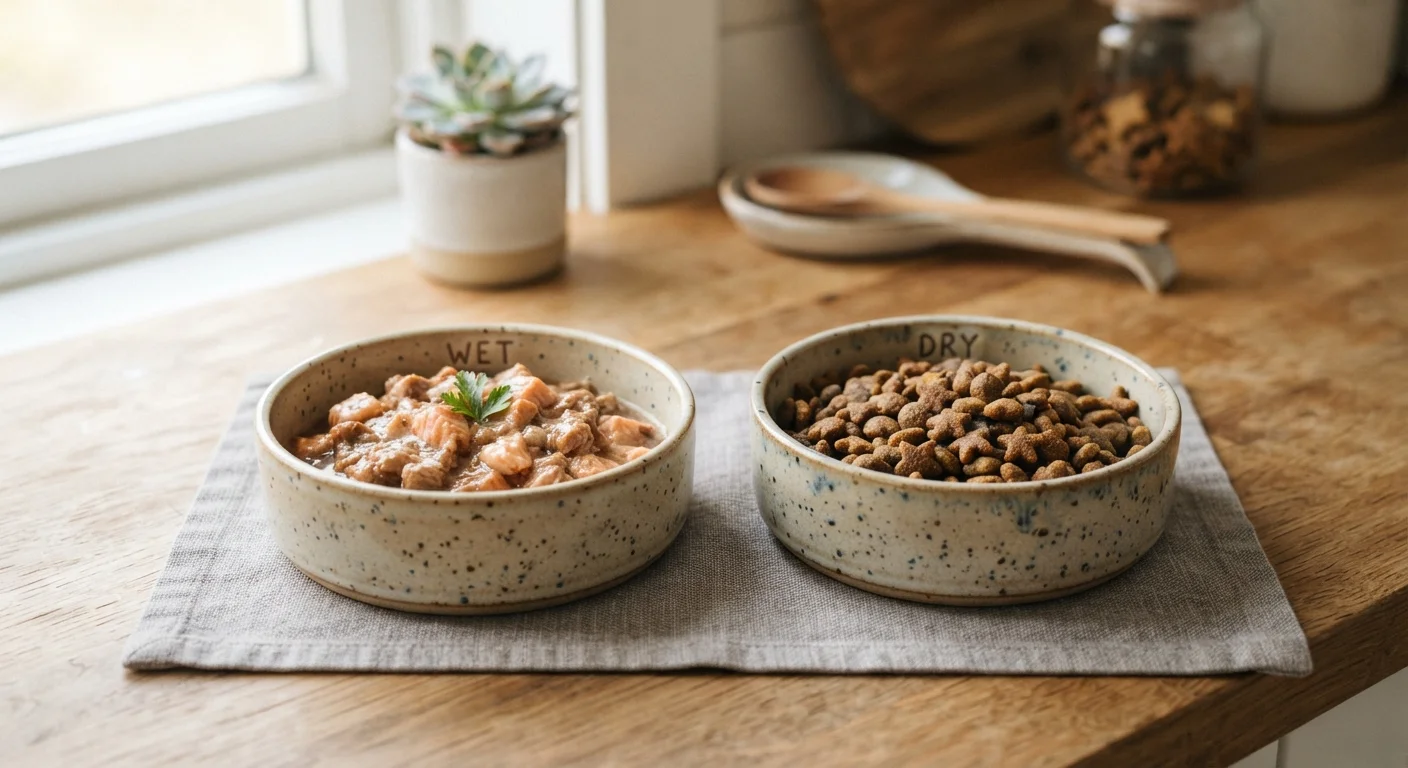
Photo: FaqsDrive.com | Smart Way To Search editorial
—— In This Article
Key Takeaways
- Wet food provides significantly more moisture, which supports urinary and kidney health in cats.
- Dry food is more affordable, easier to store, and works well for cats who prefer to graze.
- Neither format is universally superior — a cat's age, health, and habits should guide the choice.
- Many veterinarians suggest a mixed feeding approach to balance hydration and convenience.
- Palatability differences mean some cats strongly prefer one format over the other.
Why the Wet vs. Dry Debate Actually Matters
For most cat owners, choosing between wet and dry food comes down to habit or convenience. But feline nutrition researchers and veterinarians consistently point out that this decision can have real implications for your cat's long-term health — particularly around hydration, kidney function, and weight management.
Cats are obligate carnivores, meaning their bodies are designed to derive nutrients primarily from animal tissue. In the wild, prey animals provide not just protein and fat, but also substantial moisture — often 70% or more water by weight. Domestic cats evolved from desert-dwelling ancestors and have a naturally low thirst drive, which means they don't tend to drink enough water on their own. This makes the moisture content of food more than a minor detail.
Understanding the trade-offs between wet and dry food can help you make a more informed choice — or a more strategic combination. See our guide to feeding your cat at every life stage for how nutritional needs also shift as cats age.
Hydration: The Most Significant Difference
Wet food typically contains 70–80% moisture. Dry kibble, by contrast, usually contains around 10% moisture. That gap is nutritionally meaningful, especially for cats prone to urinary crystals, bladder disease, or early-stage kidney disease — conditions that are common in domestic cats.
Higher moisture intake through food can help dilute urine, reducing the concentration of minerals that form crystals or stones. Many veterinarians recommend wet food specifically for cats with these conditions, though it's worth confirming the right approach with your own vet, since individual cases vary.
70–80%
Moisture in wet cat food
Compared to roughly 10% in dry kibble, the moisture gap between formats is substantial and directly affects a cat's daily fluid intake.
~60%
Of cats affected by kidney disease in later life
Chronic kidney disease is one of the most common conditions in older cats, according to veterinary medicine literature, making hydration a long-term concern.
Dry food is not inherently harmful to hydration, but it does require that cats drink adequate water from other sources. Many cats simply don't. Providing multiple fresh water bowls, or a pet water fountain, can help close this gap for cats eating primarily kibble.
Cost, Convenience, and Dental Health
Dry food wins on practicality. It's less expensive per serving, can be purchased in bulk, and doesn't spoil once poured into a bowl — making it ideal for owners who free-feed, meaning leaving food available throughout the day. Wet food, once opened, should generally be refrigerated and used within 24–48 hours to prevent spoilage.
| Criterion | Wet Cat Food | Dry Cat Food (Kibble) |
|---|---|---|
| Moisture content | 70–80% | ~10% |
| Cost per serving | Higher | Lower |
| Shelf life (opened) | 24–48 hours refrigerated | Weeks in a sealed container |
| Palatability | Generally higher aroma, preferred by many cats | Variable; some cats strongly prefer it |
| Suitability for free-feeding | Not recommended | Works well |
| Dental health benefit | Minimal | Limited (evidence is weak) |
| Best for urinary health | Yes — higher fluid intake | Only with sufficient water intake |
One persistent claim is that dry food cleans a cat's teeth as they chew. The evidence for this is limited. Most cats don't chew kibble in a way that provides meaningful mechanical cleaning. Regardless of food type, dental hygiene — through brushing or veterinary cleanings — remains important. Your cat's overall care routine matters too; see our cat grooming guide for tips on building habits your cat will tolerate.
Choosing What Works for Your Cat
There is no single correct answer to the wet vs. dry debate — the right choice depends on your cat's health history, age, activity level, and preferences. A young, healthy cat may thrive on a quality kibble with good water access. A senior cat, or one managing kidney disease, may benefit substantially from the added moisture in wet food.
Many cat owners and veterinarians find that a combination approach works well: feeding wet food once or twice daily alongside a measured amount of kibble. This balances hydration benefits with convenience and cost. If you're unsure what ratio makes sense for your cat, a conversation with your veterinarian is the most reliable starting point — especially if your cat has an existing health condition.
When to Involve Your Veterinarian
If your cat has been diagnosed with kidney disease, urinary tract issues, diabetes, or obesity, food format and calorie density become medical considerations — not just lifestyle ones. Your veterinarian can recommend a feeding plan based on your cat's lab results and health history. Switching foods abruptly can also cause digestive upset, so any transition should be gradual over seven to ten days.
A cat's lifestyle also plays a role. Indoor cats, for instance, tend to be less active and more susceptible to weight gain, which can make calorie-dense kibble worth monitoring more carefully. Our article on how indoor and outdoor cat care differs explores these nuances further.
This article is for general informational and educational purposes only. For guidance tailored to your cat's specific health needs, consult a licensed veterinarian.

Pets & Animals Editorial Team
Pets & Animals Editorial Team is the collective byline for our editorial team and contributor network. Articles published under this byline or an editorial pen name are researched, written, and reviewed according to our editorial standards for clarity, consistency, and independence before publication.
View author profile