
The Myths Shoppers Believe That Make Them Easy Targets
Debunking widespread misconceptions about online fraud — including why a padlock icon doesn't mean a site is safe to buy from.
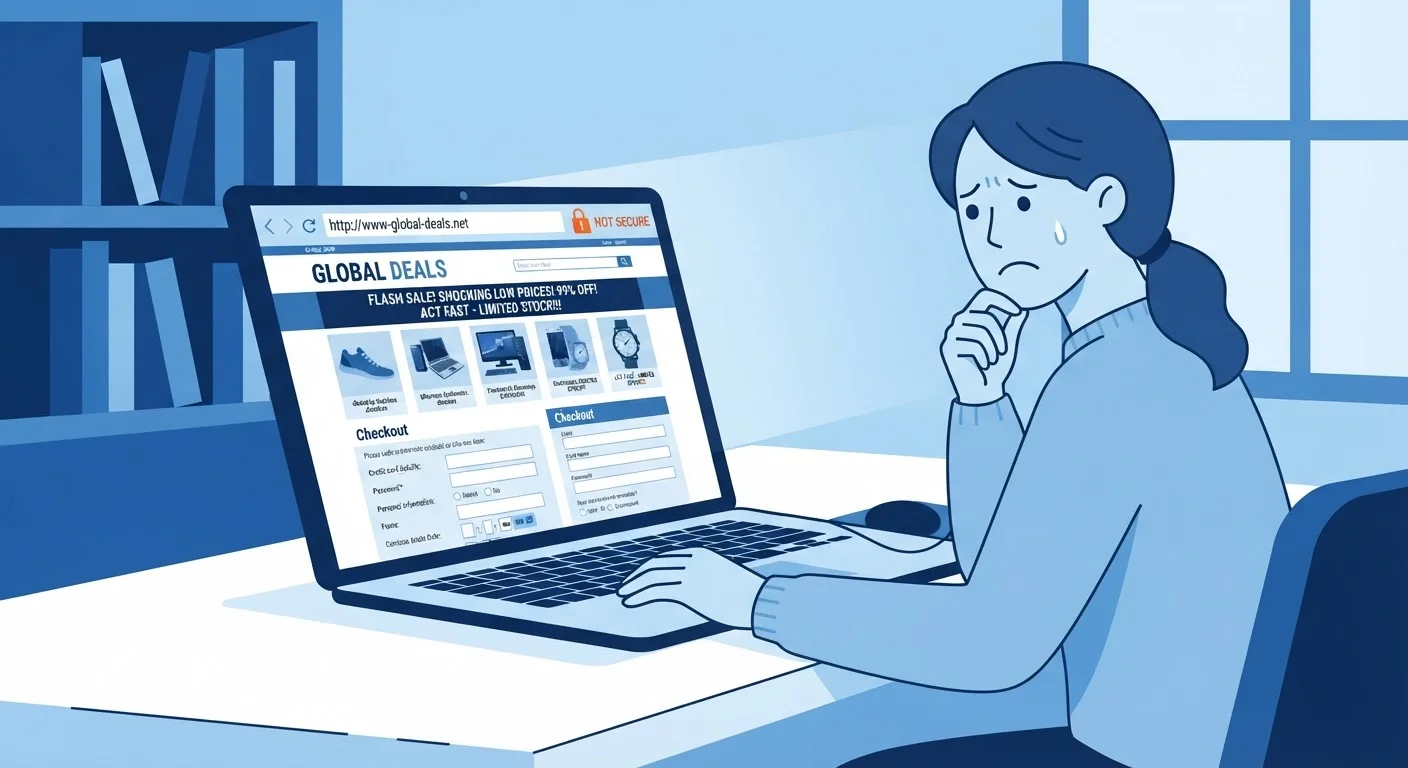
Photo: FaqsDrive.com | Smart Way To Search editorial
—— In This Article
Key Takeaways
- A padlock icon confirms encryption, not that a site is trustworthy or legitimate.
- Scammers actively target all age groups — assuming you're too savvy to be fooled is itself a vulnerability.
- Paying by debit card or wire transfer offers far weaker fraud protection than a credit card.
- Urgency tactics and too-good-to-be-true prices are deliberate psychological tools, not happy accidents.
- Verifying an unfamiliar store takes minutes and can save you significant money and stress.
Why Myths Make Shoppers Vulnerable
Most online shoppers believe they're reasonably fraud-savvy. That confidence, unfortunately, is exactly what scammers count on. Consumer protection researchers consistently find that overconfidence — not naivety — is one of the strongest predictors of falling for a scam. When you operate from a false assumption, you skip the verification steps that would have caught the problem.
The myths below aren't obscure edge cases. They're widespread beliefs held by millions of American shoppers every day. Understanding where each one breaks down is the fastest way to close the gaps in your own defenses. For a broader look at how these psychological tactics play out, see how scammers structure fake deals.
Myth
If a website has a padlock icon in the browser bar, it's safe to buy from.
Fact
The padlock only means your connection to the site is encrypted — it says nothing about whether the site itself is legitimate.
HTTPS encryption (signaled by the padlock) protects data in transit between your browser and the server. It does not verify the site's ownership, business practices, or intentions. Fraudulent websites routinely obtain free SSL certificates — which take minutes to set up — specifically because they know shoppers use the padlock as a trust signal. A scam site can have a padlock and still steal your payment details the moment you submit them.
Myth
I'm too smart and experienced to fall for an online scam.
Fact
Scam tactics are engineered to exploit cognitive shortcuts that affect everyone, regardless of intelligence or experience.
Fraud researchers have found that scam victims span every education level, income bracket, and age group. Modern scams are designed around behavioral psychology — they exploit time pressure, social proof, and emotional triggers that operate below conscious reasoning. Overconfidence and brand familiarity bias are among the habits that inadvertently make shoppers easier targets, not harder ones.
Myth
A price that seems too good to be true is probably just a great sale.
Fact
Suspiciously low prices are one of the most reliable and consistent indicators of a fraudulent listing.
Legitimate deep discounts do exist, but they have recognizable context — clearance inventory, seasonal promotions, verified retailer sales events. When a price is dramatically below market value with no clear reason, it is far more likely to signal a counterfeit product, a bait-and-switch, or a site that will take your money and never ship anything. Understanding what's actually behind jaw-dropping deals can reframe how you evaluate pricing.
Myth
Using my debit card online is just as safe as using a credit card.
Fact
Debit cards offer significantly weaker consumer protections than credit cards when fraud occurs.
Under U.S. federal law, credit card holders are liable for no more than $50 in unauthorized charges — and most issuers waive even that. Debit card liability limits are more complicated and depend heavily on how quickly you report fraud. More importantly, a fraudulent debit charge draws directly from your bank account, meaning the money is gone while a dispute is investigated. A fraudulent credit charge is not yet paid. The method you choose at checkout is a material financial decision.
Myth
If a store has lots of positive reviews, it must be trustworthy.
Fact
Review counts and star ratings can be fabricated, purchased, or cherry-picked in ways that are difficult to detect at a glance.
Fake review ecosystems are well-documented. Sellers can purchase bulk positive reviews, suppress negative ones through platform manipulation, or create review profiles on sites they control entirely. Trustworthy signals require looking beyond star ratings: verified purchase indicators, review date patterns (a sudden spike of 5-star reviews in a short window is suspicious), and third-party review aggregators all provide more useful data than a raw average score.
Turning Awareness Into Safer Habits
Recognizing a myth is step one. Building a habit around the correction is what actually keeps you safe. A few practices make a measurable difference:
- Pause before you pay. Urgency is a tool, not a fact. Countdown timers and "limited stock" warnings are designed to short-circuit your judgment — giving yourself 10 minutes before completing a purchase is often enough to spot a problem.
- Check the store before you trust it. A polished website is not proof of legitimacy. Concrete steps like checking domain age and contact details take only a few minutes and can expose a fraudulent seller before you've entered any payment information.
- Choose your payment method deliberately. Credit cards, debit cards, and wire transfers carry very different fraud protections. Your choice at checkout is your last line of defense.
Wire Transfers and Gift Cards Cannot Be Reversed
If any seller — regardless of how professional the site looks — asks you to pay via wire transfer, money order, or gift card, treat it as a firm scam signal. Unlike credit cards or most digital wallets, these payment methods offer no dispute or chargeback process. Once the funds leave your account, recovery is extremely unlikely even with law enforcement involvement.
For a full reference on the digital tactics used to steal payment information — including phishing emails and fake order confirmations — this plain-language breakdown is worth bookmarking. And if you want to understand the full landscape of online shopping fraud in one place, the field guide for everyday buyers covers recognition, avoidance, and recovery from start to finish.

Smart Shopping Editorial Team
Smart Shopping Editorial Team is the collective byline for our editorial team and contributor network. Articles published under this byline or an editorial pen name are researched, written, and reviewed according to our editorial standards for clarity, consistency, and independence before publication.
View author profile