
Budgies, Cockatiels, and Conures: Matching a Pet Bird to Your Lifestyle
Different bird species have very different noise levels, social needs, and lifespans. See how the most popular beginner birds compare.
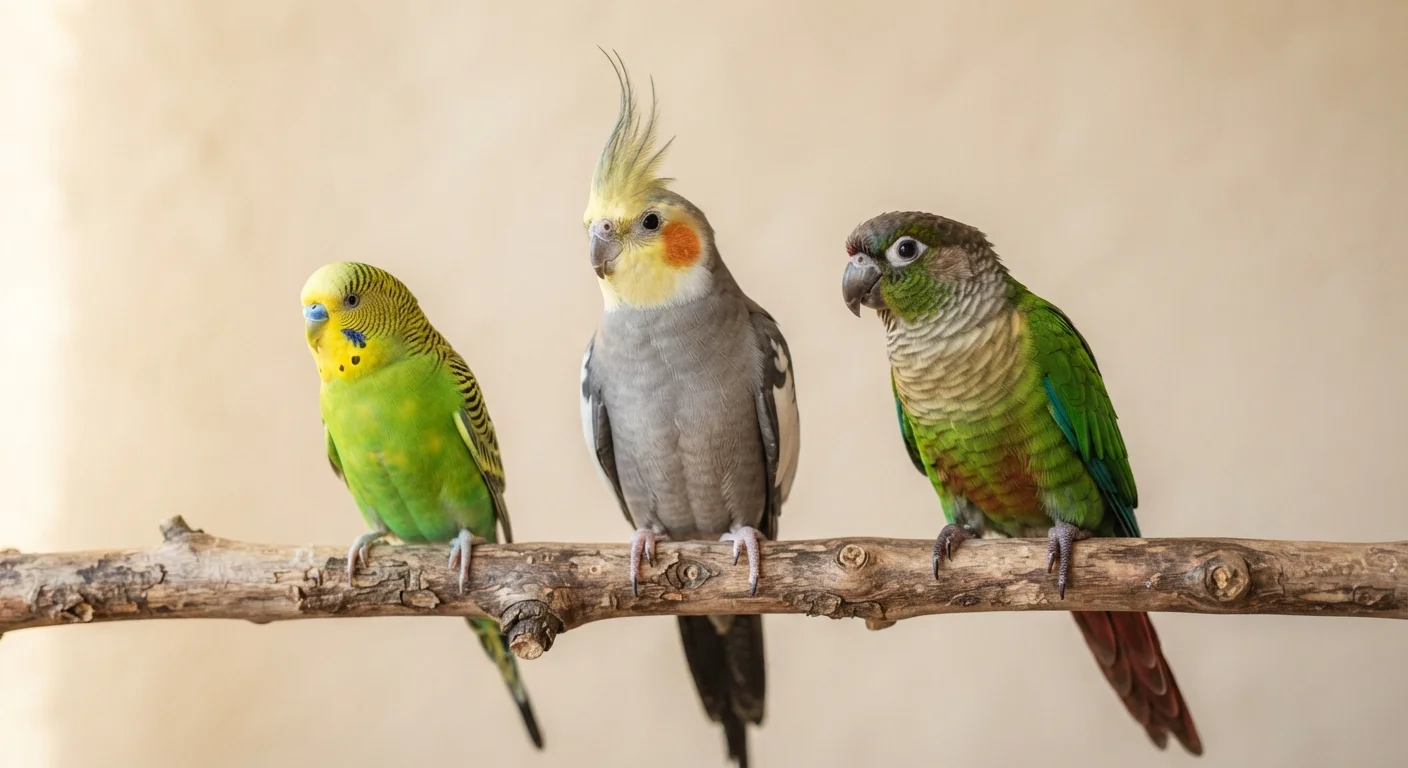
Photo: FaqsDrive.com | Smart Way To Search editorial
—— In This Article
Key Takeaways
- Budgies are the most beginner-friendly option, with lower noise and a lifespan of roughly 5–10 years.
- Cockatiels are adaptable and affectionate, with a lifespan of 15–20+ years that demands long-term planning.
- Conures form the strongest bonds but are the loudest and most time-intensive of the three species.
- All three species need daily social interaction and access to a veterinarian experienced with birds.
- Noise tolerance and available daily hours are the two most important factors in choosing the right bird.
Why Your Lifestyle Should Guide Your Choice
A bird that thrives in one home can struggle in another. Noise tolerance, the hours you're genuinely available, apartment rules, and how long you're willing to commit all shape which species will actually work for you. If you're still deciding whether a bird is right for you at all, our honest look at small pet ownership covers the real trade-offs involved. For those ready to compare species, the sections below break down what makes budgies, cockatiels, and conures distinct from one another.
Side-by-Side Comparison
The table below covers the factors that matter most day-to-day: noise, lifespan, space, interaction time, and how well each species tolerates a first-time owner's learning curve.
| Budgie | Cockatiel | Conure | |
|---|---|---|---|
| Noise level | Moderate chirping | Moderate whistling | Loud; some species very loud |
| Average lifespan | 5–10 years | 15–20+ years | 10–25 years; varies by species |
| Minimum cage size | 18 × 18 in. | 24 × 24 in. | 24 × 24 in. |
| Daily interaction needed | 1–2 hours | 2–3 hours | 3–4 hours |
| Talking ability | Good; large vocabulary possible | Whistles; limited words | Moderate; varies by species |
| Beginner-friendly | Yes, especially in pairs | Yes, highly adaptable | Moderate; needs strong commitment |
Budgies: The Approachable Starter Bird
Budgerigars — commonly called budgies or parakeets — are compact, energetic, and among the most widely kept pet birds in the United States. Their chirping is active and persistent but rarely disruptive through apartment walls, and a proper cage fits comfortably in most homes.
Budgies are highly social animals. A bird kept in isolation for long stretches often develops anxiety-driven behaviors like feather plucking, so owners with demanding schedules should consider keeping a bonded pair. With patient, consistent handling, many budgies learn to step onto a finger and some develop a modest vocabulary. Their shorter lifespan — generally 5 to 10 years — means a smaller long-term commitment than the other birds here, which can be an important consideration for someone new to bird ownership.
Cockatiels: Affectionate and Adaptable
Cockatiels are often described as the ideal intermediate bird. Larger than budgies but still manageable, they communicate mainly through gentle whistles and soft calls — a noise level most households can comfortably absorb. Many cockatiels actively seek head scratches and will whistle tunes they've picked up from their surroundings.
The most important thing to understand before adopting a cockatiel is their longevity. Well-cared-for birds routinely live 15 to 20 years or longer, making this a genuine decades-long commitment. That lifespan makes mental stimulation and regular veterinary visits especially important. Our guide on keeping birds mentally active offers practical enrichment ideas to keep a cockatiel engaged every day.
Conures: High Energy, High Reward
Conures include many species with meaningfully different noise profiles. Green-cheeked conures sit toward the quieter end, while sun conures are famously loud — capable of calls that carry across a building. Before choosing any conure, assess your noise tolerance honestly, and consider whether close neighbors or shared walls make a quieter species more practical.
What conures offer in return is remarkable personality. They're playful, curious, and tend to form intense bonds with the people who spend real time with them. They also need the most out-of-cage interaction of the three species here — ideally three to four hours of supervised time daily. Lifespans vary by species, commonly ranging from around 10 to 25 years. Under-stimulated conures can develop problematic behaviors, so this species suits owners whose schedules allow genuine daily engagement.
Questions to Ask Before You Decide
- How much noise can your household tolerate? Thin walls or close neighbors point toward budgies or cockatiels rather than louder conure species.
- How many hours are you realistically home each day? Conures need the most interaction; budgies adapt more readily to moderate attention.
- Are you prepared for a decades-long commitment? Cockatiels and conures can outlive many other family pets.
- Do you have access to a bird-experienced vet? All three species need a veterinarian who treats exotic animals. Our guide on finding an exotic-animal vet explains what to look for.
Once you've chosen a species, our preparation checklist covers everything your home needs before the bird arrives. Building a bond takes patience — learn the steps that help birds feel safe with people.
Meet Before You Commit
Many bird rescues and shelters let prospective owners spend time with birds before adoption. Interacting with a cockatiel or conure in person gives you a realistic sense of its noise level and energy — information no photo or video can fully convey. Ask shelter staff about each bird's history and known personality traits.

Pets & Animals Editorial Team
Pets & Animals Editorial Team is the collective byline for our editorial team and contributor network. Articles published under this byline or an editorial pen name are researched, written, and reviewed according to our editorial standards for clarity, consistency, and independence before publication.
View author profile