
Small Pet Enrichment: Keeping Hamsters, Rabbits, and Birds Mentally Active
Boredom affects small pets just as much as physical health. Discover practical enrichment ideas that match each animal's natural behaviors.
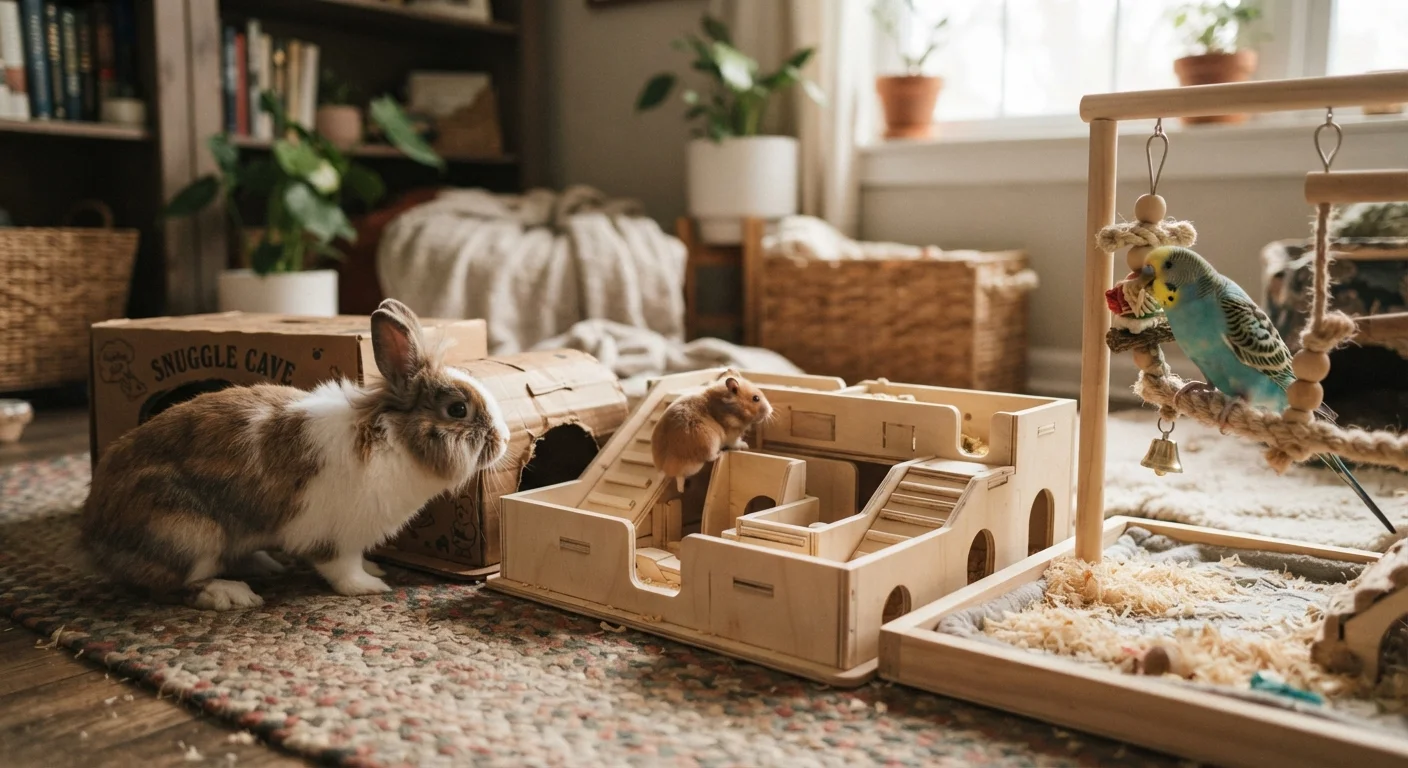
Photo: FaqsDrive.com | Smart Way To Search editorial
—— In This Article
Key Takeaways
- Boredom can cause stress behaviors in small pets, including repetitive movements and over-grooming.
- Each species has distinct natural behaviors that should guide how you approach enrichment.
- Most effective enrichment ideas are low-cost and easy to implement at home.
- Rotation and variety keep enrichment fresh and engaging over time.
- Daily interaction and handling are themselves powerful forms of mental stimulation.
Why Mental Stimulation Matters for Small Pets
Many first-time owners focus on food, water, and a clean enclosure — and that's a solid start. But mental stimulation is equally important for small pets' well-being. Hamsters, rabbits, and birds all evolved in complex environments where they had to forage, explore, and problem-solve daily. Life in a cage or hutch, without outlets for those drives, can lead to visible stress.
The good news is that enrichment doesn't require expensive gear. Most of what these animals need can be created with simple materials or small changes to routine. The strategies below are organized by species because what engages a hamster is quite different from what keeps a rabbit or a bird mentally healthy.
Watch for Signs of Boredom or Stress
Repetitive pacing, bar-chewing, over-grooming, feather-plucking, or unusual aggression can all signal that a small pet isn't getting enough mental stimulation. These behaviors may also indicate a health issue. If enrichment improvements don't reduce the behavior within a week or two, consult a vet experienced with your pet's species to rule out underlying causes.
Five Practical Enrichment Ideas for Your Small Pet
Start Simple, Then Build Variety
You don't need to set up an elaborate environment overnight. Begin with one or two enrichment additions — a foraging scatter, a new chew toy, or a daily training session — and observe how your pet responds. Gradually increasing variety over time is more sustainable and lets you learn what your individual animal genuinely enjoys.
Give hamsters a wheel — and more than just a wheel
Hamsters are crepuscular (most active at dawn and dusk) and can travel several miles nightly in the wild. A solid-surface exercise wheel sized appropriately for your species — Syrian hamsters need a larger diameter than dwarf varieties — is non-negotiable. But a wheel alone doesn't cover all their mental needs.
Add depth to their enclosure with materials they can tunnel and burrow through. Deep, loose bedding allows them to dig and build chambers, mimicking natural underground habitats. Scatter a portion of their food throughout the enclosure so they forage rather than eat from a single dish. Small cardboard tubes, cork logs, and wooden chews round out a genuinely stimulating environment.
For more on enclosure setup, see our guide to hamster cages.
A hamster wheel is essential, but foraging and burrowing opportunities matter just as much.
Let rabbits explore, dig, and chew freely
Rabbits are natural grazers and curious explorers. Confinement without mental outlets can lead to destructive chewing, thumping, and signs of frustration. The goal is to create an environment where those urges are channeled safely.
Offer a digging box filled with compressed hay or shredded paper — many rabbits will spend long stretches pawing through it. Provide untreated wood blocks, willow balls, and cardboard boxes they can chew and rearrange. Hiding fresh leafy greens around their space encourages foraging behavior. Puzzle feeders designed for rabbits work well for pellet portions.
Keep in mind that diet also ties directly into enrichment: allowing rabbits to work through a rack of fresh hay engages their mind and gut simultaneously. Our article on what rabbits eat explains how to structure their feeding routine.
Digging boxes and hidden greens let rabbits act on their natural foraging instincts safely.
Rotate toys to prevent boredom in birds
Pet birds — especially parrots, cockatiels, and budgies — are intelligent animals capable of solving puzzles, learning routines, and forming strong social bonds. When understimulated, they may feather-pluck, become loud, or develop repetitive behaviors.
Toy rotation is one of the most effective strategies. Introduce a new toy or rearrange perches every few days so the cage environment feels novel. Birds respond to foraging challenges: wrap treats in paper, tuck food inside wooden blocks, or use layered puzzle feeders. Shreddable toys made of paper, palm leaves, or soft wood satisfy a bird's natural urge to destroy and manipulate objects.
For species-specific considerations, our article on budgies, cockatiels, and conures can help you match enrichment intensity to your bird's needs.
Rotating toys every few days prevents birds from losing interest and developing stress behaviors.
Use training as a mental workout
Short, positive training sessions are highly effective enrichment for birds and rabbits alike. Birds can learn to step up, target a stick, or identify objects — all of which engage problem-solving circuits and build trust with their owner. Even five minutes of consistent, reward-based interaction each day makes a meaningful difference.
Rabbits, often assumed to be untrainable, can actually learn to come when called, navigate simple obstacle courses, and respond to hand signals. Use small pieces of fresh herb as rewards rather than sugary commercial treats.
Building this kind of trusting relationship with a bird starts with patience. Our guide to teaching a bird to trust you walks through the foundational steps.
Even five minutes of daily reward-based training counts as meaningful mental enrichment.
Schedule safe, supervised out-of-cage time
All three species benefit from time outside their enclosures in a safe, supervised space. For rabbits, a bunny-proofed room or exercise pen allows true free-roaming exploration. For hamsters, a secure playpen with hides and tunnels on the floor gives them new terrain to investigate. For birds, perch time outside the cage — on a play stand or your hand — provides critical social stimulation.
Always remove hazards before letting small pets roam: electrical cords, toxic houseplants, and gaps behind furniture are common risks. Supervision is essential, not optional. If you have questions about your pet's overall health and whether their behavior is normal, a qualified exotic-animal vet is your best resource. Our guide on finding a vet for small and exotic pets explains what to look for.
Out-of-cage time in a safe, supervised space offers exploration benefits no toy can fully replace.
Making Enrichment a Daily Habit
The most effective enrichment isn't a one-time setup — it's part of your daily routine. Spend a few minutes each day observing your pet's behavior so you can tell when something is working and when it isn't. A hamster that ignores a new toy may prefer something different; a rabbit that chews through a cardboard box in minutes is telling you they need more of it.
Small pets often go underestimated, but their cognitive and emotional needs are genuine. Meeting those needs consistently is one of the most rewarding parts of ownership — and a direct investment in a longer, healthier life for your animal. For comparison, enrichment strategies for cats follow similar logic; our article on keeping indoor cats mentally stimulated covers how those principles translate to a different species.

Pets & Animals Editorial Team
Pets & Animals Editorial Team is the collective byline for our editorial team and contributor network. Articles published under this byline or an editorial pen name are researched, written, and reviewed according to our editorial standards for clarity, consistency, and independence before publication.
View author profile