
Teaching a Pet Bird to Trust You
Building a bond with a new bird takes patience and the right approach. Learn the steps that help birds feel safe and comfortable with people.
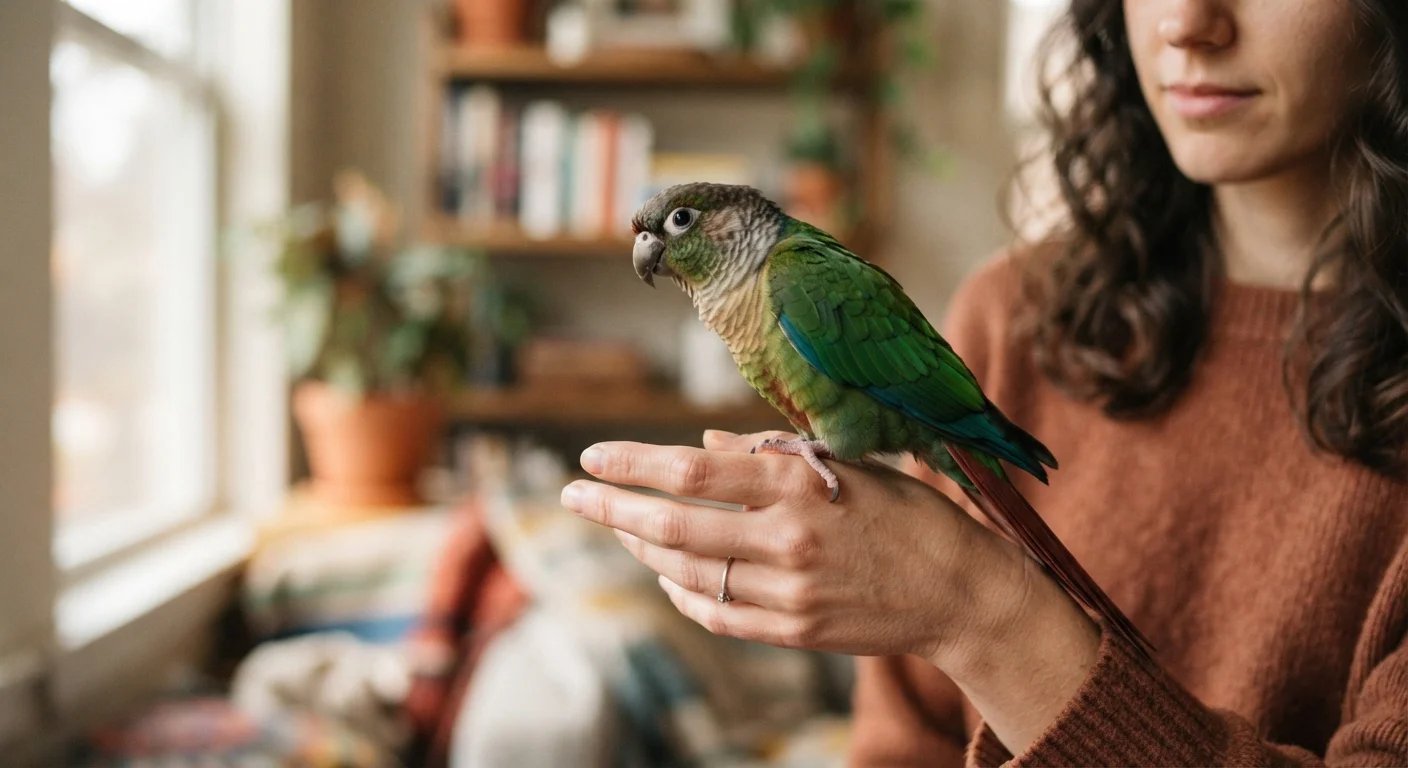
Photo: FaqsDrive.com | Smart Way To Search editorial
—— In This Article
Key Takeaways
- Birds are prey animals by instinct, so earning their trust requires slow, non-threatening interactions.
- Consistency in your routine and behavior is one of the most powerful tools for building a bird's confidence.
- Hand-taming starts with simply being present before progressing to physical contact.
- Never force interaction — letting the bird choose contact speeds up trust significantly.
- Most birds show clear body language signals that tell you when they're comfortable or stressed.
Why Birds Require a Different Approach Than Other Pets
Birds are fundamentally different from dogs or cats when it comes to socialization. As prey animals, their default instinct is wariness — fast movement, loud sounds, and direct eye contact all register as potential threats. Unlike a puppy that may eagerly approach a stranger, a new bird's first response to an unfamiliar person is often to freeze, flee to the far side of the cage, or vocalize in alarm.
This is completely normal, not a sign of a problem bird or a bad match. Understanding this wiring is the foundation of successful trust-building. The goal isn't to override the bird's instincts — it's to gradually demonstrate that you are safe, predictable, and worth approaching voluntarily.
Species also vary considerably. Cockatiels and budgies tend to warm up relatively quickly with consistent gentle handling. Larger parrots such as African greys or Amazons often take longer and have more complex social needs. Knowing your specific bird's typical temperament helps you set realistic expectations from the start. If you're also navigating the process with another new pet, our article on bringing a dog home for the first time shows how the settling-in period differs across species.
Use a Soft, Consistent Voice
Birds respond strongly to vocal tone. Speaking in a gentle, low, consistent voice every time you approach helps your bird associate you with calm rather than alarm. Over time, simply hearing your voice can become a comfort cue before you even enter the room.
Before beginning any taming work, make sure your bird has a clean bill of health. Not every veterinary practice sees birds, so finding the right provider early matters — our guide to finding a vet for a small or exotic pet walks you through the process.
Reading Your Bird's Body Language
Progress in trust-building depends on your ability to recognize what your bird is communicating. Comfortable birds preen, eat, chirp softly, and may lean toward you with relaxed feathers. These are green-light signals to continue slowly.
Stress signals include: feathers held tightly against the body, rapid eye movement, wide pupils, crouching low, repeated head-bobbing as an escape attempt, and open-mouthed breathing. A bird displaying any of these needs more space, not more contact.
Watch for Stress Signals
A bird that is hissing, lunging, fluffing tightly, or holding very still with wide eyes is telling you it feels threatened. End the session calmly and try again later. Pushing past these signals damages trust rather than building it.
Some birds also show "bluffing" behavior — especially adolescent parrots — where they lunge and bite despite previously being calm. This is a developmental phase, not a regression in trust. Responding calmly and consistently, rather than retreating entirely from training, helps birds move through this stage more smoothly.
Never Force Physical Contact
Grabbing or restraining a bird to speed up taming almost always backfires. Forced handling triggers a fear response that can set trust-building back by weeks. Always move at the bird's pace, and stop any session the moment the bird shows stress signals like flattened feathers, rapid breathing, or biting.
Tracking your sessions in a simple journal — noting what triggered calm versus stress responses — helps you identify patterns and adjust your approach over time.

Pets & Animals Editorial Team
Pets & Animals Editorial Team is the collective byline for our editorial team and contributor network. Articles published under this byline or an editorial pen name are researched, written, and reviewed according to our editorial standards for clarity, consistency, and independence before publication.
View author profile