
50/30/20 vs. Zero-Based Budgeting
Both methods are widely recommended, but they suit very different people. See how they stack up before you commit to one.
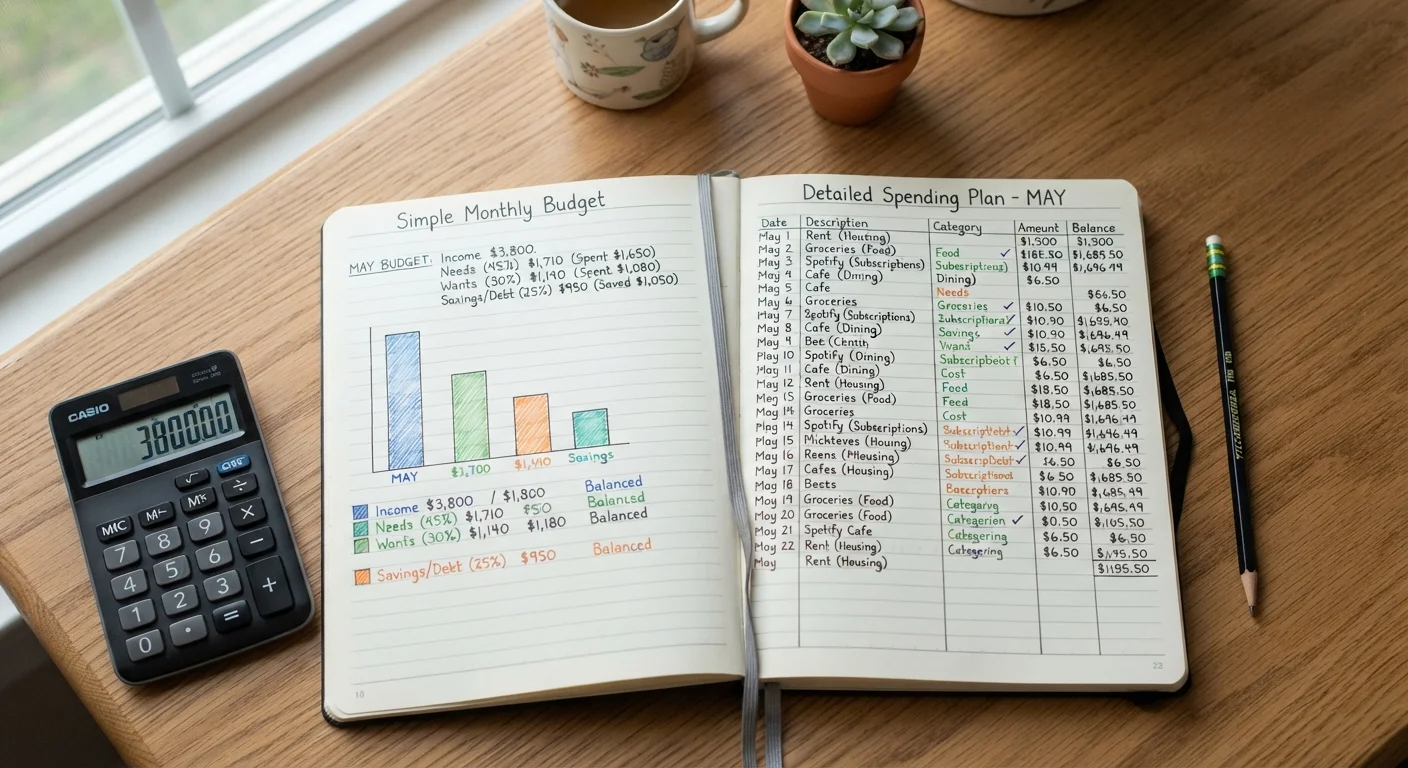
Photo: FaqsDrive.com | Smart Way To Search editorial
—— In This Article
Key Takeaways
- The 50/30/20 rule divides income into needs (50%), wants (30%), and savings or debt payoff (20%).
- Zero-based budgeting assigns every dollar of income to a specific category until nothing is left unallocated.
- The 50/30/20 rule is easier to maintain but offers less granular control over spending.
- Zero-based budgeting requires more time each month but can reveal hidden spending patterns.
- Your income stability and how closely you want to track spending should guide your choice.
- Both methods are educational frameworks — consult a financial professional for personalized advice.
How Each Method Works
The 50/30/20 rule is a percentage-based approach. You take your after-tax income and divide it into three buckets: 50% toward needs (rent, groceries, utilities, insurance), 30% toward wants (dining out, subscriptions, hobbies), and 20% toward savings and debt repayment. That's the entire system. You don't need to track individual purchases as long as your spending stays roughly within each category. For a deeper look at how the percentages work in practice, see The 50/30/20 Rule: A Simple Framework for Everyday Budgeting.
Zero-based budgeting works differently. At the start of each month, you list your expected income, then assign every single dollar to a category — groceries, gas, rent, savings, entertainment, and so on — until the total reaches zero. Zero doesn't mean broke; it means every dollar has been deliberately allocated. Nothing is left floating. Zero-Based Budgeting: Giving Every Dollar a Job explains this process in full detail.
| Criterion | 50/30/20 Budgeting | Zero-Based Budgeting |
|---|---|---|
| Setup time | Minutes per month | 30–60 minutes per month |
| Level of detail | Three broad categories | Individual line items |
| Spending visibility | Category-level overview | Dollar-by-dollar clarity |
| Flexibility | High — loose guardrails | Lower — every dollar pre-assigned |
| Works with variable income | Less suited | Well suited |
| Ideal experience level | Beginner to intermediate | Any level, detail-oriented |
| Risk of abandonment | Lower | Higher without consistent habit |
The Real Trade-Offs
The 50/30/20 rule's biggest advantage is its simplicity. Once you know your after-tax income, the math takes about a minute. Its weakness is that the broad categories can hide problem spending. You might stay under your 30% wants limit overall but still overspend on restaurants while underspending on things that matter more to you — the method won't catch that.
Zero-based budgeting surfaces exactly those kinds of patterns. Because you assign money to specific line items, you can't avoid seeing where it actually goes. The trade-off is time: rebuilding a detailed budget every month takes real effort, and if you skip a month, the whole system breaks down. The Honest Pros and Cons of Strict Budget Categories covers this tension well.
~74%
Americans living paycheck to paycheck
Various surveys conducted by financial research organizations consistently find that a large majority of U.S. adults have little financial cushion between paychecks, underscoring the importance of deliberate budgeting.
1 in 3
U.S. adults with no written budget
According to Gallup polling data, roughly one-third of American adults do not follow any kind of monthly household budget, despite widespread awareness that budgeting supports financial stability.
Another consideration is income variability. The 50/30/20 rule assumes a fairly predictable paycheck — the percentages are less meaningful when your income swings significantly from month to month. Zero-based budgeting adjusts naturally because you start from actual income each cycle rather than a fixed ratio.
If you're weighing these two against other approaches entirely, the 50/30/20 Rule, Zero-Based Budgeting, and the Envelope Method puts all three side by side. And whichever method you choose, how you track your spending matters too — see Tracking Your Spending by Hand vs. Using an App for guidance on that.
This article is for general informational and educational purposes only. It does not constitute personalized financial advice. Please consult a qualified financial professional before making decisions about your specific financial situation.

Personal Finance Editorial Team
Personal Finance Editorial Team is the collective byline for our editorial team and contributor network. Articles published under this byline or an editorial pen name are researched, written, and reviewed according to our editorial standards for clarity, consistency, and independence before publication.
View author profile