
The 50/30/20 Rule: A Simple Framework for Everyday Budgeting
Discover how the 50/30/20 budgeting rule divides income into needs, wants, and savings — and whether it works for your financial situation.
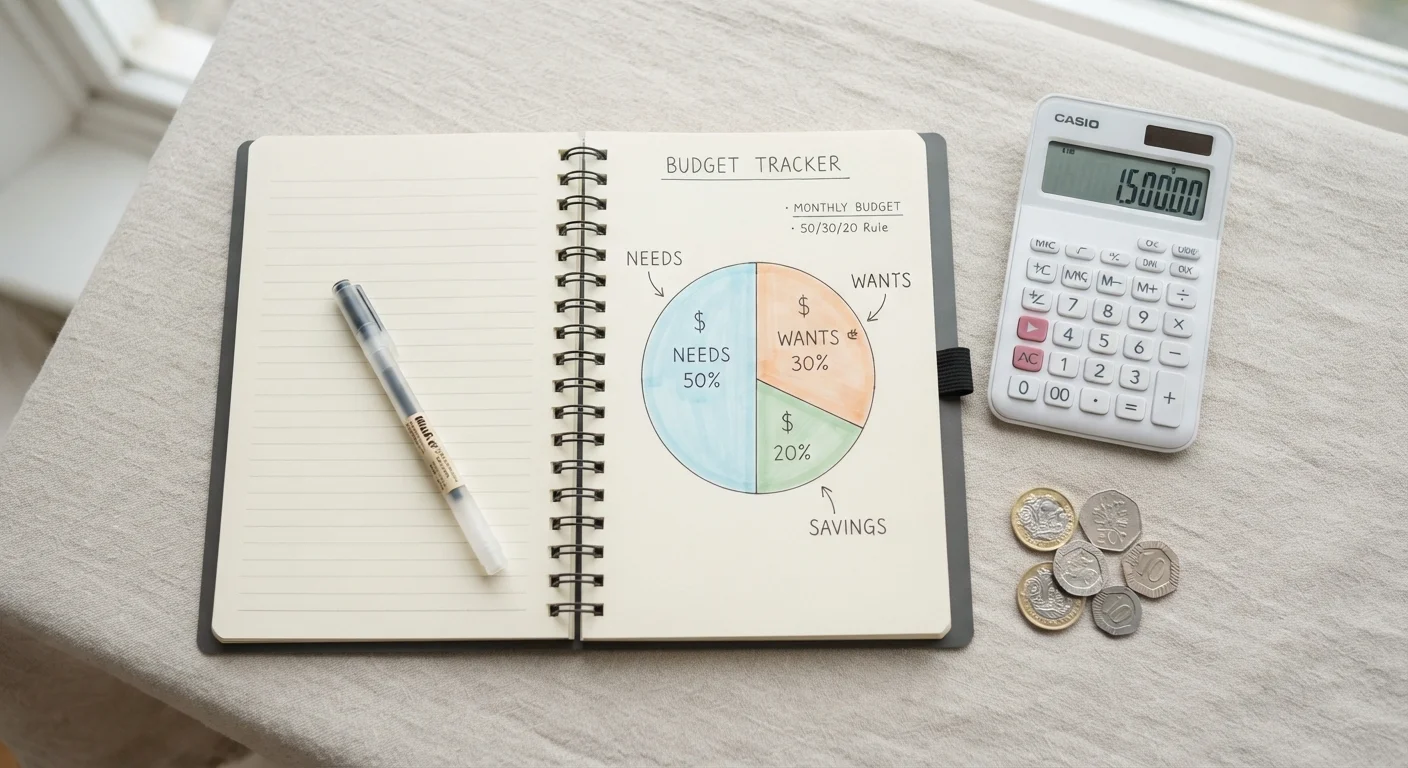
Photo: FaqsDrive.com | Smart Way To Search editorial
—— In This Article
Key Takeaways
- The 50/30/20 rule divides after-tax income into needs (50%), wants (30%), and savings or debt (20%).
- It works best as a starting framework, not a rigid prescription — real incomes and costs vary widely.
- High-cost-of-living areas or low incomes may make the 50% needs cap genuinely difficult to meet.
- The 20% savings slice can cover emergency funds, retirement contributions, and debt payoff simultaneously.
- Adjusting the percentages to match your actual situation is acceptable and often necessary.
- Tracking your current spending first helps you see how far your baseline is from the target splits.
How the Three Buckets Work
The 50/30/20 rule gives every dollar of your take-home pay a home inside one of three buckets. Here's what each covers:
- 50% — Needs: Essential expenses that are non-negotiable. Rent or mortgage, groceries, utilities, health insurance premiums, minimum loan or credit card payments, and work-related transportation all belong here. The test is simple: if skipping it would cause serious harm or breach a legal obligation, it's a need.
- 30% — Wants: Spending that improves your quality of life but isn't strictly required. Dining out, streaming subscriptions, gym memberships, vacations, and clothing beyond basics all fall into this category. This bucket isn't a guilt zone — it's a deliberate allowance for enjoying your income.
- 20% — Savings and Debt Repayment: Money directed toward your financial future. This includes emergency fund contributions, retirement account deposits, and extra payments on debt above the minimums. Building this bucket consistently is what separates short-term survival from long-term financial stability.
If you're new to organizing your finances, the complete introduction to budgeting covers the foundational concepts that make rules like this one easier to apply.
50%
Income target for essential needs
The 50/30/20 framework allocates half of after-tax income to non-negotiable expenses like housing, food, and insurance.
20%
Recommended savings and debt repayment rate
Financial planning guidance consistently cites saving at least 20% of net income as a meaningful target for long-term financial health.
~30%
Share of income spent on housing alone (U.S. median)
The U.S. Census Bureau and housing researchers have noted that many American renters spend close to or above 30% of income on housing, which can strain the overall needs bucket.
Where the Rule Works Well — and Where It Doesn't
The appeal of the 50/30/20 rule is its simplicity. There's no spreadsheet with 40 categories to maintain. For households with moderate incomes in average-cost areas, the percentages often align reasonably well with real expenses, making this framework an effective autopilot.
That said, the rule has real limitations worth understanding before you commit to it:
- High-cost cities: In metros where rent alone can consume 40–50% of take-home pay for a single earner, hitting the 50% needs target isn't realistic without major tradeoffs. The framework still has value, but the percentages will need adjusting.
- Lower incomes: When income is tight, needs often crowd out the wants and savings buckets entirely. This isn't a personal failure — it's a structural reality. Prioritizing needs and directing even a small amount toward savings is more useful than trying to force-fit arbitrary percentages.
- High earners: At the upper end of the income scale, 30% directed at wants can produce more discretionary spending than anyone needs. Many high earners intentionally skew toward a higher savings rate.
The Rule Is a Starting Point, Not a Standard
The 50/30/20 framework was popularized as a consumer-friendly simplification of broader budgeting principles, not as a universally prescribed financial standard. No regulatory body or financial authority mandates these specific percentages. Think of them as useful guardrails rather than fixed requirements — adjusting the splits to reflect your actual income, costs, and goals is not only acceptable but often necessary.
For a deeper look at how this approach stacks up against other methods, our comparison of popular budgeting frameworks walks through the trade-offs side by side.
Putting the Rule Into Practice
Starting is straightforward. Calculate your monthly after-tax income — including wages, freelance pay, or any other regular income source — then multiply by 0.50, 0.30, and 0.20 to find your target for each bucket.
The most revealing step is comparing those targets against your actual spending. Pull three months of bank and credit card statements and sort every transaction into needs, wants, or savings. Most people discover at least one category is significantly off-target — that's the information the rule is designed to surface.
Track Before You Target
Before applying any percentage targets, spend two to four weeks simply recording every expense without trying to change your behavior. Knowing your real baseline — not an estimated one — makes the 50/30/20 targets far easier to apply accurately and gives you a truthful starting point for adjustments.
Once you know your baseline, adjust gradually rather than all at once. If your wants spending sits at 42%, setting a goal to reach 30% over six months is far more sustainable than trying to cut 12 percentage points in a single month.
The 20% savings bucket deserves attention up front. Consider directing a portion toward an emergency fund before aggressively paying down lower-interest debt — our guide to emergency fund sizing explains how to determine the right target for your situation specifically.
After your first month on the plan, a structured review helps you spot drift early. The monthly budget health check provides a straightforward end-of-month checklist for doing exactly that. And if you'd prefer to build your full spending plan from scratch, the seven-step first budget guide walks you through setup in plain language.
This article is for general informational and educational purposes only and does not constitute personalized financial advice. Consult a qualified financial professional for guidance specific to your situation.
Frequently Asked Questions

Smart Shopping Editorial Team
Smart Shopping Editorial Team is the collective byline for our editorial team and contributor network. Articles published under this byline or an editorial pen name are researched, written, and reviewed according to our editorial standards for clarity, consistency, and independence before publication.
View author profile