
Tracking Your Spending by Hand vs. Using an App
Paper, spreadsheets, or digital apps — each approach has real trade-offs. Find out which tracking method works best for your lifestyle.
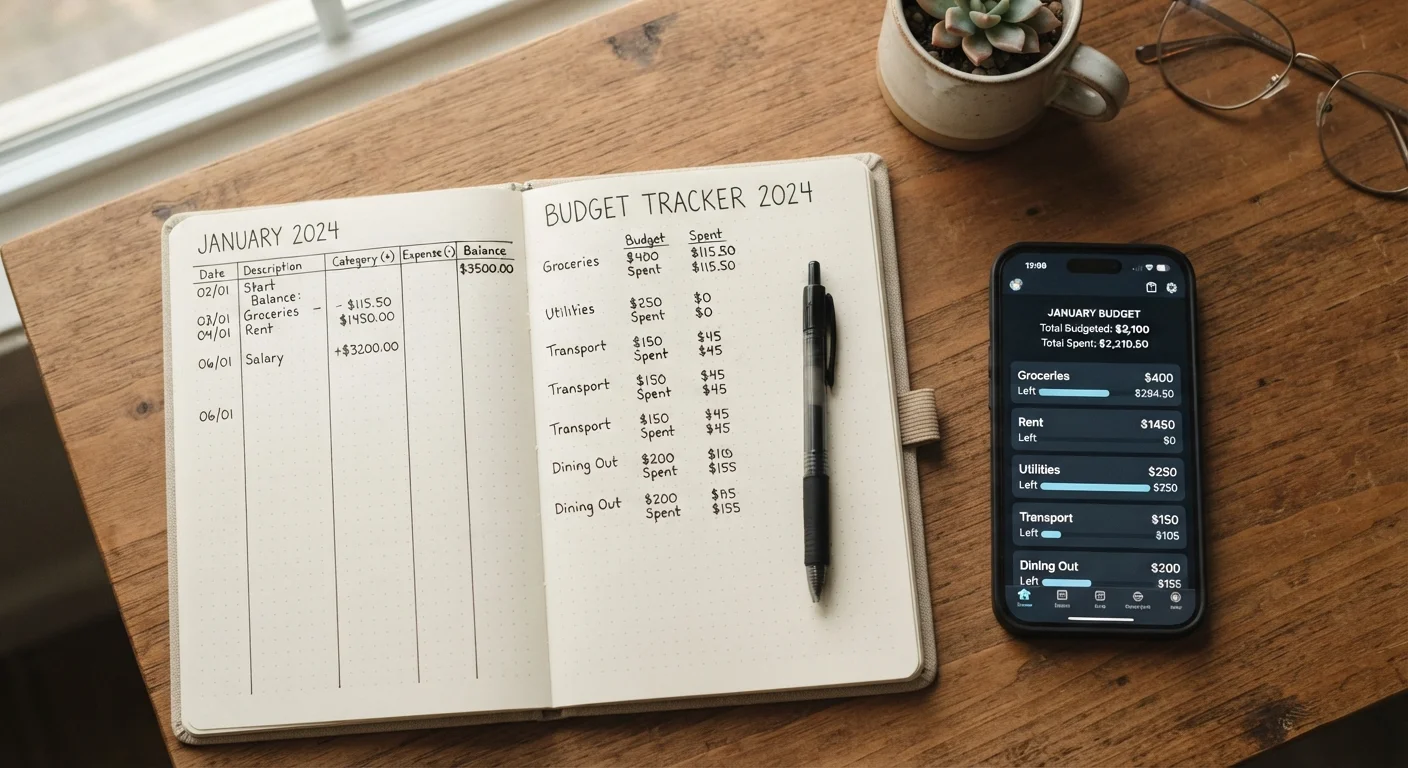
Photo: FaqsDrive.com | Smart Way To Search editorial
—— In This Article
Key Takeaways
- Tracking by hand builds stronger spending awareness because writing each transaction takes deliberate effort.
- Budgeting apps save time by syncing with bank accounts and categorizing purchases automatically.
- Neither method works if you don't stick with it — consistency matters more than the tool.
- A hybrid approach, such as using a simple spreadsheet, can combine the benefits of both methods.
- Your ideal method depends on your habits, comfort with technology, and how often you check in on your finances.
What Each Method Actually Looks Like
Tracking by hand means recording every transaction yourself — in a notebook, a printed template, or a spreadsheet you build. You write down what you spent, where, and how much, usually daily or a few times a week. It takes effort, but that effort is part of the point.
Using a budgeting app means connecting the app to your bank accounts or credit cards, then letting it pull in your transactions automatically. You spend a few minutes reviewing, adjusting categories, and checking your totals. Some apps also let you enter transactions manually if you prefer more control.
If you're still figuring out what budgeting even involves, the complete introduction to budgeting is a solid starting point before choosing a tracking method.
| Criterion | Tracking by Hand | Using a Budgeting App |
|---|---|---|
| Setup effort | Low — just a notebook or spreadsheet | Moderate — account linking required |
| Daily time commitment | 5–15 minutes to log entries | A few minutes to review |
| Cost | Free or near-free | Free tiers available; some charge fees |
| Accuracy | As accurate as your logging | High, but categories need review |
| Privacy | Fully offline, no data sharing | Data shared with third-party platform |
| Spending awareness built | Very high — writing reinforces habits | Moderate — less active engagement |
| Ease of staying consistent | Harder — requires daily discipline | Easier — automation reduces effort |
The Case for Tracking by Hand
There's real evidence that the act of writing reinforces memory and decision-making. When you record a $6 coffee purchase in your notebook, you're more likely to notice if that becomes a $90-a-month habit. The friction is the feature.
Hand tracking also costs nothing extra. A basic notebook or a free spreadsheet tool covers everything you need. You control exactly which categories you track, and there's no app asking for bank login credentials or subscription fees.
The downside is time. Manually entering every transaction is tedious, and it's easy to fall behind. A week of unlogged receipts can derail the whole system. This method works best for people who are genuinely motivated to engage with their numbers regularly.
~1 in 3
Americans who follow a formal budget
Surveys consistently find that a minority of U.S. adults track their spending in a structured, ongoing way, highlighting how much room there is to improve.
~70%
Budget dropouts cite lack of consistency
Financial behavior research broadly shows that most people who abandon a budget do so within the first few months, often due to the effort required to maintain it.
The Case for Using an App
The biggest advantage of a budgeting app is automation. Once you connect your accounts, transactions flow in on their own. Most apps also categorize purchases — groceries, gas, dining out — so you can see a breakdown of your habits without much manual work.
For people who struggle to keep up with daily logging, that convenience can be the difference between actually tracking spending and giving up after two weeks. Notifications and alerts can also flag when you're close to a spending limit in a category.
That said, apps aren't perfect. Automatic categorization makes mistakes — a hardware store purchase might land in the wrong category. You still need to review regularly. Some apps also charge monthly fees, and connecting financial accounts to a third-party service is a privacy and security consideration worth thinking through carefully.
For a deeper look at how cash-based and digital methods compare more broadly, see envelope budgeting vs. digital spending trackers.
A Note on App Security
Budgeting apps that connect to your bank use a process called read-only access, meaning they can view your transactions but generally cannot move money. Even so, it's worth reviewing any app's privacy policy and security practices before linking sensitive accounts. Using strong, unique passwords and enabling two-factor authentication on your bank accounts adds an important layer of protection.
Choosing What Fits Your Life
The best tracking method is the one you'll actually use. A flawless system sitting unused in a drawer — or an app you opened once — doesn't help your budget at all.
Ask yourself a few honest questions: Do you tend to follow through on manual tasks, or do you need automation to stay consistent? Are you comfortable linking your bank account to a third-party app? Do you prefer seeing numbers in your own handwriting, or does a visual dashboard motivate you more?
Some people land on a middle ground — a simple spreadsheet that requires manual entry but gives you structure and flexibility without the privacy trade-offs of an app. That kind of hybrid can work well once you've chosen a budgeting framework. If you haven't settled on one yet, comparing approaches like 50/30/20 vs. zero-based budgeting can help you find your fit.
Whichever method you pick, pairing it with consistent check-in habits is what makes it stick long-term. The habits that keep a budget running month after month can help you build that routine.
This article is for general informational and educational purposes only. It is not personalized financial advice. For guidance tailored to your situation, consider speaking with a qualified financial professional.

Personal Finance Editorial Team
Personal Finance Editorial Team is the collective byline for our editorial team and contributor network. Articles published under this byline or an editorial pen name are researched, written, and reviewed according to our editorial standards for clarity, consistency, and independence before publication.
View author profile