
The 50/30/20 Rule, Zero-Based Budgeting, and the Envelope Method: Which Structure Fits You?
Three popular budgeting frameworks, side by side. Understand how each works so you can choose the one that matches your habits.
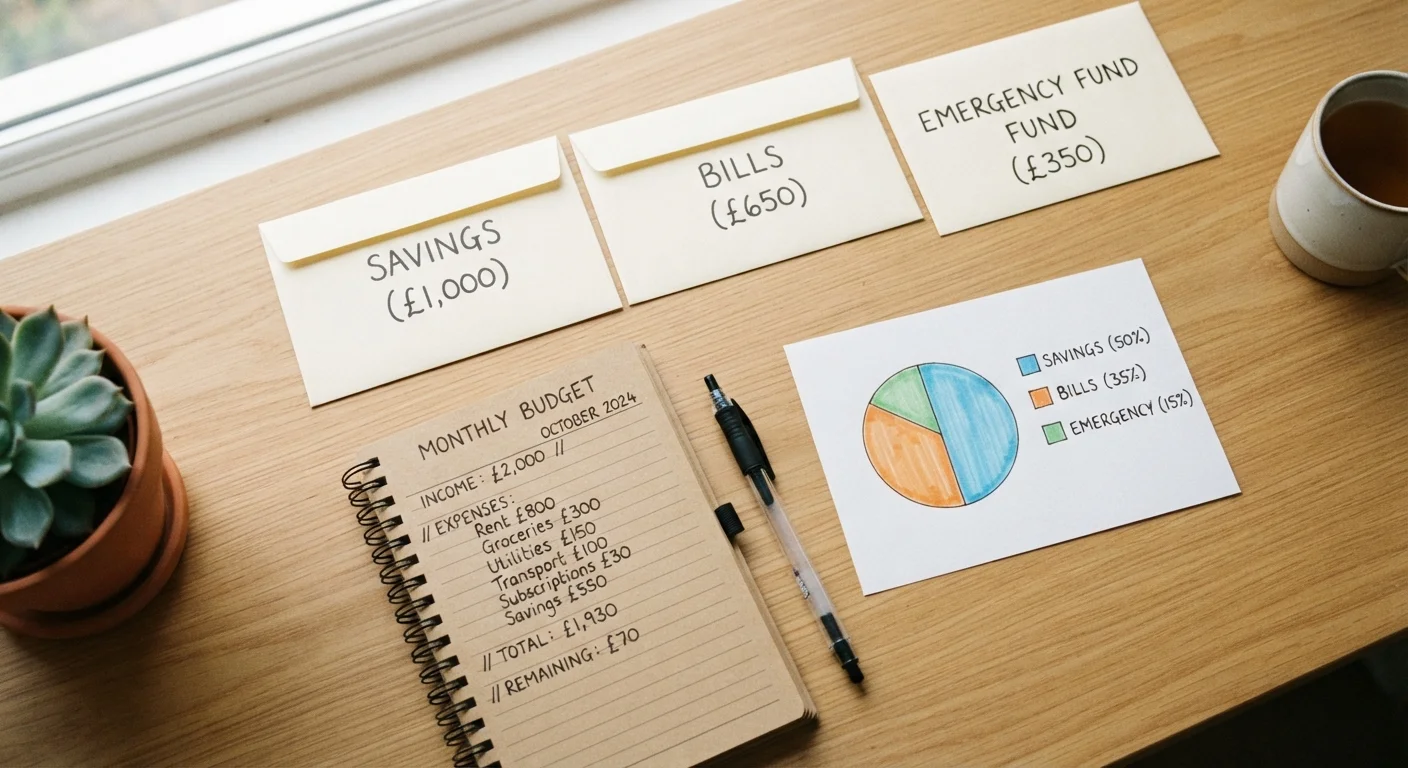
Photo: FaqsDrive.com | Smart Way To Search editorial
—— In This Article
Key Takeaways
- The 50/30/20 rule splits after-tax income into needs, wants, and savings using fixed percentages.
- Zero-based budgeting assigns every dollar a specific purpose before the month begins.
- The envelope method uses physical or virtual cash envelopes to cap spending in each category.
- No single method is universally superior — the best fit depends on your habits and lifestyle.
- Any of these frameworks can be adjusted over time as your financial situation changes.
Why Budgeting Structure Matters
Budgeting is not one-size-fits-all. The mechanics of how you track and allocate money can make the difference between a plan you stick with and one you abandon by the second week of the month. Understanding what each method actually requires — in time, discipline, and tools — helps you pick something sustainable.
This article compares three of the most widely used budgeting frameworks side by side. Each has a clear logic, a natural audience, and real trade-offs. If you want a deeper look at the merits and challenges of strict budget categories in general, see our honest look at strict budget categories.
| 50/30/20 Rule | Zero-Based Budgeting | Envelope Method | |
|---|---|---|---|
| Setup effort | Low — calculate three percentages | High — itemize every dollar monthly | Medium — create category envelopes |
| Ongoing time commitment | Minimal — periodic check-ins | High — monthly rebuild and tracking | Medium — monitor envelopes regularly |
| Best income type | Steady, predictable income | Variable or irregular income | Any income type |
| Level of spending detail | Broad categories only | Every dollar categorized | Specific per-category limits |
| Flexibility | High within each bucket | Low — adjustments require replanning | Low — empty envelope means stop spending |
| Psychological reinforcement | Mild — abstract percentages | Strong — intentional monthly planning | Strong — physical cash awareness |
| Tools needed | Spreadsheet or mental math | Spreadsheet or budgeting app | Cash envelopes or digital app |
The 50/30/20 Rule: Simple Percentages, Low Maintenance
The 50/30/20 rule divides your after-tax income into three buckets: 50% toward needs (rent, utilities, groceries, minimum debt payments), 30% toward wants (dining out, subscriptions, hobbies), and 20% toward savings and extra debt repayment.
Its biggest strength is simplicity. You don't have to track every purchase — just monitor whether you're staying roughly within each broad category. That low friction makes it appealing for people new to budgeting or those with consistent monthly incomes.
The drawback is that the percentages may not fit everyone's reality. Someone in a high cost-of-living city might find that housing alone chews up more than 50% of income. In those cases, the percentages become a goal to work toward, not an immediate rule. For a full walkthrough of how this framework operates, see The 50/30/20 Rule: A Simple Framework for Everyday Budgeting.
Adjusting the Percentages Is Fine
The 50/30/20 split is a starting point, not a law. If your housing costs are unusually high, you might run a 60/20/20 split and gradually work to realign. What matters most is that you're consciously allocating money to savings and not letting wants crowd out everything else. Small, consistent adjustments over time tend to produce better results than rigid adherence to numbers that don't match your life.
Zero-Based Budgeting: Every Dollar Gets a Job
Zero-based budgeting (ZBB) starts from zero at the beginning of each month. You list your expected income, then assign every single dollar to a category — fixed expenses, variable costs, savings, giving, or debt payoff — until your income minus your allocations equals zero. Nothing is unaccounted for.
This method gives you granular visibility into your spending. If you notice you've budgeted $200 for groceries but typically spend $300, ZBB forces that conversation upfront rather than at month's end. It's particularly useful for people with irregular incomes, since you rebuild the budget fresh each month based on what you actually expect to earn.
The trade-off is time. ZBB requires a meaningful planning session each month and ongoing tracking to ensure you don't drift over category limits. Our companion piece on zero-based budgeting covers the mechanics in detail.
The Envelope Method: Tactile Spending Control
The envelope method works by dividing cash into labeled envelopes — one for groceries, one for gas, one for entertainment, and so on. When an envelope is empty, spending in that category stops for the month. No exceptions.
The physical act of handing over cash — and watching an envelope thin out — creates a psychological awareness that swiping a card rarely does. Research in behavioral economics consistently finds that people tend to spend more carefully with cash than with digital payment methods, though individual results vary.
Many people now adapt this approach digitally using budgeting apps that replicate the envelope logic without requiring actual cash. If you're weighing a physical versus digital approach, Envelope Budgeting vs. Digital Spending Trackers breaks down both options.
Watch Out for Envelope Shortfalls
If you routinely run out of money in an envelope well before month's end, that's useful data — it means your initial allocation was too low for that category. Resist the urge to borrow from other envelopes as a habit, since that defeats the method's purpose. Instead, revisit your allocations and adjust them based on realistic spending patterns. Underfunding categories consistently can create frustration and lead to abandoning the system altogether.
Choosing the Right Framework for You
The right budgeting method is the one you'll actually use. A few practical questions can help narrow it down:
- How much time do you want to spend on budgeting? If it's minimal, the 50/30/20 rule is the lightest lift. If you're comfortable with a monthly planning session, zero-based budgeting offers more control.
- Do you struggle with overspending in specific areas? The envelope method's hard category limits can be especially effective.
- Is your income consistent? The 50/30/20 rule works smoothly with a steady paycheck. Zero-based budgeting adapts better to variable income.
You can also blend approaches — use the 50/30/20 rule as a big-picture guide while applying envelope logic to the two or three categories where you tend to overspend. Whatever you choose, revisiting and adjusting over time is normal and encouraged. For a balanced look at the commitment involved, see The Case For and Against Following a Strict Monthly Budget.
For more practical money strategies, explore our Smart Budgeting hub and Saving & Debt guidance.
This article is for general informational and educational purposes only and does not constitute personalized financial advice. For guidance specific to your financial situation, consider consulting a qualified financial professional.

Personal Finance Editorial Team
Personal Finance Editorial Team is the collective byline for our editorial team and contributor network. Articles published under this byline or an editorial pen name are researched, written, and reviewed according to our editorial standards for clarity, consistency, and independence before publication.
View author profile