
Understanding Sunlight: How to Read Your Yard Before You Plant Anything
Full sun, partial shade, and dappled light aren't interchangeable. Learn how to map your yard's light patterns before choosing what to grow.
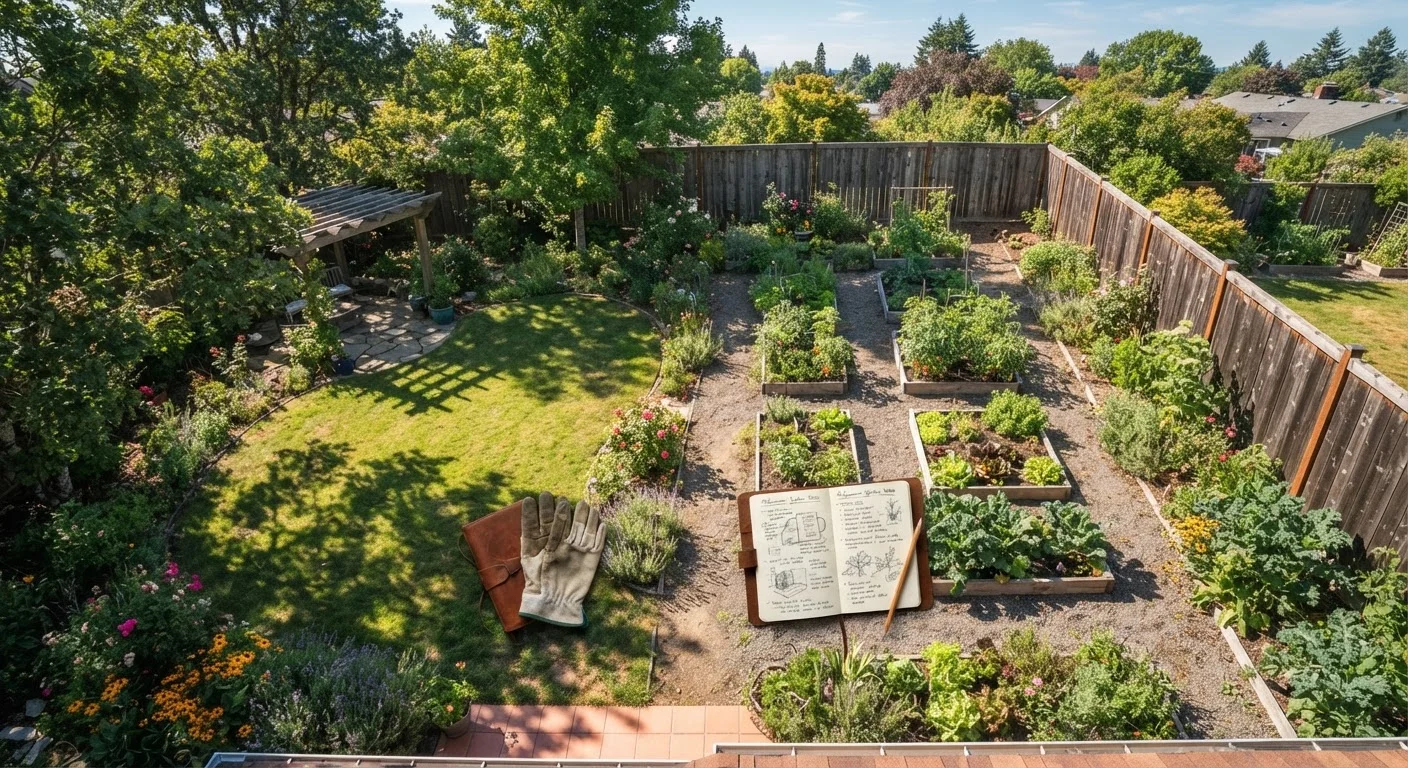
Photo: FaqsDrive.com | Smart Way To Search editorial
—— In This Article
Key Takeaways
- Sunlight labels on plant tags — full sun, partial shade, full shade — refer to hours of direct sun per day.
- Light conditions in your yard shift with the season, time of day, and nearby structures or trees.
- Tracking your yard's light over a single full day gives you a reliable baseline before you plant anything.
- Placing a sun-loving plant in a shady spot — or vice versa — is one of the most common beginner mistakes.
- A simple hand-drawn map of your yard's light zones is all you need to start making smart planting decisions.
Why Light Is the First Thing to Understand
Before you decide what to grow — or even where to put a garden bed — you need to understand how sunlight actually moves across your property. This single factor determines whether a tomato plant thrives or limps along, whether your shade garden looks lush or scorched, and whether you get the harvest you were hoping for.
Plant tags and seed packets list light requirements for a reason. Terms like full sun, partial shade, and full shade are not rough suggestions — they reflect real biological needs. Matching a plant to the wrong light environment is one of the most common reasons first-time gardens underperform. See our complete beginner's guide to starting a garden for how light assessment fits into the broader planning process.
The good news: reading your yard's light doesn't require special tools or expertise. It requires observation, a few hours of your time, and a simple recording method.
Decoding the Standard Light Labels
Every plant label uses one of a handful of standard light terms. Here's what they mean in practical terms:
- Full sun: 6 or more hours of direct sunlight per day. Most vegetables, many herbs, and the majority of flowering annuals fall into this category.
- Partial sun / partial shade: 3–6 hours of direct sun per day. These terms are sometimes used interchangeably, but plants labeled 'partial sun' generally want the higher end of that range, while 'partial shade' plants prefer the lower end.
- Full shade: Fewer than 3 hours of direct sun per day. True shade plants — like hostas, ferns, and astilbe — are adapted to low-light conditions and can actually be harmed by too much direct sun.
- Dappled light: Intermittent sunlight that filters through a tree canopy. This varies constantly and often falls in the partial shade range, though it depends on the density of the canopy above.
You'll encounter these and other gardening terms throughout your first season. The Gardener's Glossary is a helpful reference for unfamiliar vocabulary as you plan.
6+ hrs
Direct sun needed for 'full sun' plants daily
This threshold is the standard used by horticulturalists and plant breeders when labeling seed packets and nursery tags.
3–6 hrs
Daily sun for partial sun or partial shade plants
The distinction between 'partial sun' and 'partial shade' within this range reflects whether a plant prefers the upper or lower end.
< 3 hrs
Direct sun defining full shade conditions
Plants adapted to full shade can be damaged by excessive direct sun exposure, particularly hot afternoon light.
How to Map Your Yard's Light in One Day
The most reliable method is simple: spend one clear day observing and recording. Here's how to do it:
- Sketch your yard. Draw a rough overhead view of your outdoor space, marking permanent features — the house, fence lines, trees, large shrubs, and any structures like sheds or pergolas.
- Check every two hours. Starting at around 8 a.m. and ending around 6 p.m., walk your yard and note which areas are in direct sun and which are in shade. Mark each zone on your sketch using a simple code: S for sun, SH for shade, D for dappled.
- Count the hours. Tally up how many hourly checks each zone showed direct sun. A spot in sun during five out of eight checks is receiving roughly 5 hours of direct light — that puts it in the partial sun category.
- Note the quality of light. Morning sun (east-facing) is cooler and gentler; afternoon sun (west-facing) is hotter and more intense. Some heat-sensitive plants do better with morning sun even if the hour count is the same.
Use Your Phone to Track Light Easily
Set a recurring hourly reminder on your phone for your observation day. When the alarm goes off, step outside and mark each zone on your sketch — it takes less than two minutes per check. Some gardeners photograph each spot at every interval, which makes the pattern easy to see at a glance when you review the images later.
Repeat this exercise in late spring if you plan to grow summer crops, since leafed-out trees can dramatically change what seemed like a sunny spot in early spring.
Common Mistakes and How to Avoid Them
Even with good intentions, beginners often misread their yard's light. The most frequent mistakes include:
- Assuming bright equals sunny. A spot that looks bright and airy may still be in reflected light rather than direct sun. Reflected light from a white wall or light-colored surface can make an area feel bright while delivering far fewer hours of direct sun than plants need.
- Measuring in the wrong season. Taking a light reading in February or early March — before deciduous trees have leafed out — will overestimate sun exposure in many yards by summer. Measure during the season you'll be growing.
- Ignoring afternoon intensity. West-facing beds get hot afternoon sun, which can be too intense for cool-season crops like lettuce or spinach even if the hour count looks ideal.
- Forgetting that structures cast shadows. A tall privacy fence, a new pergola, or a neighbor's addition can eliminate hours of sun from a previously sunny bed.
Once you understand your yard's light, the next step is evaluating the soil underneath. Understanding your soil type works hand-in-hand with light mapping to help you choose the right plants for each spot.
Putting Your Light Map to Work
Once you have a clear picture of your yard's light zones, planting decisions become much more straightforward. Full-sun zones are where your vegetable beds, herb gardens, and most flowering perennials belong. Partial-shade areas are well-suited to plants like impatiens, astilbe, coral bells, and many native ferns. Deep shade doesn't have to be a dead zone — hostas, pachysandra, and sweet woodruff are reliable performers in low-light spots.
Your light map is also useful when deciding between garden formats. If your sunniest spot is a small, awkward area, a raised bed might let you make the most of that prime real estate. Comparing raised beds and in-ground planting can help you figure out which setup makes sense for your available light and space.
Keep your light map from year to year. As trees mature, shrubs grow, and structures change, your yard's light conditions evolve. Revisiting your observations annually helps you adapt and keeps your garden performing well season after season. For a full pre-planting checklist that includes light assessment alongside soil prep and timing, see Spring Garden Prep.
Frequently Asked Questions

Home & Garden Editorial Team
Home & Garden Editorial Team is the collective byline for our editorial team and contributor network. Articles published under this byline or an editorial pen name are researched, written, and reviewed according to our editorial standards for clarity, consistency, and independence before publication.
View author profile