
What Kind of Soil Does Your Garden Actually Need?
Learn the difference between clay, sandy, loamy, and silty soils and how each affects plant growth — plus how to improve what you have.
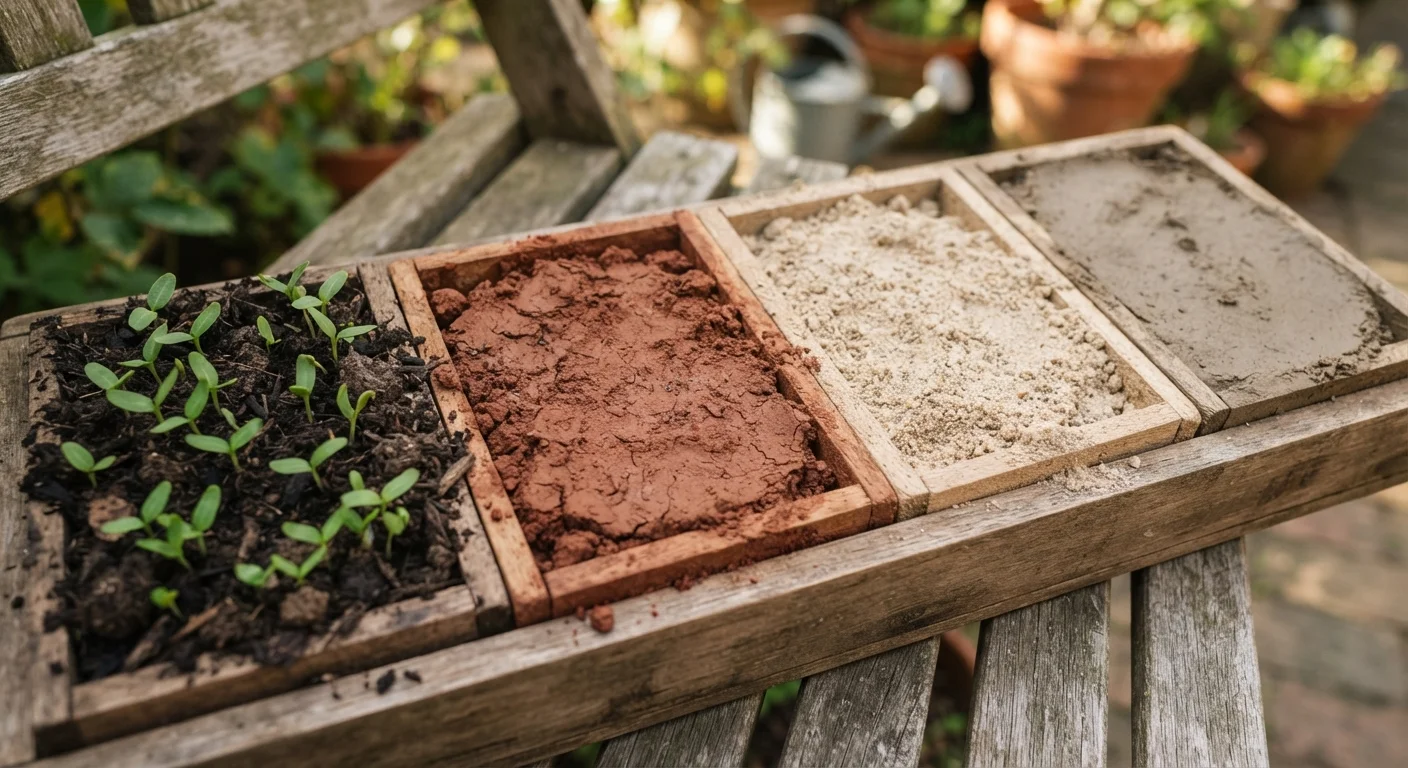
Photo: FaqsDrive.com | Smart Way To Search editorial
—— In This Article
Key Takeaways
- The four main garden soil types are clay, sandy, silty, and loamy — each with distinct drainage and nutrient properties.
- Loamy soil is widely considered ideal for most vegetables and flowers because it balances drainage with moisture retention.
- Clay soil holds nutrients well but drains poorly; sandy soil drains fast but struggles to hold water and nutrients.
- A simple ribbon test or jar test can help you identify your soil type without any special equipment.
- Adding organic matter such as compost is the single most effective way to improve almost any soil type.
- Soil pH affects nutrient availability — testing before amending saves time and avoids wasted effort.
The Four Main Soil Types Explained
Before you plant a single seed, it helps to understand what you're working with underfoot. Garden soils are generally grouped into four main types based on their particle size and composition.
- Clay soil is made up of tiny, flat particles that pack tightly together. It holds water and nutrients very well but drains slowly, becoming waterlogged in wet weather and rock-hard when it dries out. You can often recognize it by its sticky, moldable texture when wet.
- Sandy soil has large, coarse particles with big gaps between them. Water drains through quickly — sometimes too quickly — so plants can dry out fast and nutrients wash away. Sandy soil warms up early in spring and is easy to dig.
- Silty soil falls between clay and sand in particle size. It feels smooth and almost slippery when wet, holds moisture better than sandy soil, and is relatively fertile. It can compact under heavy rain or foot traffic, which reduces drainage over time.
- Loamy soil is a balanced mixture of sand, silt, and clay — typically in roughly equal proportions — along with organic matter. It drains well while still retaining enough moisture and nutrients for most plants. Loam is widely considered the gold standard for gardening.
See our complete beginner's guide to starting a garden for context on how soil fits into the broader picture of garden setup.
How to Test Your Soil at Home
You don't need a lab to get a useful read on your soil. Two simple tests give you a solid starting point.
The Ribbon Test
Take a small handful of moist (not soaking wet) soil and try to squeeze and roll it into a ribbon between your thumb and index finger. Clay-heavy soil forms a long, smooth ribbon of 2 inches or more. Sandy soil crumbles before it forms any ribbon at all. Loam creates a short, rough ribbon that breaks apart fairly easily. Silt feels slippery and may form a ribbon but not as firm or long as clay.
The Jar Test
Fill a clear jar about one-third with soil, top it with water, shake vigorously, then let it sit for 24–48 hours. Sand settles to the bottom first (within minutes), silt settles in the middle layer over several hours, and clay — the finest particles — settles last on top. The relative thickness of each layer gives you a rough idea of your soil's composition.
Consider a Cooperative Extension Soil Test
For more detailed data — including pH, nutrient levels, and organic matter percentage — consider sending a sample to your local cooperative extension service. Many offer low-cost soil testing and region-specific amendment recommendations. Search for your state's land-grant university extension program to find the nearest testing option.
For more detailed data — including pH, nutrient levels, and organic matter percentage — consider sending a sample to your local cooperative extension service. Many offer low-cost soil testing and region-specific amendment recommendations.
How Soil Type Affects Plant Growth
Soil type influences three things plants care about most: water availability, nutrient access, and root penetration.
Drainage and aeration: Plant roots need both water and oxygen. Clay soil's poor drainage can suffocate roots and invite root rot. Sandy soil's rapid drainage stresses plants through drought. Loam strikes the balance that allows roots to breathe while staying consistently moist.
Nutrient retention: Clay particles carry a slight negative electrical charge that attracts and holds positively charged nutrient ions — a property called cation exchange capacity (CEC). This means clay naturally holds more nutrients than sandy soil. However, waterlogging can prevent roots from accessing those nutrients effectively.
Root penetration: Dense, compacted soils — especially wet clay — physically resist root growth. Roots in compacted soil tend to stay shallow, making plants less drought-tolerant and more likely to topple. Loose, crumbly soil allows roots to spread wide and deep.
Soil also interacts closely with how you water. Our article on watering habits that keep plants healthy explains how soil type should shape your watering schedule.
~45%
Mineral particles in healthy garden soil
According to the USDA Natural Resources Conservation Service, ideal garden soil is roughly 45% mineral (sand, silt, clay), 25% water, 25% air, and 5% organic matter by volume.
6.0–7.0
Optimal pH range for most vegetables
Most vegetable crops and common garden flowers perform best in this slightly acidic to neutral pH range, per general horticultural guidance from university extension programs.
2–4 inches
Compost to add per season for soil improvement
Land-grant university extension recommendations commonly suggest working 2–4 inches of compost into garden beds each season to meaningfully improve soil structure over time.
How to Improve the Soil You Have
The most reliable way to improve almost any soil type is to add organic matter regularly. Compost — decomposed plant and food material — improves drainage in clay, boosts moisture retention in sand, and feeds the microorganisms that make nutrients available to roots.
Improving Clay Soil
Work 2–4 inches of compost into the top 8–10 inches of soil each season. Avoid digging clay when it's wet, as this destroys its structure. Over several years, consistent organic matter additions will noticeably loosen and lighten even stubborn clay. Do not add sand — small amounts mixed into clay can create a dense, concrete-like material that drains worse than clay alone. Our garden myths article covers this and other widely repeated misconceptions in more detail.
Improving Sandy Soil
Sandy soil benefits from generous and repeated compost additions. Organic mulch on the surface also slows moisture evaporation between waterings. Unlike clay, sandy soil can absorb large amounts of organic matter without issue — so err on the generous side.
Checking pH Before You Amend
Even good soil structure won't help if your pH is off. An inexpensive test kit or a cooperative extension soil test will tell you whether you need to add lime (to raise pH) or sulfur (to lower it). Most vegetables and ornamentals prefer a slightly acidic to neutral range of about 6.0–7.0.
If you're planning a new planting area, our spring garden prep checklist walks through soil testing and bed preparation step by step.
Start With Compost, Not Chemicals
Before reaching for fertilizers or soil conditioners, try adding a 2-inch layer of finished compost and working it into the top 8–10 inches of your bed. Compost improves drainage, moisture retention, and microbial activity simultaneously — regardless of your starting soil type. It's the lowest-risk, highest-reward first step for most beginning gardeners.
Frequently Asked Questions

Home & Garden Editorial Team
Home & Garden Editorial Team is the collective byline for our editorial team and contributor network. Articles published under this byline or an editorial pen name are researched, written, and reviewed according to our editorial standards for clarity, consistency, and independence before publication.
View author profile