
Raised Beds vs. In-Ground Planting: Weighing the Tradeoffs
Raised beds and in-ground plots each come with real advantages and limitations. Here's how to decide which setup fits your space and goals.
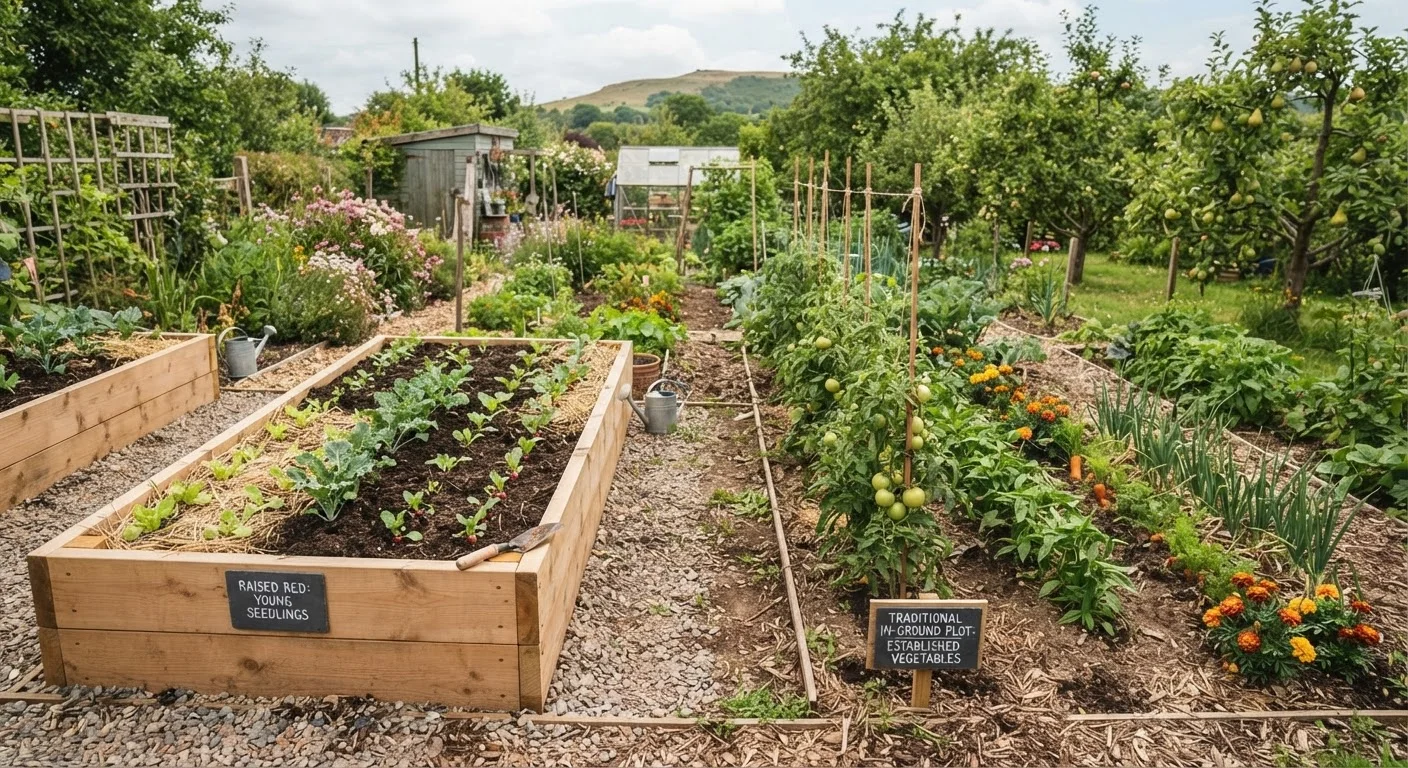
Photo: FaqsDrive.com | Smart Way To Search editorial
—— In This Article
Key Takeaways
- Raised beds offer better drainage and soil control, but require an upfront investment in materials and fill.
- In-ground planting costs less to start and supports larger plantings, but depends heavily on existing soil quality.
- Raised beds warm up faster in spring, giving you a head start on the growing season.
- In-ground plots work better for deep-rooted vegetables like corn, squash, and asparagus.
- Your native soil quality is often the single most important factor in choosing a method.
- Many experienced gardeners use both methods together based on what they're growing.
What You're Actually Choosing Between
At their core, raised beds and in-ground plots differ in one fundamental way: where your plant roots live. A raised bed is a contained structure — typically wood, metal, or composite — filled with soil you bring in. An in-ground plot works directly with the earth beneath your feet, amended or not.
That distinction cascades into real differences in cost, effort, drainage, soil quality, and what you can realistically grow. Neither method is universally superior. The better question is which tradeoffs you're willing to accept given your specific yard, budget, and gardening goals. Before committing, it helps to read through what first-time gardeners commonly face so you can set realistic expectations from the start.
| Criterion | Raised Beds | In-Ground Planting |
|---|---|---|
| Upfront cost | Higher (materials + fill soil) | Lower (amend existing soil) |
| Soil control | Complete — you choose the mix | Limited by native conditions |
| Drainage | Excellent; dries out faster | Variable by soil type |
| Spring warm-up | Earlier — good for cool-season crops | Slower; dependent on climate |
| Weed pressure | Lower, especially early on | Higher from established seed bank |
| Root depth | Limited by bed depth | Unrestricted |
| Scalability | Costly to expand | Easy to expand |
| Best crop types | Herbs, greens, tomatoes, root veg | Corn, squash, perennials, trees |
The Case for Raised Beds
Raised beds give you control over something most gardeners can't change: what's already in the ground. If your yard has clay-heavy, sandy, rocky, or potentially contaminated soil, a raised bed lets you start fresh with a known, quality growing medium. You choose the mix, which means you can tailor it from the beginning. Understanding what soil your plants actually need makes this process much easier to get right.
Raised beds also drain faster, which reduces the risk of root rot in wet climates or heavy soils. They warm up earlier in spring — soil in a raised structure can be several degrees warmer than in-ground soil — giving cool-season crops a meaningful head start. Weed pressure is typically lower, especially in the first year or two, because you're not starting with a seed bank already in the ground.
The tradeoffs are real, though. Materials and quality fill soil carry an upfront cost that adds up quickly as you scale. Raised beds also dry out faster in summer heat, which means more frequent watering. And because the root zone is physically limited by the depth of the structure, very deep-rooted plants may not thrive as well.
6–8 inches
Minimum raised bed depth for most vegetables
Most extension services recommend at least 6 inches of soil depth for annual vegetables, with 12 inches preferred for root crops like carrots.
3–5°F
How much warmer raised bed soil runs in spring
Soil in raised beds can run several degrees warmer than ground-level soil in early spring, which is meaningful for germination of cool-season crops.
2–4 seasons
Typical timeline to significantly improve poor native soil
Consistent compost additions over multiple growing seasons are generally needed before heavily depleted or compacted native soil supports reliable yields.
The Case for In-Ground Planting
In-ground planting has sustained home gardens and farms for centuries, and its core advantage is simple: it scales without significant added cost. Expanding a plot means digging and amending more ground — not buying lumber, hardware, and cubic yards of imported soil mix.
The in-ground approach also supports a wider range of crops. Plants like corn, asparagus, winter squash, and most fruit-bearing trees or shrubs need the kind of unrestricted root depth and spread that no raised bed realistically provides. If you want to grow a diverse, large-volume kitchen garden, in-ground planting generally gets you there more efficiently.
The challenges are equally real. Native soil quality varies enormously. In many suburban yards, the topsoil has been disturbed, compacted, or stripped during construction, leaving something far from ideal for gardening. Fixing in-ground soil takes time — sometimes multiple seasons of amending with compost before results improve noticeably. Check out our guidance on spring garden prep and soil testing to understand what you're working with before you dig in.
Weeds are the other persistent reality with in-ground plots. An established seed bank in native soil means weed management is ongoing work throughout the growing season.
A Note on Potentially Contaminated Soil
If your home was built before the 1980s, or if the land has a history of industrial or commercial use, your native soil may contain lead or other contaminants. This is one situation where raised beds with clean imported soil are widely recommended rather than optional. Many cooperative extension offices offer low-cost soil testing that can tell you what you're working with before you plant anything edible directly in the ground.
Making the Decision That Fits Your Situation
A few practical questions can guide your choice. Start by testing or at least observing your native soil. Does water pool after rain? Does the ground feel like concrete when dry? Those signals point toward raised beds. If your soil is loose, dark, and drains reasonably well, in-ground planting with some compost amendment may be all you need.
Consider your physical comfort and available time. Raised beds require more setup work initially but can be significantly easier to maintain week to week. In-ground plots demand more ongoing weeding and soil care but less structural investment up front.
Think about what you want to grow. Salad greens, herbs, tomatoes, peppers, and most root vegetables do very well in raised beds. If you're dreaming of a corn patch, berry rows, or fruit trees, in-ground is the more practical path. You might also find that using both approaches — raised beds for intensive plantings and in-ground space for sprawling crops — gives you the flexibility to grow a wider variety without compromise. As you plan your plantings, exploring options like starting from seed versus buying transplants is a natural next step.

Home & Garden Editorial Team
Home & Garden Editorial Team is the collective byline for our editorial team and contributor network. Articles published under this byline or an editorial pen name are researched, written, and reviewed according to our editorial standards for clarity, consistency, and independence before publication.
View author profile