
The Science Behind Stopping Distances
Learn how speed, road conditions, and reaction time combine to determine how far your car travels before stopping.
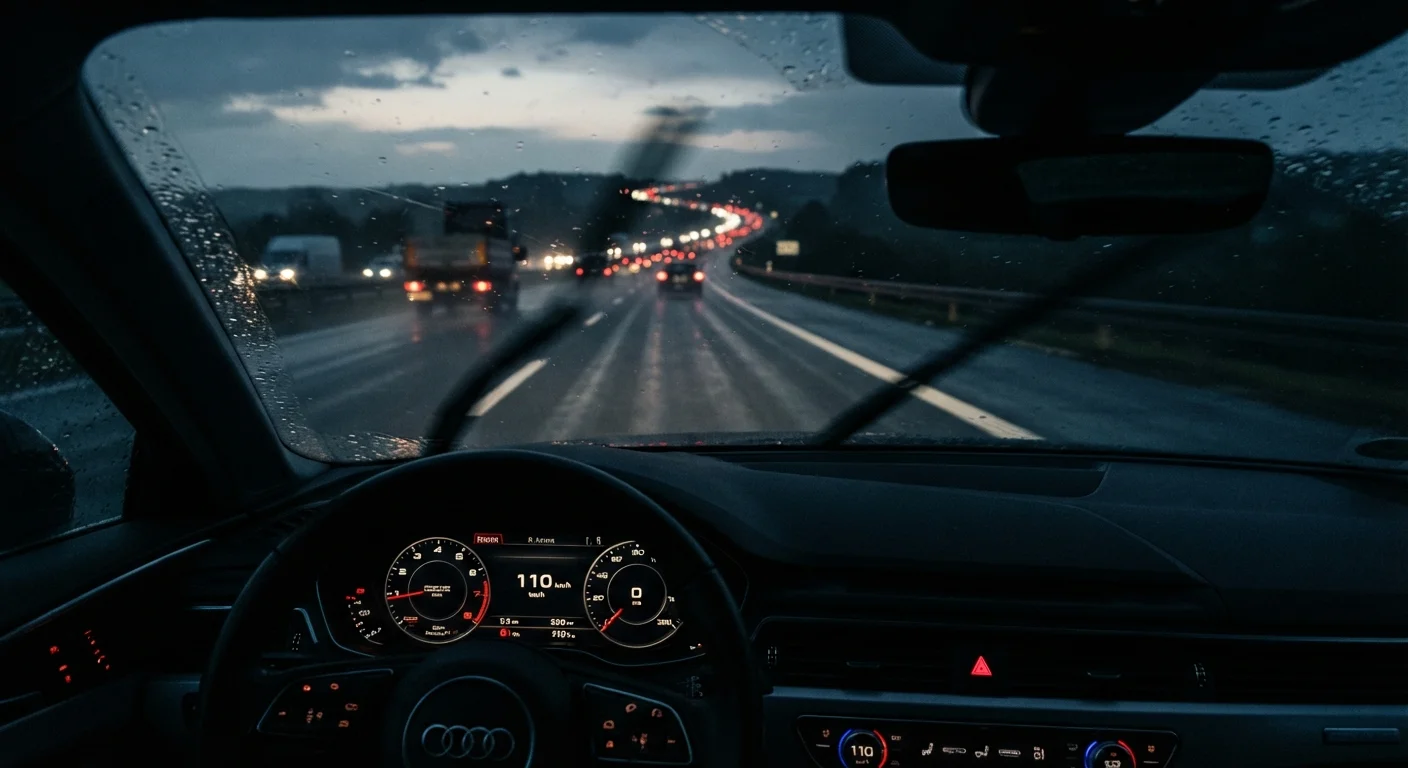
Photo: FaqsDrive.com | Smart Way To Search editorial
—— In This Article
Key Takeaways
- Total stopping distance includes both your reaction time and the physical braking distance of the vehicle.
- Braking distance grows with the square of speed - doubling speed roughly quadruples the distance needed to stop.
- Wet or icy roads can multiply stopping distances by two to eight times compared to dry pavement.
- The average human reaction time adds roughly 60-90 feet of travel at highway speeds before brakes even engage.
- Maintaining a safe following distance is the most direct way to use stopping distance knowledge every day.
- Worn tires and degraded brakes meaningfully extend how far your car travels before stopping.
The Two-Part Formula Every Driver Should Know
Most drivers think of stopping as a single action - pressing the brake pedal. In reality, your car's journey from hazard to halt involves two distinct phases, and understanding both can change how you drive.
Phase 1 - Reaction distance: The moment you see a hazard, your brain must process what it's seeing, decide to brake, and send a signal to your foot. This perception-reaction process typically takes 1.0-1.5 seconds for an alert, sober driver. At 60 mph, that's 88-132 feet of road covered before your brakes do anything at all.
Phase 2 - Braking distance: Once the brakes engage, friction between your tires and the road surface is what actually slows the car. This phase depends on your speed, tire quality, brake condition, and road surface. On dry pavement at 60 mph, a typical car needs roughly 120-170 additional feet to stop.
Add those together and you're looking at 240-300 feet - nearly the length of a football field - before the car fully stops. That's under ideal conditions. Common misconceptions about speed often cause drivers to underestimate just how much room they actually need.
~300 ft
Typical stopping distance at 60 mph on dry pavement
This estimate, consistent with NHTSA driver education materials, includes both reaction distance and braking distance for a standard passenger vehicle.
4×
Increase in braking distance when speed doubles
Because braking distance scales with the square of speed, doubling from 30 to 60 mph roughly quadruples the distance needed to stop, not doubles it.
1.5 sec
Average perception-reaction time for an alert driver
Traffic engineering research commonly uses a 1.5-second perception-reaction time to calculate safe stopping sight distances on roadways.
Why Speed Is the Most Powerful Variable
Here's the physics that surprises most people: braking distance does not grow in a straight line with speed. It grows with the square of speed. That means when you double your speed, you roughly quadruple your braking distance - not double it.
- At 30 mph: braking distance on dry pavement ≈ 45 feet
- At 60 mph: braking distance ≈ 180 feet (4× as much, not 2×)
- At 75 mph: braking distance ≈ 280+ feet
This non-linear relationship is the core reason speed limits exist where they do, and why even modest speed reductions - going 55 instead of 65, for instance - produce meaningful safety gains. The two-second following rule is built directly on this physics: faster speeds demand proportionally more space, not just a little more.
“Speed is the single most important factor in road crash severity. Small reductions in average speed lead to large reductions in crash risk and injury.”
— World Health Organization, Global Road Safety Program
How Road Conditions Multiply the Numbers
All the stopping distances above assume dry, well-maintained pavement. Real-world roads rarely offer that ideal. Friction between tires and the road surface is what makes braking work, and anything that reduces friction stretches how far your car travels.
A general guide to how conditions affect stopping distance:
| Road Condition | Approximate Multiplier |
|---|---|
| Dry pavement | 1× (baseline) |
| Wet pavement | 1.5-2× |
| Packed snow | 3-4× |
| Ice | 6-8× |
These are general estimates - actual performance varies by tire type, tread depth, and vehicle weight. For a deeper look at how to adjust your driving in poor weather, see our guide on driving in rain, snow, and fog.
Adjust Your Following Gap Before You Need It
Don't wait until conditions worsen to increase your following distance. If rain is forecast or you're approaching a bridge deck - which freezes before road surfaces - add extra space early. Reacting to already-slippery conditions is far harder than building in margin before they arrive.
The Hidden Role of Your Vehicle's Braking System
No amount of awareness overcomes a poorly maintained braking system. Your car's ability to convert speed into stopped motion depends on hardware that wears out over time - particularly brake pads, rotors, and tires.
Brake pads that are worn thin generate less friction against the rotor, reducing braking force. Rotors that are warped or scored can cause uneven braking. Tires with low tread depth have less surface area in contact with the road, which directly limits grip. Understanding how these components work together is foundational - the full braking system explainer walks through each part in plain language.
Anti-lock braking systems (ABS) - standard on virtually all modern vehicles - help by preventing wheel lockup during hard stops, which maintains steering control. ABS does not shorten stopping distances in all conditions; on loose gravel or deep snow it can sometimes lengthen them. Knowing what your system does and doesn't do is part of being a prepared driver.
ABS Is a Tool, Not a Guarantee
Anti-lock braking systems help drivers maintain steering control during hard stops, which is genuinely valuable in emergency situations. However, ABS is not designed to shorten stopping distances in every scenario - on icy or gravel surfaces, it may behave differently than on dry pavement. Always drive at speeds that allow you to stop within the distance you can see.
Practical Habits That Put This Knowledge to Work
Understanding stopping distance is most useful when it changes how you actually drive. Here are the habits that directly reduce your risk:
- Increase following distance proactively. Give yourself at least three seconds of gap in ideal conditions, and extend it whenever speed, weather, or visibility changes. This is your primary buffer against the stopping distance equation working against you.
- Slow down before curves and intersections. You can't predict what's around the bend. Entering with lower speed means shorter stopping distance if something unexpected appears.
- Eliminate distractions. Even a half-second of added reaction time at 60 mph adds 44 feet to your stopping distance. Eyes off the road is one of the fastest ways to erase your safety margin.
- Check tires regularly. Tread depth and inflation both affect grip. The penny test - inserting a penny into a tread groove to check depth - is a simple, no-tool method to spot worn tires before they become a stopping problem.
- Get brakes inspected on schedule. Most mechanics recommend brake inspection at least once a year or whenever you notice squealing, pulling, or a longer-than-usual stopping feel.
For a related perspective on how perception affects your ability to respond to hazards, see our guide on what your blind spots actually cover.
Frequently Asked Questions

Automotive Basics Editorial Team
Automotive Basics Editorial Team is the collective byline for our editorial team and contributor network. Articles published under this byline or an editorial pen name are researched, written, and reviewed according to our editorial standards for clarity, consistency, and independence before publication.
View author profile