
Tailgating: Why the Two-Second Rule Exists
Following too closely is one of the leading causes of rear-end collisions. Understand the physics and the simple rule that helps.
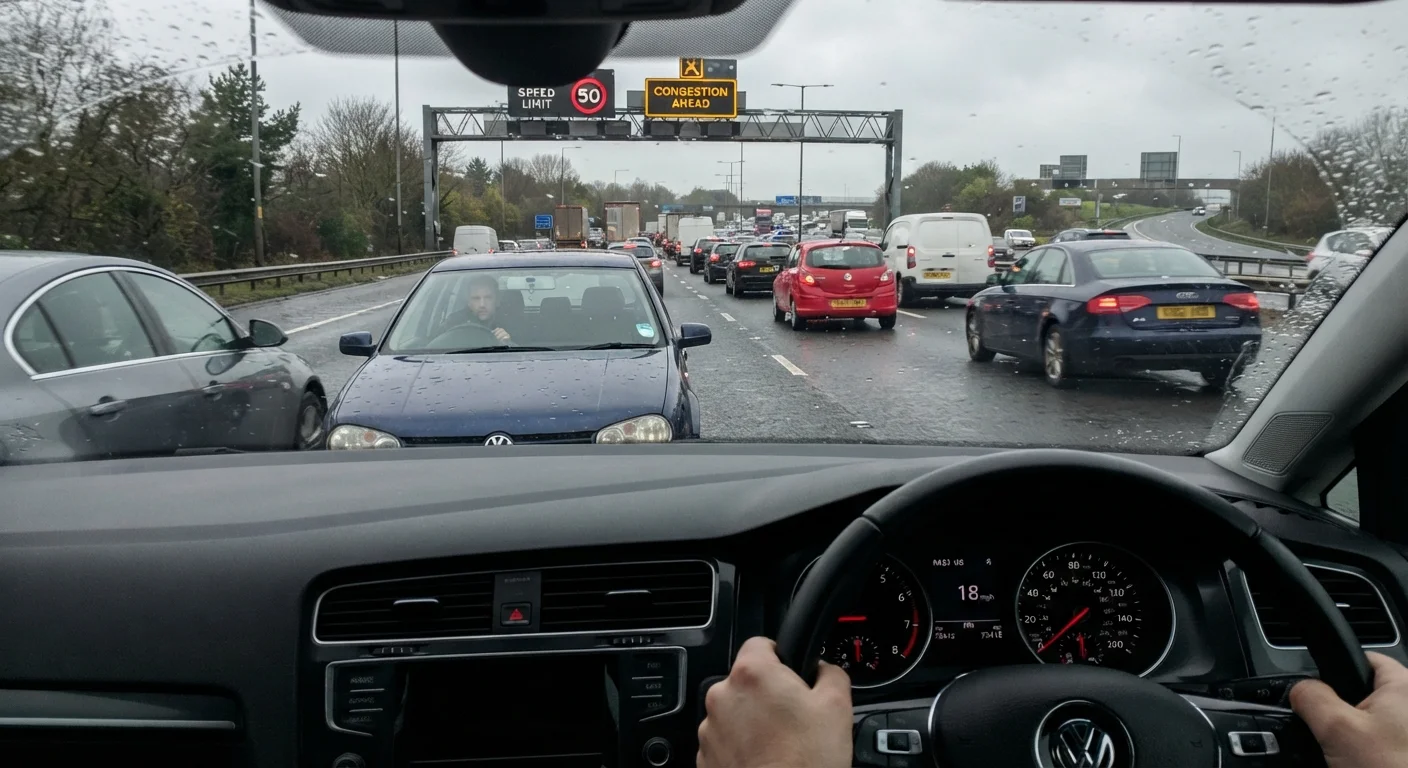
Photo: FaqsDrive.com | Smart Way To Search editorial
—— In This Article
Key Takeaways
- The two-second rule provides a minimum following distance at any speed under normal conditions.
- Human reaction time alone consumes roughly 1.5 seconds before braking even begins.
- Tailgating is a leading factor in rear-end crashes, which are among the most common collision types in the U.S.
- Adverse conditions - rain, night, fatigue - require increasing your gap to three or four seconds.
- Larger vehicles like trucks and SUVs need even more following distance due to greater stopping weight.
The Physics of Following Too Closely
When you drive behind another vehicle, the gap between your front bumper and their rear bumper is your only safety cushion. The challenge is that stopping a vehicle is not instantaneous - it is a two-part process: your reaction time plus your vehicle's braking distance. Together, these determine your total stopping distance.
Reaction time is the interval between when your eyes register a hazard and when your foot actually reaches the brake pedal. Research in traffic safety literature consistently puts average human reaction time between 1.5 and 2.5 seconds. At 60 mph, that means your car travels 132 to 220 feet before braking even begins. Understanding this interaction in depth can change how you think about speed and space - see the science behind stopping distances for a fuller breakdown.
After your foot hits the brake, the car still needs distance to decelerate to a stop. Add these two distances together, and the gap you need is far larger than most drivers intuitively estimate - especially at highway speeds.
~29%
Of all U.S. crashes involve rear-end collisions
According to the National Highway Traffic Safety Administration (NHTSA), rear-end crashes are consistently one of the most common crash types on American roads.
1.5 sec
Average human reaction time before braking
Traffic engineering research indicates the typical driver takes 1.5 seconds or more to perceive a hazard and initiate braking - distance already covered before deceleration begins.
176 ft
Minimum safe gap at 60 mph (2 seconds)
At 60 mph, two seconds of following distance equals approximately 176 feet - roughly the length of five average-sized sedans bumper to bumper.
How the Two-Second Rule Works
The two-second rule converts a complex physics equation into a practical, real-time check any driver can run. Here is how to use it:
- While moving, watch for any stationary roadside marker - a sign, overpass, painted line, or shadow.
- The instant the rear of the vehicle ahead passes that marker, start counting: "one-one-thousand, two-one-thousand."
- If your front bumper reaches the marker before you finish the count, close the gap by easing off the accelerator.
The rule works because two seconds of travel time consistently translates to a meaningful physical gap regardless of speed. At 30 mph that is roughly 88 feet; at 60 mph it stretches to about 176 feet. The gap scales with speed automatically, which is the rule's key advantage over fixed car-length estimates.
Adjust Your Gap After Lane Changes
Each time you merge into a new lane, reset your two-second check. Drivers often reduce their gap significantly during a merge and then forget to re-establish it before traffic conditions require sudden braking. Making this a deliberate post-merge habit takes only a few seconds and dramatically reduces collision risk.
When Two Seconds Is Not Enough
The two-second rule assumes dry pavement, good visibility, and an alert driver. Real driving conditions frequently demand more space.
- Rain and wet roads: Wet pavement significantly reduces tire grip and extends braking distance. Add at least one extra second.
- Night driving: Reduced visibility means you may detect a hazard later, leaving less time to react. Night driving habits that reduce your risk covers additional strategies for after-dark travel.
- Heavy or large vehicles: Trucks, vans, and SUVs carry more momentum and require longer stopping distances. If you drive one, add an extra second to your baseline.
- Driver fatigue: Tired reaction times are measurably slower than alert ones. Increase your following distance and take breaks before exhaustion sets in.
Drivers sometimes assume that keeping pace with surrounding traffic at high speeds means the gap is adequate. That belief is one of the assumptions drivers make that lead to crashes worth re-examining carefully.
State Laws on Following Distance
Most U.S. states include following-too-closely provisions in their traffic codes, though specific language varies. Generally, the law requires that drivers maintain a distance that is "reasonable and prudent" given speed, traffic, and conditions. Being involved in a rear-end collision while following too closely can have legal and insurance consequences. Check your state's driver handbook for the exact language that applies where you live.
Building the Habit: Making Space Automatic
Knowing the two-second rule intellectually and applying it consistently are two different things. Here is how to move from awareness to habit:
Set a mental intention before entering traffic. Remind yourself to check your gap every few minutes, particularly after merging onto a highway or when traffic density increases.
Watch for common triggers that cause drivers to unconsciously close gaps: distraction from a phone, impatience in slow-moving traffic, or simply matching the aggressive pace of surrounding vehicles. The speed limit myths that put drivers at risk article addresses how perceived social norms around speed can subtly override sound judgment.
If you find yourself being tailgated, your instinct might be to speed up to create peace of mind - but that rewards the behavior and doesn't solve the core safety problem. Instead, create buffer ahead of your own vehicle so you have more room to slow gradually, reducing the chance a sudden stop turns into a chain-reaction crash.
Maintaining following distance is not timid driving - it is efficient, low-stress driving that simply accounts for how physics and human biology actually work.
Frequently Asked Questions

Automotive Basics Editorial Team
Automotive Basics Editorial Team is the collective byline for our editorial team and contributor network. Articles published under this byline or an editorial pen name are researched, written, and reviewed according to our editorial standards for clarity, consistency, and independence before publication.
View author profile