
Brake Pads, Rotors, and Calipers: How Your Stopping System Works
Every time you stop, dozens of parts work together. This explainer walks through the full braking system so you know what's doing the work.
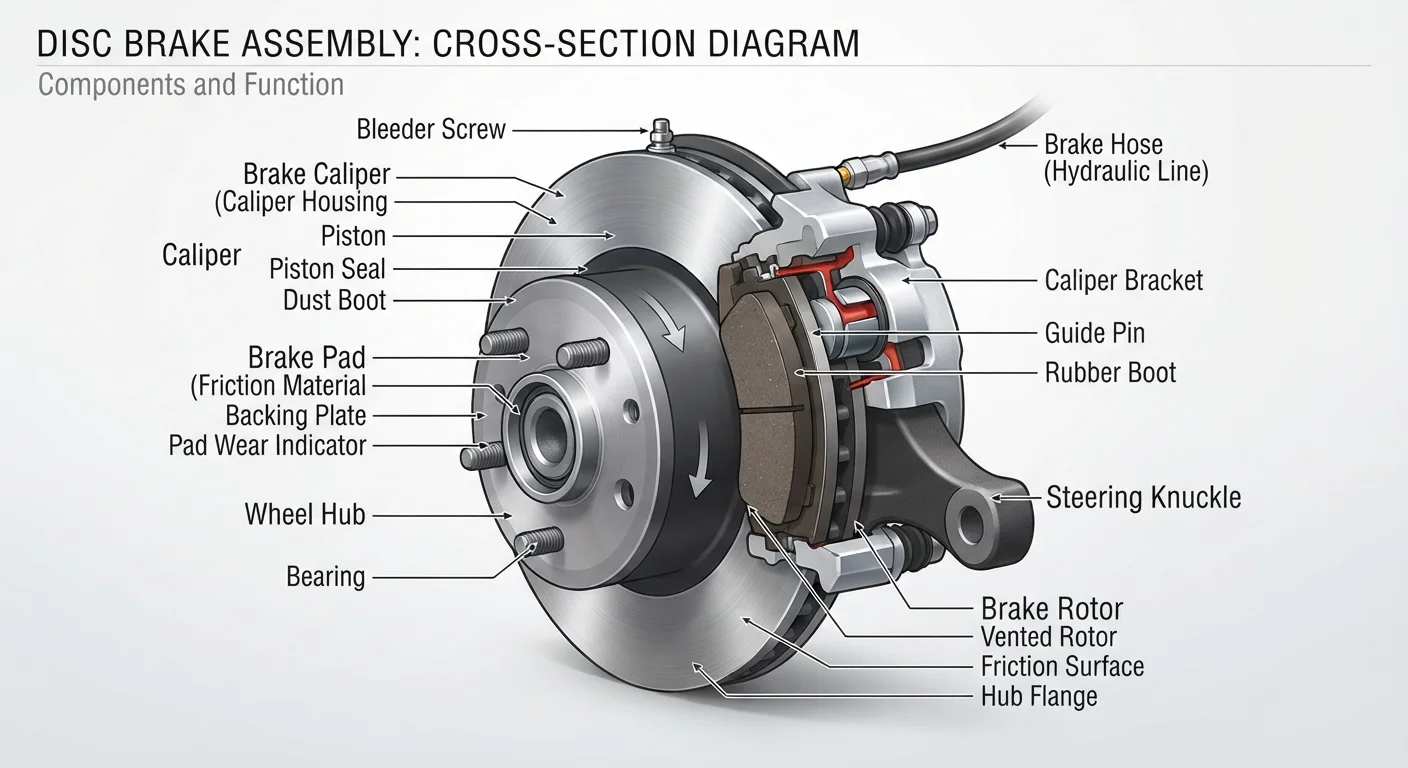
Photo: FaqsDrive.com | Smart Way To Search editorial
—— In This Article
Key Takeaways
- Brake pads, rotors, and calipers are the three core components of a disc brake system.
- Hydraulic pressure - powered by brake fluid - is what transfers your pedal force to the brakes.
- Brake pads wear down over time and are the most frequently replaced brake component.
- Squealing, grinding, or a vibrating pedal are common warning signs that brakes need inspection.
- Brake work involves critical safety systems - always consult a qualified mechanic for repairs.
The Big Picture: How Stopping Actually Works
Every time you press the brake pedal, your car converts kinetic energy - the energy of motion - into heat through friction. That process happens in milliseconds and involves several interconnected components working in sequence. Understanding each one helps you recognize warning signs, ask better questions at the shop, and feel more confident about your vehicle.
The core of a modern disc brake system has three main players: the brake pad, the rotor, and the caliper. They work together every single time you stop - at a red light, in a parking lot, or in an emergency. For a broader look at how your car's parts relate to each other, see our plain-English map of what's under your hood.
~70%
Stopping force handled by front brakes
Weight shifts forward during braking, which is why front brake components typically wear faster than rear ones.
10-12 mm
Typical new brake pad thickness
Mechanics generally recommend replacement when friction material wears to approximately 2-3 mm, well before the metal backing contacts the rotor.
2 years
Common brake fluid change interval
Many manufacturers recommend flushing brake fluid every two years because it absorbs moisture over time, lowering its boiling point and reducing braking performance.
Brake Pads: The Friction Layer
Brake pads are flat, layered components mounted inside the caliper. One side is a metal backing plate; the other is a friction material - typically made from semi-metallic, ceramic, or organic compounds - that presses directly against the rotor surface.
Because pads are designed to wear down gradually (rather than damaging the rotor), they are the most frequently replaced part of your brake system. Thickness matters: most new pads measure around 10-12 mm of friction material, and mechanics typically recommend replacement when they reach about 2-3 mm. Many pads include a small metal tab called a wear indicator that scrapes against the rotor and produces a high-pitched squeal when the pad is getting thin - that sound is intentional and is your car asking for attention.
Listen for the Squeal - Don't Ignore It
That high-pitched sound when braking is your car's built-in early warning system. Most drivers have a window of several hundred miles between the first squeal and the point where pads are dangerously thin. If you hear it, schedule an inspection within the next week or two rather than waiting for your next oil change.
Rotors: The Spinning Target
The rotor (also called a brake disc) is the large, flat metal disc bolted to your wheel hub. It spins with the wheel and provides the surface against which the pads press. Rotors are engineered to absorb and dissipate heat rapidly - many have internal vanes or slots to help airflow carry heat away.
Over time, rotor surfaces can develop grooves from worn pads, or become warped from repeated heating and cooling. A warped rotor often causes a pulsing or vibrating sensation in the brake pedal when you stop. Rotors have a minimum thickness specification stamped onto the edge; once a rotor wears below that spec, it can no longer safely dissipate heat and must be replaced.
Calipers and Hydraulics: The Force Behind the Stop
The caliper is a metal housing that straddles the rotor like a clamp. Inside it are one or more pistons surrounded by brake fluid. When you press the pedal, you push a piston in the master cylinder (located near the engine bay), which forces brake fluid through the brake lines and into the calipers at each wheel. That hydraulic pressure pushes the caliper's pistons outward, squeezing the brake pads against both sides of the spinning rotor.
Because the system is hydraulic - meaning it uses fluid pressure rather than cables - even light pedal pressure can generate enormous clamping force. This is also why brake fluid condition matters: fluid that has absorbed moisture over time can boil under heavy braking, creating air bubbles that compress rather than transmit force. Checking your brake fluid is a simple under-hood task any driver can learn.
ABS: The Electronic Layer on Top
Many modern vehicles add an ABS module to the hydraulic system. ABS uses wheel-speed sensors to detect when a wheel is about to lock up, then rapidly modulates brake pressure to maintain steering control during hard stops. This is why your pedal may pulse rapidly under emergency braking - it is the ABS working as designed, not a malfunction.
Warning Signs Every Driver Should Know
Your braking system gives clear signals when something is wrong. Recognizing them early typically means less damage and lower repair costs.
- Squealing when braking: Usually wear indicators telling you pads are low.
- Grinding or metal-on-metal sound: Pads may be fully worn, and the metal backing plate is contacting the rotor - requires immediate attention.
- Pulsing or vibrating pedal: Often indicates a warped rotor.
- Car pulling to one side while braking: Can indicate a stuck caliper or uneven pad wear.
- Soft or spongy pedal: A sign of air in the brake lines or low/contaminated brake fluid.
If you notice any of these symptoms, have your vehicle inspected by a qualified mechanic promptly. For a deeper look at what to expect during a brake service, see brake maintenance demystified.
Frequently Asked Questions

Automotive Basics Editorial Team
Automotive Basics Editorial Team is the collective byline for our editorial team and contributor network. Articles published under this byline or an editorial pen name are researched, written, and reviewed according to our editorial standards for clarity, consistency, and independence before publication.
View author profile