
Speed Limit Myths That Put Drivers at Risk
From 'flow of traffic' to cushion speeds, common speed limit beliefs can be dangerously wrong. Here's what's actually true.
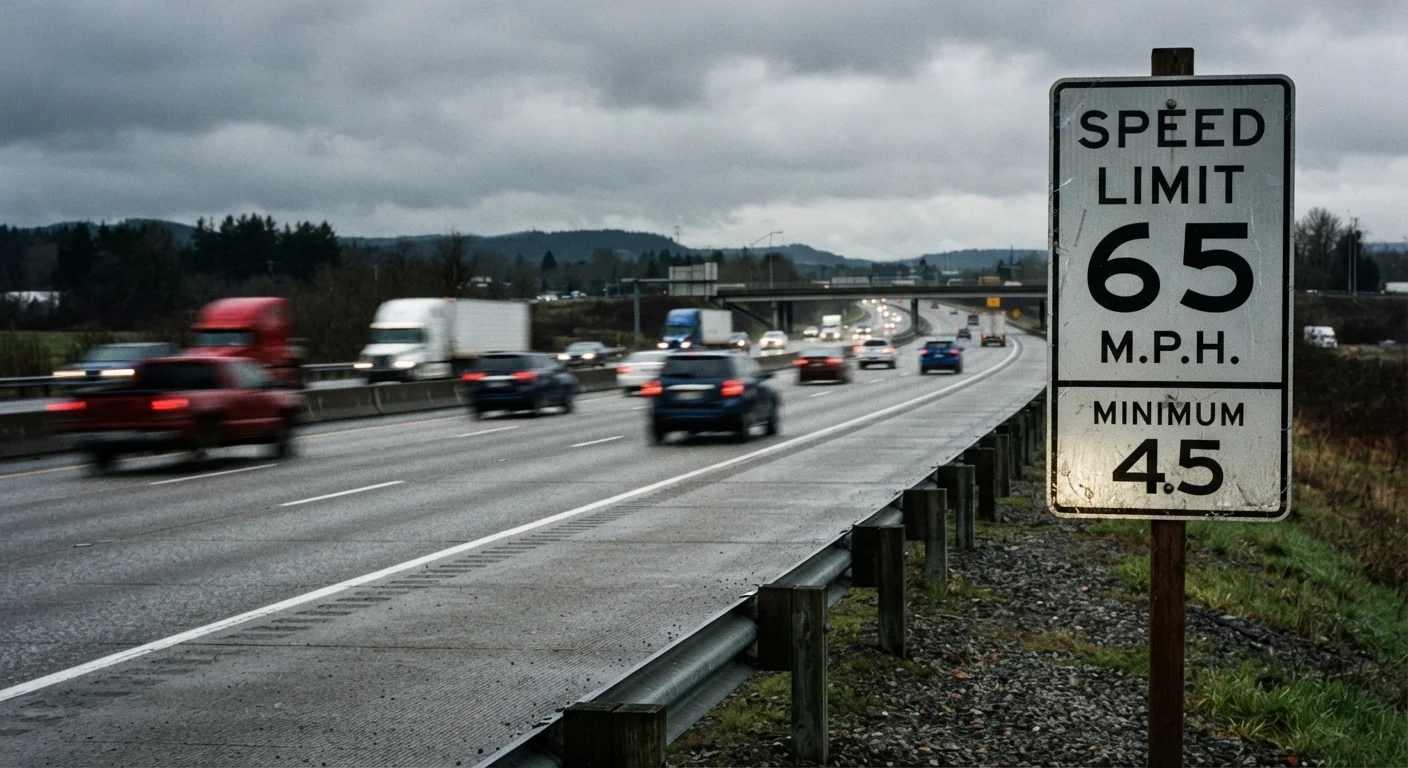
Photo: FaqsDrive.com | Smart Way To Search editorial
—— In This Article
Key Takeaways
- Driving at the 'flow of traffic' speed does not protect you from a speeding ticket or collision liability.
- Speed limits are legal maximums, not targets - conditions often require driving well below them.
- Higher speeds dramatically increase both crash probability and injury severity.
- Officers can cite any driver exceeding the posted limit, regardless of surrounding traffic speed.
Why Speed Limit Myths Are Dangerous
Most American drivers consider themselves above average behind the wheel - a statistical impossibility that points to a deeper problem: widespread overconfidence. Speed-related misconceptions are among the most persistent and consequential beliefs on the road. They lead real drivers to travel faster than conditions allow, misread their legal exposure, and underestimate how quickly a situation can turn fatal.
The myths below aren't fringe ideas. They circulate freely in casual conversation, online forums, and even among experienced drivers. Understanding where each one breaks down is the first step toward genuinely safer habits. For a broader look at how false confidence creates crash risk, see common assumptions drivers make that lead to crashes.
Myth
If I'm just keeping up with the flow of traffic, I can't get a ticket - everyone else is doing the same speed.
Fact
Officers can legally cite any driver exceeding the posted limit, regardless of what surrounding vehicles are doing.
The 'flow of traffic' idea is probably the most widespread speed myth in the U.S. It feels intuitive: if everyone is traveling at 75 mph on a 65 mph highway, singling out one driver seems arbitrary. But traffic law doesn't work that way. The posted limit is the legal ceiling. Any driver above it is technically in violation, and enforcement is an officer's discretion - not a group vote. Being surrounded by other speeders is not a legal defense, and it doesn't reduce your collision risk either.
Myth
Going 5 to 10 mph over the limit is a legal 'cushion' that police informally allow.
Fact
There is no official or legally recognized speed buffer - any speed above the posted limit is a violation.
This myth likely comes from the reality that enforcement priorities vary by jurisdiction and traffic conditions. Some officers do focus on more extreme violations, but that is a practical resource decision, not a built-in legal tolerance. Relying on an assumed cushion is gambling with both your license and your safety. At 10 mph over a 55 mph limit, your vehicle covers about 95 feet per second - leaving very little margin for error if something unexpected appears ahead.
Myth
Speed limits are set conservatively, so driving faster than the sign says is still safe.
Fact
Speed limits are established through engineering studies that account for road geometry, pedestrian activity, crash history, and other local factors.
The process for setting posted limits typically involves traffic engineers analyzing the specific road - its curves, sight lines, intersection frequency, nearby schools or businesses, and historical crash data. The result is a limit calibrated to that environment. A limit that seems low on a straight stretch may account for a blind curve 300 yards ahead or a history of pedestrian incidents. Dismissing a posted limit as 'just being cautious' ignores the site-specific reasoning behind it.
Myth
Driving slower than surrounding traffic is more dangerous than matching or exceeding their speed.
Fact
While large speed differentials can create friction, the solution is safe lane positioning - not speeding up to match unsafe traffic.
There is a kernel of truth here: abrupt speed mismatches on high-speed roads can create hazards. But the appropriate response is to use the right lane for slower travel and allow faster vehicles to pass - not to abandon the posted limit. Traveling at an unsafe speed to 'blend in' shifts your crash risk upward substantially. If you feel consistently pressured on a particular road, the issue is driver behavior around you, not your compliance with the law.
Myth
The speed limit applies only under ideal conditions - in good weather, you can safely go faster.
Fact
Posted limits represent the maximum under ideal conditions; in adverse weather or visibility, the appropriate speed is lower, not the same or higher.
Most U.S. states have a 'basic speed law' that requires drivers to travel at a speed reasonable for current conditions - regardless of what the sign says. Rain reduces tire traction and increases stopping distance. Fog shortens sight lines. Glare, wind, and road debris all raise risk. A driver doing the posted limit in a heavy downpour may still be cited if an officer determines conditions required a slower speed. The sign is a ceiling in good conditions, not a green light in bad ones.
Speed, Physics, and the Risks Drivers Underestimate
Every speed myth ultimately runs into physics. Stopping distance doesn't increase in a straight line as speed rises - it grows exponentially. A vehicle traveling at 60 mph needs roughly four times the stopping distance of one going 30 mph. That gap is what separates a close call from a fatal collision.
~29%
Of traffic fatalities linked to speeding annually
The National Highway Traffic Safety Administration consistently attributes roughly one in three traffic deaths to speeding-related factors each year.
4×
Stopping distance increase from 30 to 60 mph
Because stopping distance grows with the square of speed, doubling your speed roughly quadruples the distance needed to stop, according to basic physics and driver safety research.
Crash severity compounds the problem. At higher impact speeds, the forces involved rise sharply, overwhelming the protection offered by seatbelts and airbags. Road conditions, tire wear, and driver reaction time all interact with speed to determine outcomes - and none of those factors appear on a speedometer. For a deeper look at the physics, explore the science behind stopping distances and consider how following distance rules fit into the same equation.
Speed Myths Can Have Fatal Consequences
Speeding is consistently one of the top contributing factors in U.S. traffic fatalities. Acting on a misconception - like assuming a speed cushion exists or that flow-of-traffic speeds are legally safe - can result in a ticket, license points, or a crash with serious injuries. No social norm or informal expectation overrides the physics of a high-speed collision.
Speed limit awareness also matters in specific driving scenarios. Merging onto a highway, for instance, requires matching traffic speed safely - not treating the posted limit as a ceiling to approach regardless of conditions. See highway merging done right for technique guidance. Similarly, after dark, the effective safe speed is often lower than what the sign allows; night driving habits that reduce your risk explains why.
Conditions Often Demand Speeds Below the Limit
Wet pavement, reduced visibility, heavy traffic, and road construction zones all require slowing down below the posted maximum. In many states, failing to adjust speed for conditions is itself a ticketable offense - even if you're technically under the limit. Always assess the road ahead, not just the sign.

Automotive Basics Editorial Team
Automotive Basics Editorial Team is the collective byline for our editorial team and contributor network. Articles published under this byline or an editorial pen name are researched, written, and reviewed according to our editorial standards for clarity, consistency, and independence before publication.
View author profile