
Driving in Rain, Snow, and Fog: What Changes and Why
A practical breakdown of how wet, icy, and low-visibility conditions affect vehicle control and what adjustments to make.
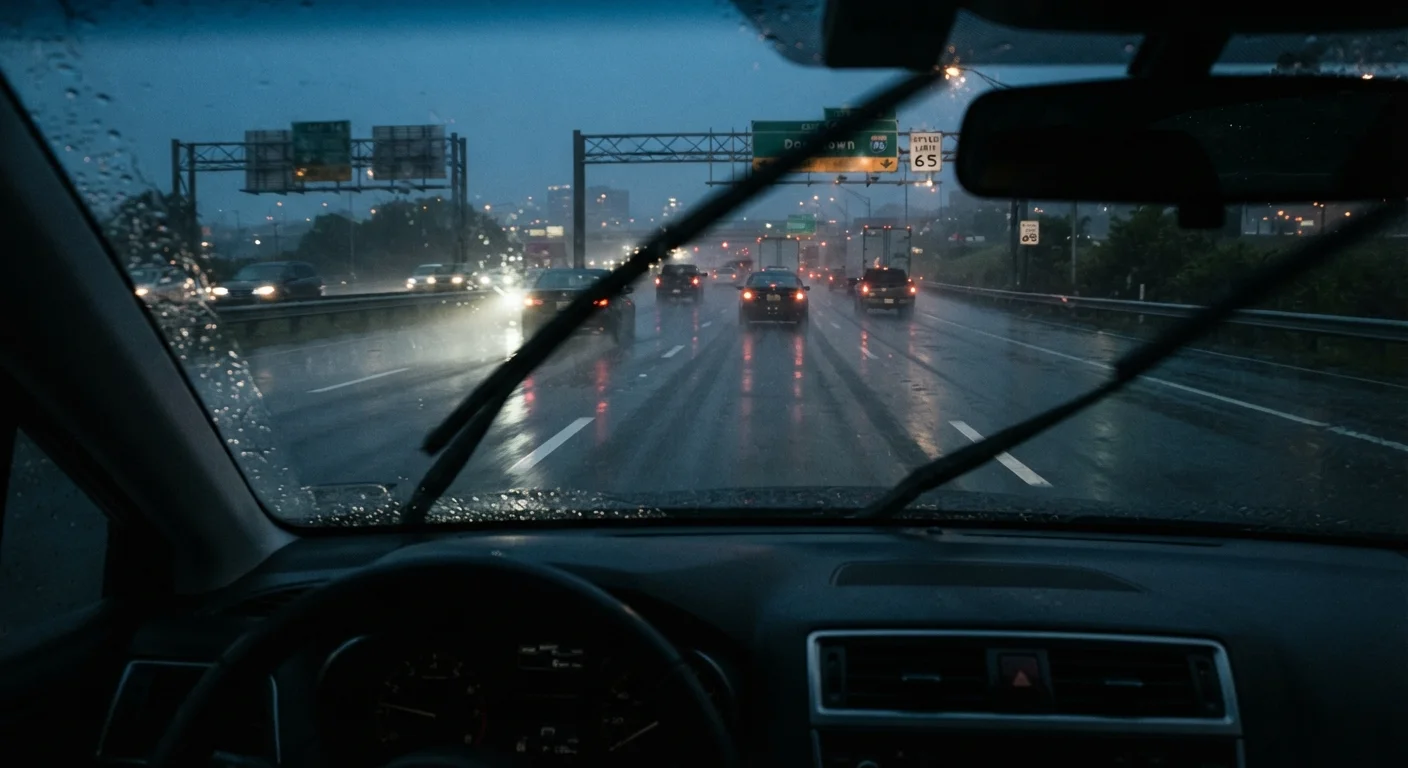
Photo: FaqsDrive.com | Smart Way To Search editorial
—— In This Article
Key Takeaways
- Wet, icy, and foggy conditions each reduce traction and visibility in distinct ways that require different responses.
- Braking distances can more than double on wet roads and increase far more dramatically on snow or ice.
- Hydroplaning can occur at speeds as low as 35 mph on standing water - ease off the gas, don't brake hard.
- Fog calls for low-beam headlights, not high beams, and slower speeds regardless of posted limits.
- Tire tread depth and tire pressure are the single biggest vehicle factors in adverse-weather safety.
- Adjusting following distance is one of the simplest and most effective habits in poor conditions.
Why Weather Changes the Physics of Driving
Most drivers slow down when it rains. Fewer understand why that instinct is correct - or how much adjustment is actually needed. Adverse weather doesn't just make roads slippery; it fundamentally changes the relationship between your tires, the road surface, and the laws of physics that govern how fast your car can stop, turn, and stay in control.
Traction - the friction between your tires and the road - is what allows steering, braking, and acceleration to work. Any substance between the tire and the pavement (water, snow, ice, slush) reduces that friction. Less friction means longer stopping distances, reduced steering response, and a higher risk of skidding. Understanding this helps explain why the adjustments covered in this article aren't just suggestions - they're responses to physical reality.
For a deeper look at how speed and road conditions combine to determine stopping distances, see our guide to the science behind stopping distances.
~21%
U.S. crashes linked to weather conditions annually
According to the Federal Highway Administration, roughly 21% of all vehicle crashes in the U.S. are weather-related, resulting in approximately 5,000 deaths per year.
3-10×
Increase in stopping distance on snow vs. dry pavement
Stopping distances on packed snow and ice can be 3 to 10 times longer than on dry roads, depending on speed, tire type, and surface temperature.
35 mph
Speed at which hydroplaning can begin
Hydroplaning can occur at speeds as low as 35 mph when tires encounter standing water, particularly with worn tread depth.
Driving in Rain: Traction, Hydroplaning, and Speed
Rain creates two distinct hazards: reduced tire grip and impaired visibility. The first few minutes of rainfall are often the most dangerous, because light rain mixes with oil and road debris to create a slick film before heavier rain washes it away.
Hydroplaning
Hydroplaning occurs when a tire rides on top of a film of water rather than maintaining contact with the road surface. At that moment, steering and braking inputs have little effect. It can happen at speeds as low as 35 mph on standing water, and the risk increases with worn tire tread and higher speeds.
If you feel your car begin to float or the steering go light, ease off the accelerator gradually and hold the wheel steady. Do not brake hard or make sharp steering corrections - both can cause a spin.
Speed and Following Distance
The standard recommendation is to reduce speed by at least one-third on wet roads and increase your following distance to at least 4-5 seconds behind the vehicle ahead (versus the typical 2-3 seconds in dry conditions). Headlights should be on - both for your own visibility and so other drivers can see you. Many states legally require headlights whenever wipers are in use.
Turn Your Lights On - Even in Daylight Rain
Many drivers forget that headlights in rain aren't just about seeing the road - they're about being seen. Modern vehicles with daytime running lights (DRLs) may not automatically activate taillights, so manually switching to your full headlight setting ensures your entire vehicle is visible to traffic ahead and behind.
Driving in Snow and Ice: What Your Car Loses First
Snow and ice take the challenges of rain and multiply them. Packed snow can reduce traction to a fraction of dry-road levels; black ice - a thin, nearly transparent glaze that forms when temperatures hover near freezing - can reduce it to near zero. Black ice commonly forms on bridges, overpasses, and shaded sections of road before open stretches freeze.
Braking and Acceleration
On snow, stopping distances can increase by 3-10 times compared to dry pavement, depending on speed and conditions. Accelerate slowly to avoid spinning your drive wheels, and begin braking much earlier than you normally would. If your vehicle has ABS, apply firm, steady pressure - ABS prevents wheel lockup automatically. Without ABS, threshold braking (applying steady pressure just short of lockup) is more effective than pumping.
Steering and Skid Recovery
Oversteer (rear slides out) and understeer (front pushes wide) are both more common on slick surfaces. For a rear-wheel skid, steer gently in the direction the rear is sliding. For front-wheel push, ease off the accelerator and let the tires regain grip before steering again. Sudden corrections almost always make skids worse.
Your tires matter enormously here. See our overview of tire pressure, tread depth, and rotation to understand the minimum tread depth that keeps grip meaningful in wet and snowy conditions.
Before winter driving season, practice gentle threshold braking in an empty, snowy parking lot so you understand how your car behaves before you need that knowledge on a live road.
Muscle memory formed in a controlled, low-stakes setting is far more reliable than trying to remember instructions during an active skid on a busy road.
In freezing conditions, test road grip with a brief, gentle brake application at low speed before you need to brake hard - bridges and overpasses freeze first, so check early.
Drivers who proactively sample road surface conditions have earlier warning of black ice and can adjust speed before reaching higher-risk sections of their route.
Driving in Fog: Managing Visibility and Space
Fog is uniquely disorienting because it compresses perceived distance and makes it difficult to judge speed relative to other vehicles. Drivers frequently feel like they're traveling slower than they actually are, which leads to following too closely and reacting too late.
Headlight Choice Matters
Use low-beam headlights in fog - not high beams. High beams reflect off fog particles and scatter light back at you, reducing visibility rather than improving it. If your vehicle has dedicated fog lights (lower-mounted units designed to illuminate the road surface below the fog layer), use them in addition to low beams.
Speed and Space
Slow down enough that you can stop within your visible distance. If you can only see 100 feet ahead, you need to be traveling at a speed that allows stopping in 100 feet - which, at highway speeds, is physically impossible. Dense fog often warrants pulling off the road entirely. If you do pull over, turn off your running lights and use hazard flashers so other drivers don't follow your lights off the road.
Fog shares several dangers with night driving. Our article on night driving habits that reduce your risk covers complementary techniques for low-visibility conditions.
Never Stop in a Traffic Lane During Dense Fog
If visibility becomes dangerously low, pull completely off the road onto a shoulder or into a parking area. Stopping in a travel lane - even with hazard lights on - puts you at serious risk of being struck by a following vehicle whose driver cannot see you in time to stop. If you must stop, exit the vehicle and move away from the road.
Vehicle Preparation That Makes a Real Difference
No driving habit fully compensates for a vehicle that isn't ready for adverse conditions. A few maintenance checks have an outsized effect on safety in wet and wintry weather.
- Tires: Tread depth directly determines how well tires channel water, snow, and slush away from the contact patch. The legal minimum is 2/32 of an inch, but most safety experts recommend replacing tires at 4/32 for winter driving. In regions with regular snowfall, dedicated winter tires offer substantially better grip than all-season tires at temperatures below 45°F.
- Windshield wipers: Worn wiper blades leave streaks that worsen glare and reduce visibility in rain and snow. Replace blades at least annually, or whenever they skip or streak.
- Defrost systems: Rear defroster and front HVAC defrost need to be fully functional before winter arrives, not after the first frost.
- Lights: All exterior lights - headlights, taillights, brake lights - should be working. Burned bulbs are harder to notice from inside the car.
For a broader seasonal readiness checklist, see our article on seasonal car maintenance.
Key Habits to Build Before Conditions Catch You Off Guard
The most effective preparation for adverse-weather driving happens before the weather turns. Drivers who have already internalized adjusted habits - slower speeds, wider following gaps, earlier braking - execute them naturally under stress. Those encountering these adjustments for the first time in a crisis are more likely to react incorrectly.
A few foundational habits worth building deliberately:
- Add time to your drive. Rushing is the enemy of safe adverse-weather driving. Leaving earlier removes pressure to speed or take risks.
- Check conditions before leaving. A weather app or local traffic update takes 60 seconds and can tell you whether fog, ice, or heavy rain is expected on your route.
- Eliminate distractions more rigorously. Adverse conditions demand full attention. The principles of defensive driving apply even more strongly when visibility and traction are reduced.
- Know your vehicle's systems. Understand whether your car has ABS, traction control, and stability control - and what each one does and doesn't do. These systems help, but they have limits and do not eliminate the need to slow down.
- Increase following distance proactively. Don't wait until a near-miss to back off. In rain, aim for 4-5 seconds; in snow and ice, 8-10 seconds is more appropriate.
This article provides general educational information about driving in adverse weather conditions. Always use your own judgment, follow posted signs and advisories, and consult local traffic authorities or emergency services guidance during severe weather events.

Automotive Basics Editorial Team
Automotive Basics Editorial Team is the collective byline for our editorial team and contributor network. Articles published under this byline or an editorial pen name are researched, written, and reviewed according to our editorial standards for clarity, consistency, and independence before publication.
View author profile