
Seasonal Car Maintenance: What Changes Between Summer and Winter
Hot and cold weather stress your vehicle in different ways. Understand what to check—and why—as the seasons shift.
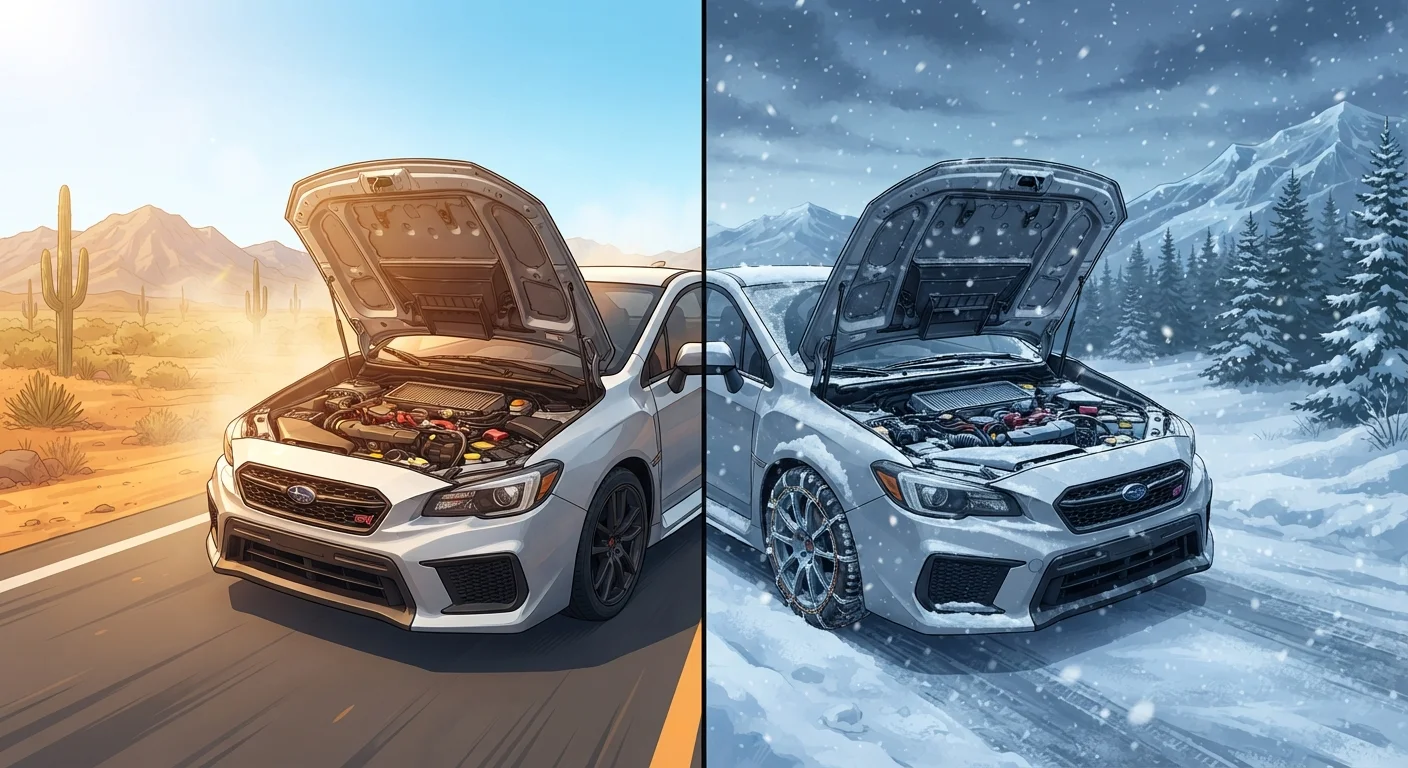
Photo: FaqsDrive.com | Smart Way To Search editorial
—— In This Article
Key Takeaways
- Extreme heat and extreme cold stress your vehicle in opposite but equally damaging ways.
- Battery, tires, coolant, and oil are the four systems most affected by seasonal temperature swings.
- Checking these systems before each season shift helps prevent breakdowns and costly repairs.
- Many seasonal checks are simple visual inspections any driver can do without special tools.
Why Seasons Matter for Your Car
Temperature is one of the biggest stressors a vehicle faces. Heat accelerates fluid breakdown and tire wear; cold thickens fluids and saps battery power. Understanding why each season creates different risks helps you prioritize what to check rather than guessing. This article breaks the comparison down system by system so you know exactly what shifts and what to do about it. For a broader month-by-month schedule, see the Annual Car Maintenance Checklist for year-round reliability.
| System | Summer Risk | Winter Risk | |
|---|---|---|---|
| Battery | Heat degrades capacity over time | Cold reduces cranking power immediately | |
| Tires | Overinflation; blowout risk in heat | Underinflation; reduced wet/ice traction | |
| Engine Oil | Thin oil breaks down faster at high temps | Thick oil flows slowly, starving engine on startup | |
| Coolant | Low coolant causes overheating | Wrong concentration causes freeze and block damage | |
| Wiper Blades | UV and heat degrade rubber | Ice tears standard blades; poor visibility | |
| Brakes | Heat from heavy use fades braking | Salt corrosion; longer stopping on ice |
Battery and Electrical System
Batteries are caught in a seasonal squeeze. In summer, high temperatures speed up the internal chemical reactions that cause battery fluid to evaporate and plates to corrode - gradually reducing capacity. In winter, a battery that tested fine in October may struggle to crank a cold engine in January because cold temperatures slow those same chemical reactions, reducing the power the battery can deliver in an instant.
What to do: Have your battery tested at a shop or auto parts store before summer heat peaks and again before the first hard freeze. If your battery is three years or older, pay close attention to test results. Clean any visible white or bluish corrosion from the terminals with a wire brush - corrosion increases resistance and compounds both heat and cold problems.
Test Your Battery Before the Season Changes
Most auto parts stores offer free battery testing - no appointment needed. A load test tells you how much power the battery can actually deliver under stress, not just whether it holds a surface charge. Testing in early fall and again in late spring catches weaknesses before extreme temperatures expose them at the worst possible moment.
Tires: Pressure and Tread
Tire pressure changes about 1 PSI for every 10°F shift in outside temperature. That means a tire properly inflated in summer will likely be underinflated once winter arrives - and overinflation is a risk going the other direction. Underinflated tires handle poorly, wear unevenly, and reduce fuel economy. Overinflated tires have less road contact and can blowout more easily in summer heat.
Tread depth matters even more in cold and wet conditions. Worn tread that is adequate on dry summer roads may be dangerously insufficient on wet or icy pavement. For a full explanation of how to measure tread and when to rotate, see our guide on tire pressure, tread depth, and rotation. And if you live somewhere with real winter weather, understand how those tires perform before you need them - the effects of snow and ice on vehicle control are significant.
Engine Oil and Other Fluids
Motor oil is rated by viscosity - its resistance to flow. The "W" in ratings like 5W-30 stands for winter; lower numbers flow more freely in cold temperatures. Many modern vehicles use a multi-grade oil that handles a wide temperature range, but older vehicles or those driven in extreme climates may benefit from a seasonal oil weight change. Check your owner's manual, which will specify the recommended oil viscosity range for your climate.
Coolant (antifreeze) deserves equal attention. In summer, it prevents your engine from overheating. In winter, it prevents the coolant itself from freezing inside the engine block - a failure that can crack the block and cause catastrophic damage. Have the coolant concentration tested annually with an inexpensive test strip or have a shop check it. Most manufacturers recommend a 50/50 mix of coolant and distilled water, which protects to roughly -34°F.
~1 PSI
Tire pressure lost per 10°F temperature drop
The U.S. Department of Energy notes that proper tire inflation directly affects fuel economy and handling safety.
-34°F
Freeze protection from a 50/50 coolant mix
A properly mixed coolant-to-water ratio is the standard recommendation across most vehicle manufacturers for year-round protection.
Brakes, Wipers, and Visibility
Brake performance does not change dramatically with temperature under normal conditions, but winter driving exposes worn brakes quickly. Ice and snow require more stopping distance and place higher demand on brake components. If your brakes squeal, pulse, or feel soft, address them before winter arrives - not during it.
Wiper blades are often overlooked until they streak across a rainy windshield or smear snow into a foggy arc. Standard rubber blades stiffen in cold weather and can tear when scraped across iced glass. Many drivers swap to winter-specific blades - which have a rubber boot protecting the frame from ice buildup - for the cold months, then return to standard blades in spring. Washer fluid should be rated for freezing temperatures; plain water will turn to ice in the reservoir and lines. The Safe Driving Tips hub has additional guidance on keeping your vehicle controllable in tough conditions.
This article provides general educational information about vehicle maintenance. Always consult a qualified mechanic for advice specific to your vehicle's make, model, and condition.

Automotive Basics Editorial Team
Automotive Basics Editorial Team is the collective byline for our editorial team and contributor network. Articles published under this byline or an editorial pen name are researched, written, and reviewed according to our editorial standards for clarity, consistency, and independence before publication.
View author profile