
Defensive Driving: What It Actually Means in Practice
Defensive driving is more than a slogan. This guide explains the specific habits and mindsets that form its foundation.
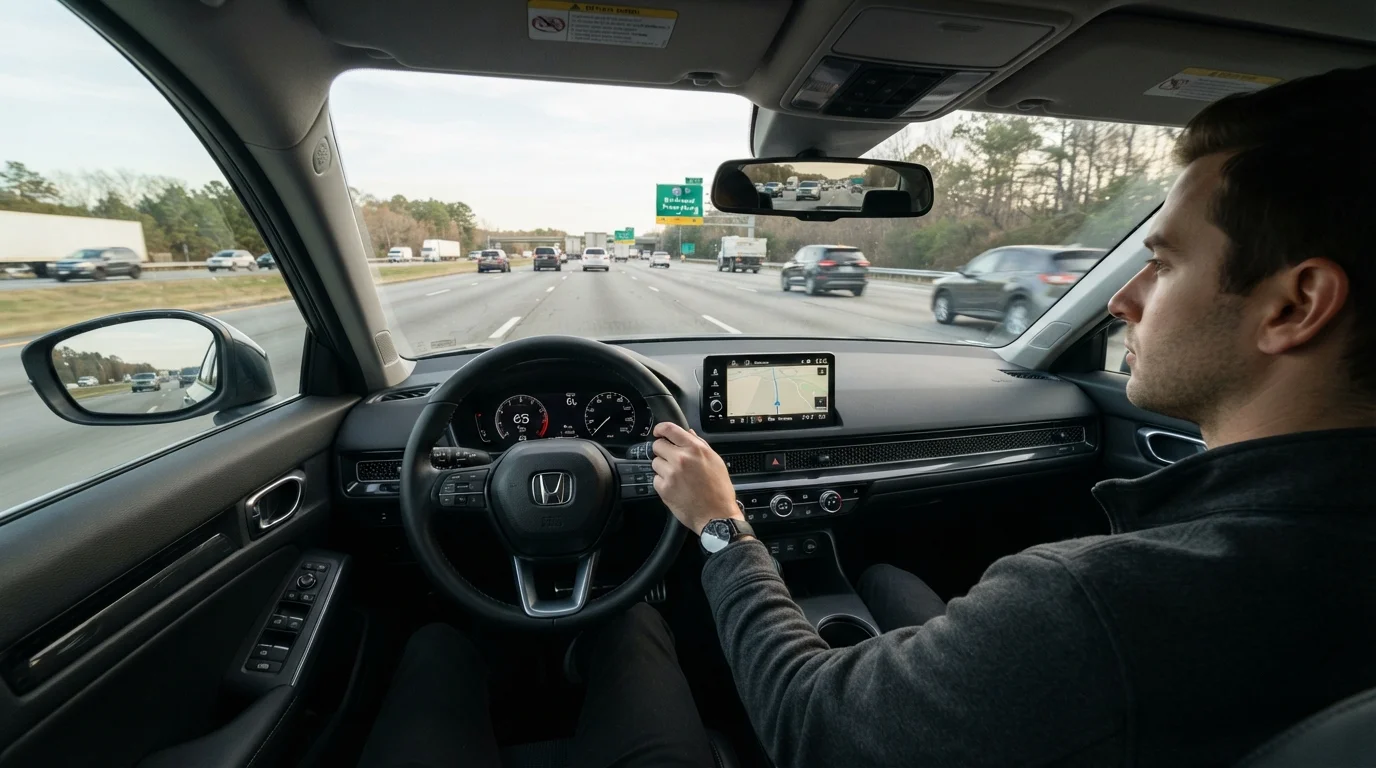
Photo: FaqsDrive.com | Smart Way To Search editorial
—— In This Article
Key Takeaways
- Defensive driving means anticipating hazards before they happen, not just reacting to them.
- Maintaining adequate following distance is one of the most effective crash-prevention habits.
- Scanning ahead, checking mirrors regularly, and eliminating distractions are daily non-negotiables.
- Adjusting speed and space for weather, traffic, and fatigue is part of the defensive driver's toolkit.
- Defensive driving treats other road users as unpredictable - and plans accordingly.
What Defensive Driving Actually Means
The phrase "defensive driving" gets used often enough that it can start to feel like an empty slogan. But it describes a genuinely different way of operating a vehicle - one grounded in awareness, planning, and a realistic view of risk.
At its core, defensive driving means anticipating hazards rather than simply reacting to them. A reactive driver hits the brakes when danger appears. A defensive driver has already identified the likely hazard, created space, and adjusted their speed before anything goes wrong.
It also means accepting a simple truth: you can control your own vehicle, but you cannot control other drivers. That shift in mindset - from assumption to anticipation - is where defensive driving actually begins. For a closer look at how overconfident assumptions contribute to crashes, see common assumptions that lead to crashes.
Following distance
The gap you maintain between your vehicle and the one in front of you, measured in time or space. More distance means more time to react if the car ahead brakes suddenly.
Hazard anticipation
The practice of identifying potential dangers before they become emergencies, by reading the road environment ahead of you.
Scanning
Actively moving your eyes across the road - near, mid-range, and far - rather than fixating on one spot. Scanning helps catch hazards earlier.
Reaction time
The time between when your brain recognizes a hazard and when your body responds. Fatigue, distraction, and speed all affect how useful your reaction time is.
Space management
Deliberately maintaining a buffer of open space around your vehicle on all sides, giving yourself more options if something unexpected happens.
The Core Habits of a Defensive Driver
Defensive driving isn't a single technique - it's a cluster of consistent habits practiced every time you're behind the wheel.
- Scan ahead continuously. Keep your eyes moving between the road immediately ahead, the mid-range, and the distant horizon. Hazards rarely appear without some early visual warning.
- Check your mirrors every 5-8 seconds. A good defensive driver always knows who and what is around them - not just in front.
- Signal early and clearly. Giving other drivers time to respond to your intentions reduces the chance of conflict or collision.
- Expect the unexpected. A parked car might open its door. A pedestrian might step off a curb. A driver might run a red light. Planning for these possibilities - without paranoia - keeps your reactions sharp.
- Eliminate in-vehicle distractions. Phone use, eating, and adjusting audio systems all divert attention during moments when it matters most.
Practice Habits Before They're Needed
Defensive driving habits are most effective when they're automatic. Try consciously practicing mirror checks, scanning, and following distance on every drive - even short, familiar ones. Repetition builds the muscle memory that kicks in when it counts most.
Managing Space and Speed
Two physical factors you can directly control - your following distance and your speed - have an outsized impact on your ability to avoid crashes.
Following distance gives you time and space to react. The widely cited three-second rule offers a simple benchmark: after the vehicle ahead passes a fixed object, count at least three seconds before you pass the same point. In wet, icy, or foggy conditions, extend that gap significantly.
Speed management goes beyond reading the speedometer. Posted limits reflect safe speeds for ideal conditions. When visibility drops, roads are slick, or traffic is dense, reducing speed below the posted limit is not only reasonable - it's the defensive choice. Driving faster than conditions warrant is a leading factor in serious crashes.
Space management also applies laterally. Maintaining a cushion on all sides of your vehicle - not just in front - gives you more options if something unexpected happens to your left or right.
Staying Mentally Present Behind the Wheel
Physical alertness and mental engagement are not the same thing. A driver can be wide awake and still be mentally checked out - on autopilot through a familiar route, distracted by a difficult conversation, or emotionally preoccupied.
Defensive driving requires deliberate mental engagement throughout your trip. This means actively processing what you see, making predictions about how the traffic environment might change, and sustaining that attention rather than letting it drift.
Fatigue is a particularly serious threat to this mental engagement. Research consistently shows that drowsy driving impairs judgment and reaction time in ways that parallel alcohol impairment. Recognizing your own fatigue - and acting on it - is itself a defensive driving skill. Our guide on driver fatigue warning signs walks through what to watch for.
Driving Drowsy Is Never a Small Risk
If you notice your eyes feel heavy, your mind is drifting, or you can't recall the last few miles, those are serious warning signs - not minor inconveniences. Pull off safely at the first opportunity and rest before continuing. No destination is worth the risk of falling asleep at the wheel.
When Conditions Change, So Should You
A defensive driver doesn't apply the same approach regardless of environment. Adjusting technique to match real-world conditions is central to the practice.
Rain reduces tire grip and lengthens stopping distances. Fog limits sight lines. Snow and ice demand dramatically increased following distances and near-elimination of sudden inputs - sharp braking or steering - that can cause a slide. For a full breakdown of how adverse weather affects vehicle control and what adjustments to make, see our guide on driving in rain, snow, and fog.
After dark, reduced visibility and the presence of fatigued or impaired drivers makes nighttime driving statistically riskier per mile. The habits covered in our article on night driving habits translate the defensive driving mindset directly into low-light scenarios.
The underlying principle remains constant: conditions set the terms, and a defensive driver adjusts accordingly - never assuming that what worked yesterday applies automatically to today.
This article provides general educational information about safe driving practices. It is not a substitute for professional driver training or certified defensive driving instruction.
Frequently Asked Questions

Automotive Basics Editorial Team
Automotive Basics Editorial Team is the collective byline for our editorial team and contributor network. Articles published under this byline or an editorial pen name are researched, written, and reviewed according to our editorial standards for clarity, consistency, and independence before publication.
View author profile