
Tire Pressure, Tread Depth, and Rotation: The Basics Drivers Often Skip
Tires affect safety, fuel economy, and handling—yet basic upkeep is often overlooked. Here's what you need to check and how often.
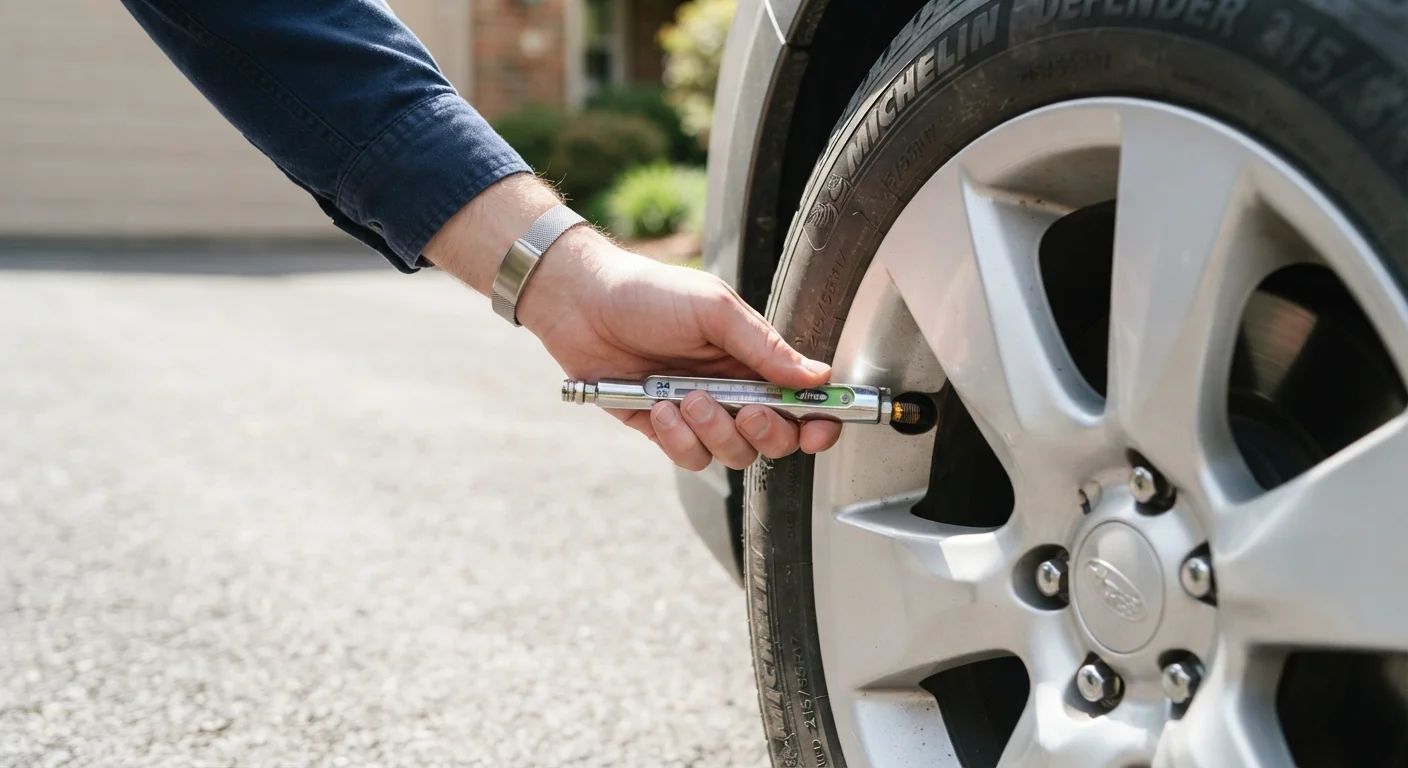
Photo: FaqsDrive.com | Smart Way To Search editorial
—— In This Article
Key Takeaways
- Correct tire pressure is found on the driver's door jamb sticker, not the tire sidewall.
- Tread depth below 2/32 of an inch signals a tire that needs immediate replacement.
- Rotating tires every 5,000-7,500 miles helps them wear evenly and last longer.
- Under-inflated tires reduce fuel efficiency and increase blowout risk.
- A simple penny or quarter test can tell you whether your tread is dangerously worn.
Why Tires Deserve More Attention Than They Get
Tires are the only part of your car that touches the road. They control how quickly you stop, how well you handle a curve, and how your vehicle responds when conditions turn slippery. Yet for many drivers - especially those new to car ownership - tires get a glance, not a check.
Neglecting the basics costs real money and creates real risk. Underinflated tires wear unevenly, reduce gas mileage, and run hotter, which raises the chance of a blowout. Worn tread can't channel water away from the contact patch fast enough, meaning hydroplaning becomes a serious hazard in the rain. For a deeper look at how wet and icy roads change what your tires can do, see our article on driving in rain, snow, and fog.
The good news: monitoring your tires is straightforward, costs almost nothing, and takes minutes. This guide walks you through the three most important habits - pressure checks, tread inspection, and rotation - so you can stay ahead of problems before they become emergencies.
Tire Pressure: The Number Most Drivers Get Wrong
Many drivers assume the number molded into the tire sidewall is the target pressure. It isn't. That figure - often around 44-51 PSI - is the tire's maximum capacity, not what you should run day to day. Your vehicle's recommended pressure is printed on a sticker inside the driver's door jamb, and sometimes in your owner's manual. It typically falls between 30 and 35 PSI for passenger cars.
~1 PSI
Pressure lost per 10°F temperature drop
The U.S. Department of Energy notes that tire pressure decreases by roughly 1 PSI for every 10-degree Fahrenheit drop in ambient temperature.
0.2%
Fuel economy loss per 1 PSI underinflation
According to the U.S. Department of Energy, properly inflated tires can improve gas mileage by up to 0.5-3%, with each PSI drop in all four tires reducing efficiency by about 0.2%.
Check pressure when tires are cold - meaning the car has been parked for at least three hours or driven fewer than a mile. Heat from driving causes air to expand, giving a falsely high reading. A quality dial or digital gauge is inexpensive and far more reliable than the gauges built into gas station air pumps.
Make pressure checks part of your monthly routine. Temperature swings matter too: tire pressure drops roughly 1 PSI for every 10°F decrease in outside temperature, so fall and winter often bring tires that are quietly underinflated. For a full picture of how seasons affect your car, our seasonal car maintenance guide covers what to inspect as the weather shifts.
Set a Monthly Reminder on Your Phone
Tire pressure checks are easy to forget because tires lose air slowly and silently. Setting a recurring monthly reminder takes seconds and ensures you never go more than 30 days without a check. Pair it with your first fill-up of the month to build the habit faster.
Tread Depth: How to Know When a Tire Is Done
Tire tread channels water away from the contact patch so rubber can grip pavement. As tread wears down, that ability degrades - and stopping distances in wet conditions increase substantially. The legal minimum tread depth in most U.S. states is 2/32 of an inch, but many safety professionals recommend replacing tires at 4/32 of an inch, especially if you drive in rain or snow regularly.
Two quick tests work without any tools:
- The penny test: Insert a penny into the tread groove with Lincoln's head pointing down. If you can see the top of Lincoln's head, tread is at or below 2/32 inch - replace the tire soon.
- The quarter test: Use a quarter the same way. If you can see the top of Washington's head, you're at about 4/32 inch - consider replacing within the next few months, particularly before winter.
Most tires also have built-in tread wear indicators - small raised bars running across the grooves. When the surrounding tread wears flush with those bars, the tire has reached its minimum usable depth.
To understand what the numbers and markings on your tire sidewall actually mean - including load ratings and speed ratings - see our explainer on tire pressure, tread, and load ratings.
Rotation: The Habit That Extends Tire Life
Your tires don't wear at the same rate. Front tires handle steering and, on front-wheel-drive vehicles, also transmit engine power - so they wear faster, particularly on the outer edges. Rear tires typically wear more evenly but still develop different patterns than the fronts. If left in place, this uneven wear shortens the life of the entire set.
Rotate your tires every 5,000-7,500 miles to distribute wear evenly across all four.
Front and rear tires carry different loads and perform different functions, causing them to wear at different rates. Regular rotation prevents any single tire from wearing out prematurely, extending the life of the full set and saving replacement costs.
Always check tire pressure when tires are cold, before driving more than a mile.
Driving heats the air inside tires, causing pressure to read higher than its true resting value. Checking cold gives you an accurate baseline to compare against the vehicle's recommended PSI, so you're not under- or over-inflating.
Use the quarter test monthly to catch tread wear before it becomes dangerous.
Tread wear is gradual and easy to miss visually. A consistent measurement habit catches the transition from safe to marginal tread early, giving you time to plan a replacement rather than face an emergency or failed inspection.
Check all four tires individually - don't assume they're all at the same pressure.
Tires lose air at different rates due to minor valve stem differences, small punctures, or temperature exposure. Assuming all four are fine based on a single check can leave one or more tires dangerously underinflated.
Rotating tires - moving them between positions in a defined pattern - evens out this wear and can add thousands of miles to tire life. A common guideline is to rotate every 5,000 to 7,500 miles, which works out to roughly every other oil change for many drivers. Your owner's manual may specify a different interval, so check there first.
Rotation patterns vary depending on whether your vehicle is front-wheel drive, rear-wheel drive, or all-wheel drive, and whether you have directional tires (which must stay on the same side of the car). A qualified mechanic can recommend the right pattern for your specific setup and perform the rotation during routine service visits.
Pair consistent rotation with regular pressure checks and you'll get the most even wear possible. For a broader maintenance schedule that keeps everything on track, our annual car maintenance checklist provides a month-by-month framework.
Quick Wins: Start Protecting Your Tires Today
You don't need a garage or mechanical expertise to start taking care of your tires. These actions are simple, immediate, and meaningful:
Building these habits pays off. Well-maintained tires support better fuel efficiency, safer emergency handling, and lower overall ownership costs. Before your next long drive, add a tire check to your prep routine - our pre-trip safety walkthrough shows exactly what to inspect before you leave.

Automotive Basics Editorial Team
Automotive Basics Editorial Team is the collective byline for our editorial team and contributor network. Articles published under this byline or an editorial pen name are researched, written, and reviewed according to our editorial standards for clarity, consistency, and independence before publication.
View author profile