
Tire Pressure, Tread, and Load Ratings Decoded
Those numbers on your tire sidewall carry real meaning. Here's what PSI, tread depth, and load ratings tell you about your tires.
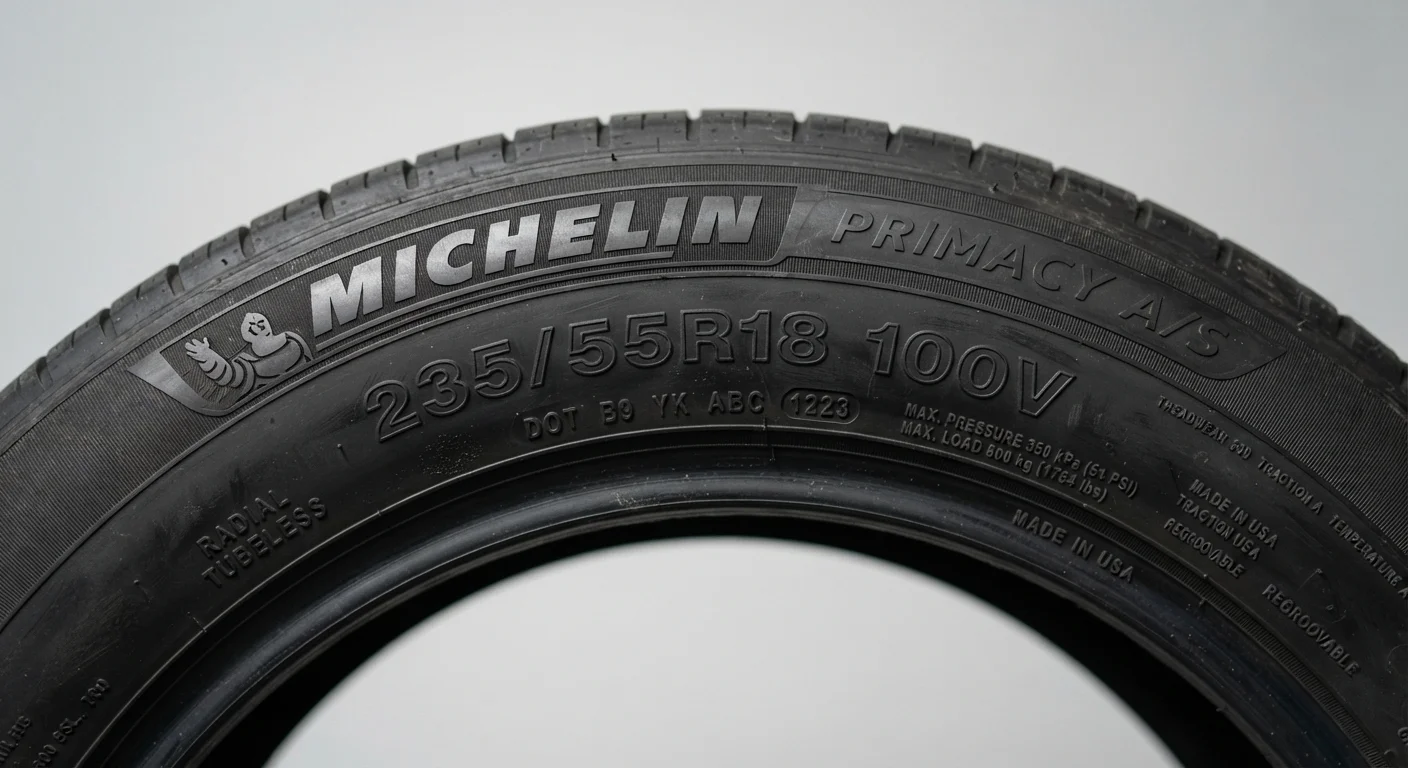
Photo: FaqsDrive.com | Smart Way To Search editorial
—— In This Article
What's Printed on Your Tire Sidewall
That string of numbers and letters stamped into the side of your tire - something like P215/65R16 98H - is not random. Each segment carries a specific meaning about how your tire is built, what it's designed to carry, and how fast it can safely travel. Think of it as a data label, similar to how oil cap numbers decode viscosity ratings for your engine.
| Recommended PSI source | Driver's door jamb sticker (Vehicle manufacturer specification) |
| Minimum legal tread depth (most U.S. states) | 2/32 of an inch (U.S. state motor vehicle regulations) |
| Recommended tread replacement threshold | 4/32 of an inch (General safety guidance from tire industry organizations) |
| Typical pressure loss per month | ~1 PSI (General tire industry guidance) |
| PSI drop per 10°F temperature decrease | ~1 PSI (Tire industry general guideline) |
| New tire tread depth (typical) | 10/32" to 11/32" (Standard new tire specification) |
Here's how to break down a standard tire code:
- P - Passenger vehicle tire (LT = light truck)
- 215 - Tire width in millimeters (sidewall to sidewall)
- 65 - Aspect ratio: sidewall height is 65% of the tire width
- R - Radial construction
- 16 - Wheel diameter in inches
- 98 - Load index (how much weight the tire supports)
- H - Speed rating (the maximum sustained speed the tire is designed for)
Tire Pressure (PSI) Explained
PSI stands for pounds per square inch, and it measures how much air is inside your tire. Getting this right is one of the simplest ways to protect your safety and fuel economy.
PSI
Pounds per square inch - the unit used to measure tire air pressure. Your vehicle's recommended PSI is listed on the door jamb sticker, not the tire itself.
Aspect Ratio
The ratio of a tire's sidewall height to its width, expressed as a percentage. A ratio of 65 means the sidewall height is 65% of the tire's width.
Load Index
A numerical code on the tire sidewall that corresponds to the maximum weight each tire can safely support when inflated to the correct PSI.
Tread Depth
The measurement from the top of the tire tread to the bottom of the groove, typically expressed in 32nds of an inch. It indicates how much usable grip the tire has remaining.
Speed Rating
A letter code indicating the maximum sustained speed a tire is designed to handle safely under its rated load. Common ratings range from S (112 mph) to Y (186 mph).
Radial Construction
The most common modern tire build, where internal cords run perpendicular to the direction of travel. Denoted by the letter R in the tire size code.
Where to find the correct PSI: Look at the sticker on the inside of your driver's door jamb - not the maximum PSI printed on the tire itself. That tire-sidewall number is the tire's structural limit, not the pressure your car needs. Your vehicle manufacturer's recommended PSI is what you should target.
Driving on underinflated tires increases rolling resistance, generates excess heat, and can cause premature tread wear on the outer edges. Overinflated tires reduce road contact, making braking and cornering less predictable. Check pressure at least once a month and before long trips - tires naturally lose about 1 PSI per month, and pressure drops roughly 1 PSI for every 10°F decrease in outside temperature.
4/32"
Tread depth where wet braking performance noticeably declines
Many automotive safety organizations recommend considering replacement at this threshold, well above the legal 2/32" minimum.
1 PSI
Pressure lost per 10°F drop in outside temperature
Cold weather is one of the most common causes of underinflated tires, making seasonal pressure checks especially important.
See our full guide on tire pressure checks and rotation schedules for a step-by-step maintenance routine.
Tread Depth and Load Ratings
Tread depth determines how well your tire channels water, grips the road, and stops in an emergency. New tires typically start with 10/32" to 11/32" of tread depth. The legal minimum in most U.S. states is 2/32", but handling and wet-weather braking begin to degrade noticeably well before that point - many safety organizations recommend replacing tires at 4/32".
A quick field check: insert a quarter into a tread groove with Washington's head pointing down. If you can see the top of his head, you're at or below 4/32" and replacement is worth considering soon.
Load index tells you the maximum weight each tire can support when properly inflated. The number on the sidewall (like 98) maps to a standardized chart - a load index of 98, for example, corresponds to a capacity of 1,653 lbs per tire. Never install tires with a lower load index than your vehicle requires; the rating is a safety threshold, not a suggestion.
Speed ratings (the letter following the load index) indicate the maximum sustained speed the tire is engineered to handle safely. Common ratings include S (112 mph), H (130 mph), and V (149 mph). Mismatching speed ratings across axles can affect handling balance - always consult your vehicle owner's manual when replacing tires.
If a dashboard light triggers while you're investigating tire concerns, this dashboard warning light reference can help you interpret what your car is signaling.
When to Consult a Qualified Mechanic
Interpreting tire codes is something any driver can learn, but replacing tires involves torque specs, alignment, and balancing that require professional tools. If you notice uneven tread wear, sidewall bulges, or consistent pressure loss, have a licensed mechanic inspect your tires before driving further. Never attempt to repair a sidewall puncture yourself - sidewall damage is generally considered non-repairable and a safety risk.

Automotive Basics Editorial Team
Automotive Basics Editorial Team is the collective byline for our editorial team and contributor network. Articles published under this byline or an editorial pen name are researched, written, and reviewed according to our editorial standards for clarity, consistency, and independence before publication.
View author profile