
Why High Price Doesn't Always Mean High Quality
The link between price and quality is weaker than most shoppers assume. Learn the research behind pricing psychology and what really signals value.
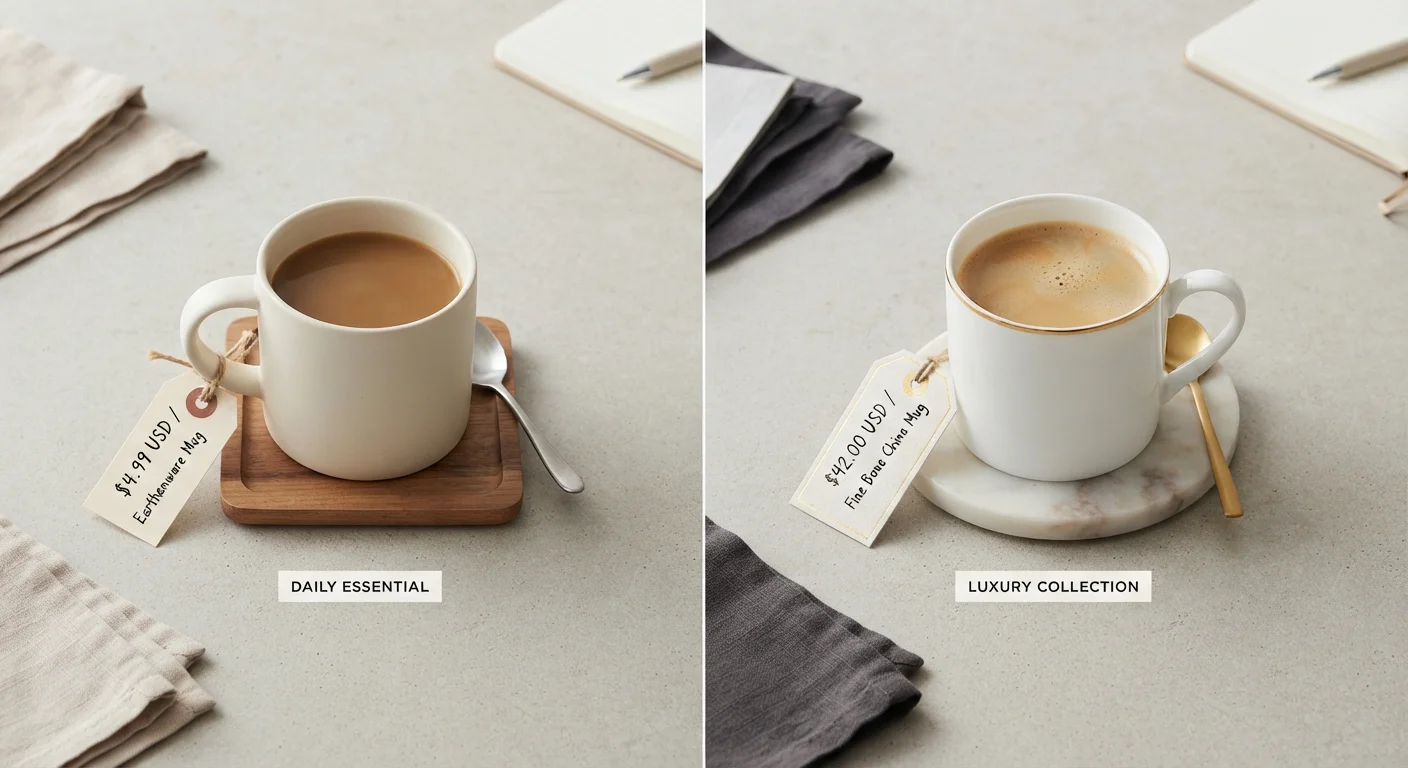
Photo: FaqsDrive.com | Smart Way To Search editorial
Key Takeaways
- Price and quality have a weaker correlation than most consumers assume, according to consumer research.
- Pricing is often shaped by branding, marketing costs, and perceived prestige rather than production quality.
- Tangible signals like materials, construction, and independent testing are more reliable quality indicators than price.
- Moderately priced products frequently match or outperform expensive alternatives in independent evaluations.
- Understanding pricing psychology helps you make smarter decisions without overspending.
The Price–Quality Link Is Weaker Than You Think
Most shoppers use price as a shortcut for quality. It feels logical: companies charge more because they deliver more, right? In practice, the evidence is far less tidy. Research consistently shows that across a wide range of consumer product categories, the statistical relationship between price and independently measured quality is weak — meaning a higher price gives you only a slight edge in predicting actual performance.
That's not to say price never reflects quality. In some categories — certain tool grades, medical-grade materials, or products where manufacturing precision genuinely drives cost — you do get what you pay for. But those categories are the exception, not the rule. For most everyday purchases, price is at least partly a signal about branding and market positioning rather than what's inside the box.
Myth
If something costs more, it must be made better. That's just how markets work.
Fact
Price reflects many factors beyond materials and craftsmanship, including branding, advertising, distribution, and perceived status.
Consumer research has repeatedly shown that price and objective quality have a modest and inconsistent correlation. A widely cited meta-analysis published in the Journal of Consumer Research found that across product categories, price explained only a small fraction of the variation in independently measured quality. Packaging, brand name, and retailer placement often account for more of the price difference than the product itself does.
Myth
Expensive products are tested more rigorously and held to a higher standard.
Fact
Testing standards are largely set by regulation and third-party certification bodies, not by price point.
Safety and performance regulations generally apply across price tiers. A $15 electrical outlet and a $90 designer version must meet the same UL listing requirements in the U.S. What independent testing organizations — not manufacturers — determine is whether a product actually performs to its claims. Those findings frequently reveal mid-range products meeting or exceeding premium ones on measurable criteria.
Myth
When you pay more for a brand-name product, you're paying for reliability.
Fact
Brand premiums often reflect marketing investment and status signaling, not documented reliability advantages.
Brand equity is real, but it measures consumer perception, not engineering reliability. Studies in behavioral economics have shown that identical products — sometimes manufactured in the same facility — sell at dramatically different prices depending on the label attached. When buying for reliability, look for concrete indicators: warranty terms, published failure-rate data, and build quality signals like materials and construction tolerances — not the price tag or logo.
Myth
Paying a premium protects you from scams and fakes.
Fact
Counterfeit goods are frequently sold at near-premium prices to exploit exactly this assumption.
Fraudulent sellers have learned that a low price triggers skepticism, so many deliberately price fakes close to the authentic product's retail value. Paying more does not authenticate a product. Genuine protection comes from buying through verified, established channels and knowing what to look for in the product itself — not from price alone. Learn more about spotting red flags and protecting yourself from deceptive sellers.
Myth
Luxury products use fundamentally better materials that justify the cost.
Fact
Premium materials sometimes account for only a small portion of the price premium; branding and margin make up the rest.
In apparel, cosmetics, and electronics especially, independent analyses have found that raw material costs bear little relationship to retail price. A fragrance may cost a few dollars to produce and sell for over $100; the difference is marketing, packaging, and brand positioning. That said, some product categories do show genuine material differences at higher price points — the key is relying on what product claims actually mean rather than inferring material quality from price.
What Actually Does Signal Quality
If price is an unreliable guide, what should you look at instead? Several signals are more directly tied to how a product actually performs:
- Independent test results: Organizations that evaluate products without manufacturer funding provide the most objective data available. Look for published test scores, not manufacturer-supplied data sheets.
- Verifiable material and construction details: Physical build quality signals — seam consistency, material weight, finish evenness — often predict longevity better than brand reputation does.
- Total cost of ownership: A cheaper upfront price can cost more over time through repairs, consumables, or replacement. Understanding lifetime cost vs. purchase price helps you make that calculation before committing.
- Decoding marketing language: Terms like "premium," "professional-grade," and "all-natural" are often unregulated. Learn what product claims actually mean before assuming they indicate superior quality.
Price Is a Marketing Signal, Not a Quality Guarantee
Manufacturers set prices based on many factors — brand equity, target market, advertising spend, and retailer margins — not solely on the cost of materials or craftsmanship. Accepting a high price as proof of quality hands control of your purchase decision to a marketer, not to evidence. Always look for independent verification before assuming a premium price reflects a premium product.
When comparing similar items, price per unit is a more useful number than sticker price for assessing genuine value — especially in consumables and packaged goods.
Don't Ignore Suspiciously Low Prices Either
While high price doesn't guarantee quality, an unusually low price can signal a real problem — counterfeit goods, missing safety testing, or outright scams. The goal is to evaluate products on their actual merits, not to anchor decisions entirely on price in either direction. See why 'too good to be true' is usually right for more on that side of the equation.

Smart Shopping Editorial Team
Smart Shopping Editorial Team is the collective byline for our editorial team and contributor network. Articles published under this byline or an editorial pen name are researched, written, and reviewed according to our editorial standards for clarity, consistency, and independence before publication.
View author profile