
Reading Past the Marketing: What Product Claims Actually Mean
"Premium," "professional-grade," "all-natural" — learn what these common product claims really signal and which ones are largely meaningless.
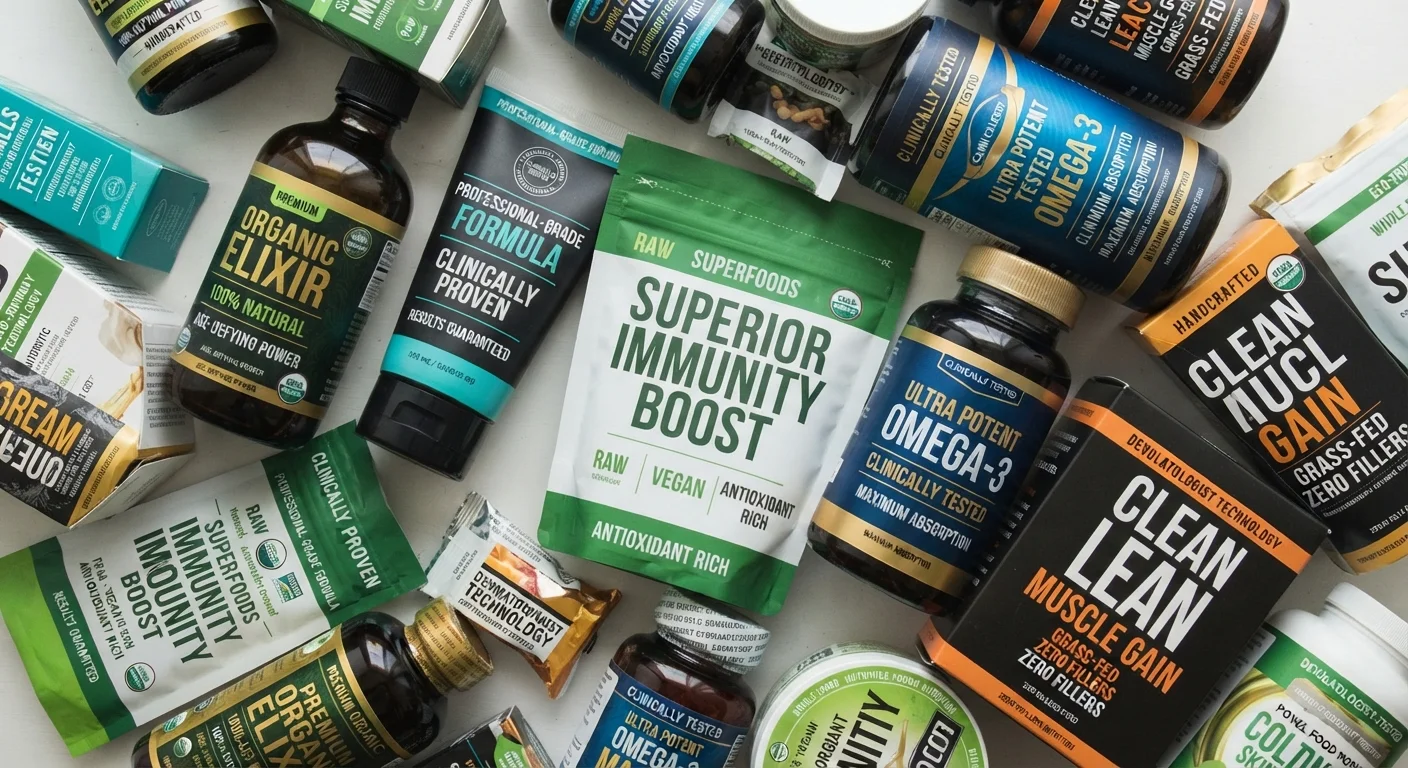
Photo: FaqsDrive.com | Smart Way To Search editorial
—— In This Article
Key Takeaways
- Words like 'premium' and 'professional-grade' have no regulated definitions and can be applied by any manufacturer.
- 'Natural' on food and personal care products is not a guaranteed clean-ingredient signal without a supporting certification.
- Third-party certifications from recognized bodies carry far more weight than self-applied marketing labels.
- Specific, measurable claims — backed by verifiable data — are more trustworthy than vague superlatives.
- Reading ingredient lists, spec sheets, and independent test results is more reliable than relying on front-of-package claims.
Why Marketing Language Is Designed to Feel Like Information
When you pick up a product and read words like "advanced formula," "ultra-pure," or "engineered for performance," your brain processes them as descriptive facts. That's intentional. Marketers understand that confident, specific-sounding language triggers a sense of trust — even when the words carry no measurable meaning.
This isn't about deception in a legal sense. Most of these phrases are simply unregulated descriptors — terms with no standardized definition that any manufacturer can apply freely. Understanding which claims fall into this category is the first step toward evaluating products on their actual merits rather than their packaging.
For a deeper look at how perceived value can inflate price without improving quality, see why high price doesn't always mean high quality.
The Most Common Meaningless Claims — and What They Actually Signal
Not all vague claims are equal. Some are mostly harmless puffery; others actively mislead shoppers about ingredients, safety, or performance. Here's what the most common ones really communicate:
- "Premium" — No regulatory body defines this. It typically signals a higher price point, not higher quality. Manufacturers self-apply it without meeting any external standard.
- "Professional-grade" — Implies the product meets the bar used by industry professionals, but there's no certification required to use this phrase. Check whether the product meets a documented industry specification instead.
- "All-natural" / "Natural" — On food products, the FDA has not issued a binding definition. On personal care products, it's essentially unregulated. The presence of synthetic ingredients doesn't legally disqualify a product from using this label.
- "Clinically tested" — This only means a test occurred. It does not mean the test showed positive results, was conducted independently, or was peer-reviewed. Look for published study data, not just the phrase.
- "Advanced formula" / "New and improved" — These phrases describe a comparison to a previous version, but no third party verifies the claim or quantifies the improvement.
When Claims Are Actually Regulated
Some product categories do have enforceable claim standards. USDA Organic certification requires verified compliance with federal organic regulations. EPA-registered disinfectants must demonstrate efficacy through approved protocols. FDA-approved drug claims require clinical evidence meeting regulatory standards. In these cases, the certification itself is the signal — not the marketing language surrounding it.
When a claim does carry real weight — such as USDA Organic, NSF Certified, or Energy Star — it's backed by a recognized certifying body with published standards. See our full guide to certifications and standards that actually mean something to learn which labels to trust.
What to Look for Instead
The antidote to vague marketing language is specific, verifiable information. Here's where to focus your attention:
Skip the Front, Read the Back
Front-of-package language is advertising copy. The ingredient list, materials disclosure, or specification table — usually on the back or sides — is where verifiable information lives. Make it a habit to turn the product over before the marketing has a chance to do its job.
Ingredient and materials disclosures are more reliable than front-of-package claims. A product listing its full ingredient list — especially in standardized formats like an INCI list for personal care — gives you actual facts to evaluate, not impressions to feel.
Spec sheets contain measurable data: dimensions, material grades, rated load, voltage tolerance, and similar figures. These are harder to fabricate and easier to compare across products. Our guide to reading a product specification sheet walks through exactly what to look for.
Independent testing results from organizations that evaluate products against consistent, objective criteria carry far more weight than brand claims. Learn how independent testing differs from brand reputation as a source of truth.
For physical products, tangible build signals — materials, tolerances, and finish quality — are also strong predictors of durability. See build quality signals to look for in physical products for a practical checklist.
~70%
Shoppers influenced by front-of-package claims
Research published in consumer behavior journals consistently finds that a substantial majority of purchase decisions are influenced by packaging language rather than ingredient or specification review.
0
Regulated definitions for 'premium' in U.S. consumer goods
No U.S. federal agency enforces a standard definition for 'premium' across general consumer product categories, leaving manufacturers free to self-apply the term.
Applying This in Practice
The next time you evaluate a product, treat front-of-package language as a starting point for questions, not a conclusion. Ask: Who verified this claim? If the answer is only the manufacturer, dig deeper. Look for the product's full disclosure documents, search for independent test results, and check whether any certifications listed appear in the certifier's public registry.
Marketing claims are designed to reduce the effort of evaluation. Slowing down and asking for evidence — rather than accepting confident language at face value — is one of the simplest and most effective habits a shopper can develop. It applies equally to spotting red flags in product listings and to everyday purchasing decisions.
Frequently Asked Questions

Smart Shopping Editorial Team
Smart Shopping Editorial Team is the collective byline for our editorial team and contributor network. Articles published under this byline or an editorial pen name are researched, written, and reviewed according to our editorial standards for clarity, consistency, and independence before publication.
View author profile