
Price Per Unit vs. Sticker Price: Which Number Actually Matters
Sticker price can be misleading. Discover how unit pricing reveals true value and why it's the smarter number to compare.
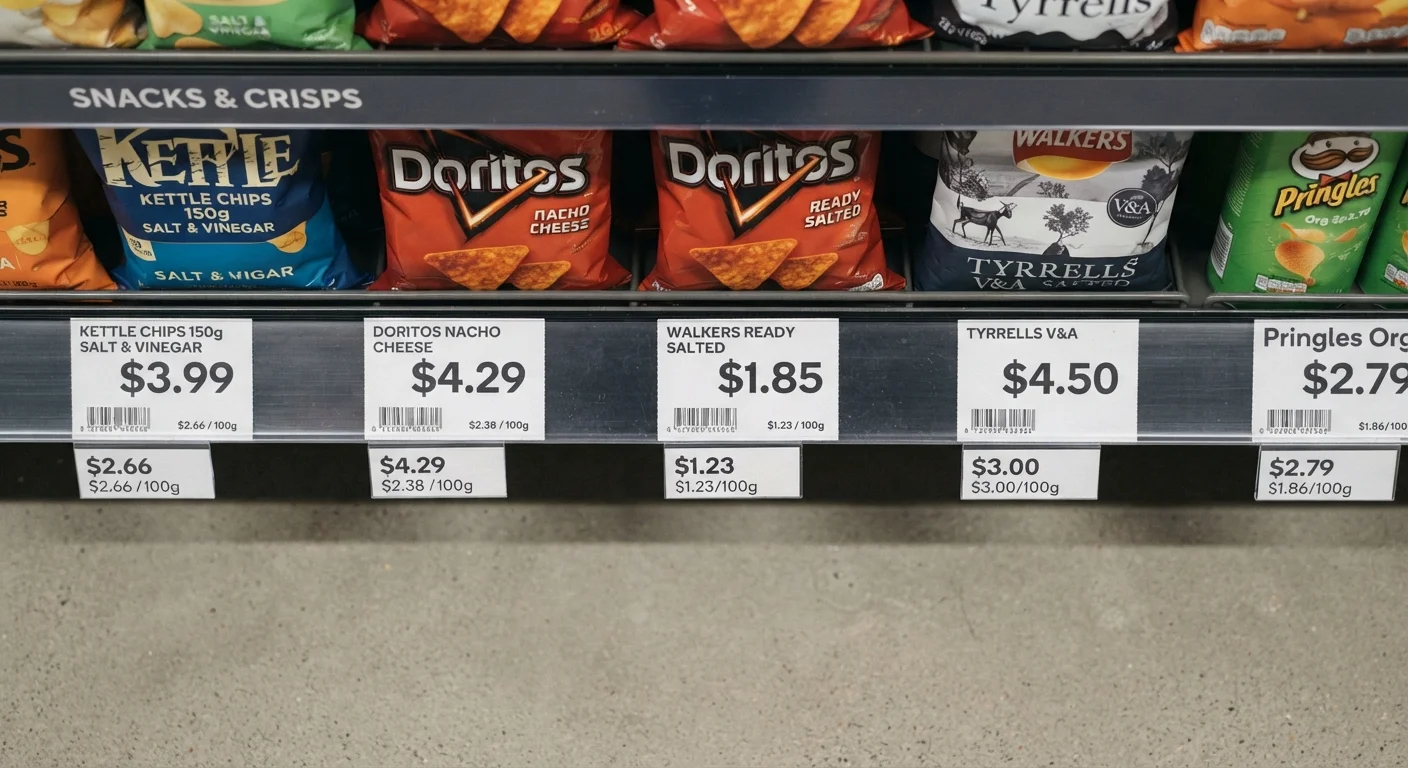
Photo: FaqsDrive.com | Smart Way To Search editorial
—— In This Article
Key Takeaways
- Sticker price tells you what you'll spend today; price per unit tells you what you're actually getting for that money.
- Bulk sizes don't always have a lower price per unit — you have to check.
- Many U.S. retailers are required by law to display unit pricing on shelf labels.
- A product with a higher sticker price can be cheaper on a per-unit basis than a smaller, lower-priced option.
- Unit pricing works across nearly every category: food, cleaning supplies, personal care, and more.
What Each Number Actually Tells You
Walk down any grocery aisle and the first number you'll notice is the sticker price — that bold figure front and center on the shelf tag. It's designed to be seen. But sticker price only answers one question: how much does this specific package cost right now? It tells you nothing about how much product you're getting in return.
Price per unit — sometimes called unit price — divides the total cost by a standard measure: ounces, pounds, count, fluid ounces, square feet, or whatever makes sense for that product category. The result is a direct, like-for-like comparison regardless of package size.
For example: a 16-oz bottle of dish soap priced at $3.99 costs about 25 cents per ounce. A 32-oz bottle priced at $6.49 costs about 20 cents per ounce. The sticker price on the larger bottle is higher, but the unit price is lower — meaning you're getting more for each dollar spent. That distinction matters, and it's easy to miss when you're only reading the big number. As this concept connects to broader value questions, it's worth also understanding why a higher price doesn't always signal higher quality.
Head-to-Head: Sticker Price vs. Price Per Unit
Here's a direct look at how these two numbers differ across the factors that matter most to everyday shoppers.
| Criterion | Sticker Price | Price Per Unit |
|---|---|---|
| What it measures | Total cost of this package | Cost per ounce, count, or measure |
| Useful for budgeting checkout total | Yes — shows exact spend | No — doesn't reflect total outlay |
| Useful for comparing value | Misleading across different sizes | Accurate across all sizes |
| Accounts for package size | No | Yes |
| Shown on most shelf labels | Always | Usually (varies by retailer/state) |
| Helps spot bulk-buy value | No | Yes |
| Risk of misleading shopper | High — larger sizes appear costly | Low — normalizes the comparison |
One practical note: in many U.S. states, retailers — particularly grocery stores — are legally required to display unit pricing on shelf labels. Look for the smaller text, usually in the lower-left corner of the label. If it's not shown, you can calculate it yourself by dividing the price by the quantity listed on the package.
When Sticker Price Is the Right Number to Use
Unit price wins for comparison — but sticker price still has a legitimate role. If you're working with a fixed checkout budget, sticker price is what you need to track. A lower unit price means nothing if buying the larger size pushes you over your limit or means you'll throw away product before using it.
Perishables are a good example. If a family-size container of yogurt has a better unit price but you'll only use half before it expires, the cheaper-per-ounce deal becomes an actual loss. The same logic applies to specialty items you buy infrequently — over-buying to capture a unit-price advantage rarely pays off.
~30%
Shoppers who regularly check unit pricing
Consumer research consistently shows that a minority of shoppers actively use unit price labels despite their wide availability in U.S. stores.
35+ states
U.S. states with unit pricing regulations
Many U.S. states have laws requiring retailers to display unit prices, though the scope and enforcement vary by state and store type.
So treat sticker price as your budget guardrail and unit price as your value compass. Use both together rather than one in isolation.
How to Make Unit Pricing a Quick Shopping Habit
You don't need a calculator in every aisle. A few simple habits make unit-price comparison nearly automatic:
- Read the shelf tag fully. Most tags already show the unit price. Train your eye to find that line first.
- Compare same units. Only compare price-per-ounce to price-per-ounce, not ounces to counts — mixing units creates false comparisons.
- Question "bulk" assumptions. Warehouse club sizes aren't always the cheapest per unit. Check rather than assume.
- Factor in your realistic usage. The best unit price on a product you won't finish is still a bad deal.
Unit pricing pairs well with thinking about the full cost of a purchase over time. For bigger buying decisions, calculating lifetime cost versus purchase price adds another layer of smart analysis that sticker price alone will never show you.
Unit Pricing Isn't Just for Groceries
Unit pricing applies far beyond the supermarket. Paper towels (price per sheet), laundry detergent (price per load), vitamins (price per serving), and even printer paper (price per ream or sheet) all benefit from this approach. Any category where the same product comes in multiple sizes or counts is fair game. The habit transfers easily once you start looking for it.

Smart Shopping Editorial Team
Smart Shopping Editorial Team is the collective byline for our editorial team and contributor network. Articles published under this byline or an editorial pen name are researched, written, and reviewed according to our editorial standards for clarity, consistency, and independence before publication.
View author profile