
Red Flags Hidden in Plain Sight on Product Listings
From vague descriptions to stock photos and missing return policies, learn which listing details quietly signal a potential scam.
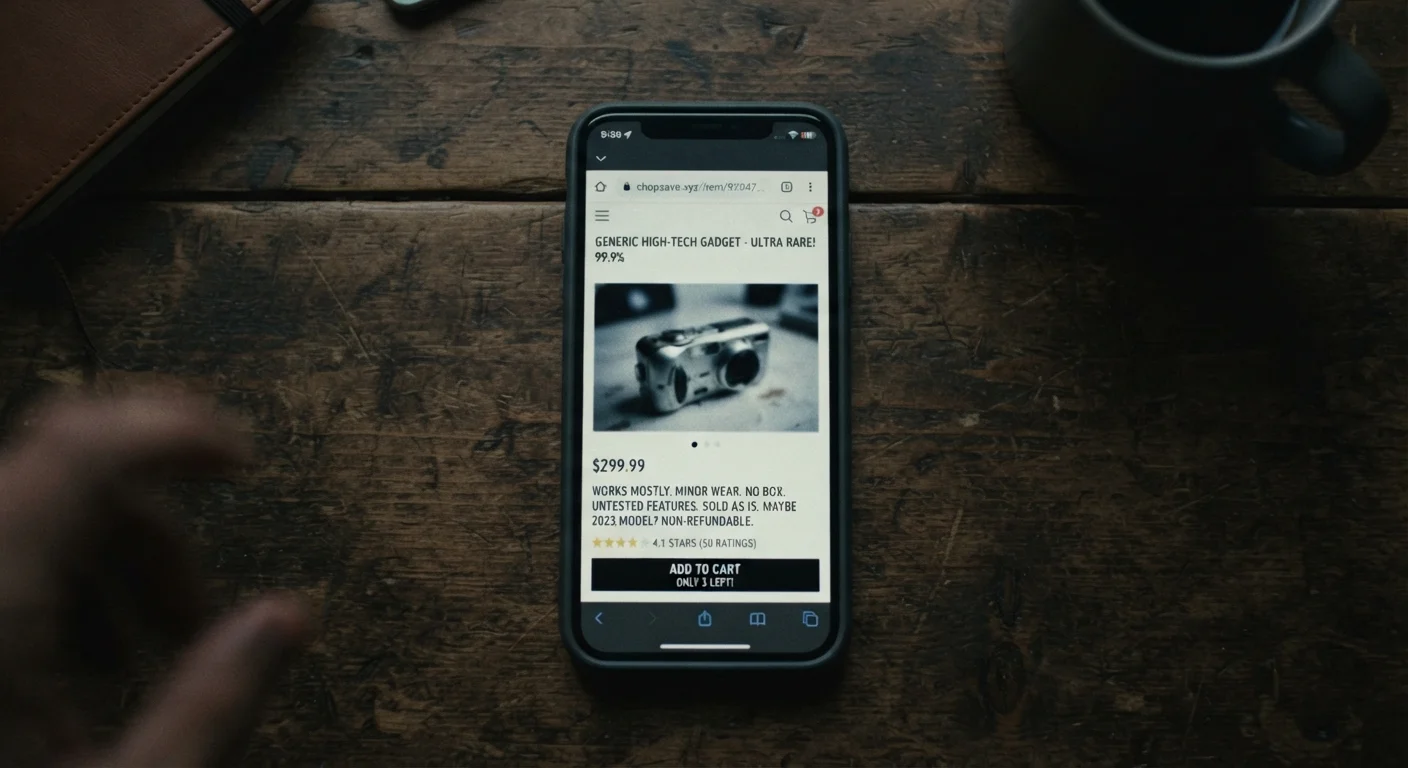
Photo: FaqsDrive.com | Smart Way To Search editorial
—— In This Article
Key Takeaways
- Vague product descriptions and stock photos are among the most consistent warning signs in deceptive listings.
- Missing or confusing return policies shift financial risk entirely onto the buyer.
- Suspiciously low prices, pressure tactics, and unverifiable seller details often appear together in fraudulent listings.
- Reverse image searching product photos takes seconds and can reveal a listing is recycled or fake.
- Cross-checking details before purchase — not after — is the most effective protection shoppers have.
Why Listings Are Where Scams Begin
Most people assume a product listing that looks clean and complete is probably legitimate. That assumption is exactly what deceptive sellers rely on. The truth is that a polished layout, a decent photo, and a few bullet points are easy to fake — and scammers have become very good at mimicking the look of trustworthy storefronts.
The real clues aren't dramatic. They're quiet: a vague phrase here, a missing policy there, a photo that feels slightly off. Understanding what those signals mean is one of the most practical skills a shopper can develop. As scam anatomy research shows, fraudulent listings succeed not by being obviously fake, but by being just convincing enough.
Here are the red flags most commonly buried in plain sight on product pages — and what each one actually tells you.
Descriptions built on buzzwords, not specifics
A listing that calls a product "premium," "professional-grade," or "high-quality" without backing those words up with actual specifications is telling you something important: the seller either doesn't know what they're selling or doesn't want you to look too closely. Legitimate sellers include measurable details — dimensions, materials, weight, compatibility, certifications — because those specifics help buyers make informed decisions and reduce returns.
Vague language, by contrast, is difficult to dispute after a purchase. If a listing says "durable construction" and the item falls apart, you can't point to a specific claim that was violated. Learning what product claims actually mean helps you spot when words are being used to obscure rather than inform.
Vague terms like 'premium' without specifics are harder to dispute — and easier for bad sellers to hide behind.
Photos that don't match the product being sold
Stock images sourced from a manufacturer's website are a staple of dropshipping and counterfeit listings. The give-away is when every photo looks professionally lit and branded, but no image actually shows the item as it would arrive — unboxed, in natural light, from multiple angles. Reverse image searching any photo (right-click on desktop, or use a tool like Google Images) takes about ten seconds and can reveal whether that image has been lifted from an unrelated source.
Watch also for listings where the main photo doesn't match the thumbnail, or where the image shows a brand name that differs from what appears in the title. These inconsistencies usually mean the seller is using whatever image gets clicks, not an accurate representation of what ships.
A reverse image search takes ten seconds and can expose a photo recycled from a completely different product or seller.
A price that seems dramatically lower than comparable items
An unusually low price isn't always a deal — it's often a signal that something about the transaction is off. The item may be counterfeit, significantly lower quality than represented, or may not arrive at all. Sellers running fraudulent listings often set prices just low enough to be tempting but not so low they trigger immediate skepticism. Understanding why suspiciously low prices are a reliable scam indicator helps frame what's likely happening behind those numbers.
Compare the listing to at least two or three other sources for the same or equivalent product. If the gap is more than 30–40%, that's worth investigating further before purchasing.
Prices dramatically below comparable listings often signal counterfeit goods, misrepresented quality, or outright fraud.
No return policy — or one that's nearly impossible to use
A listing that omits return and refund information entirely is transferring all the financial risk to you. Even more concerning are policies written to sound reasonable but structured to be unusable: returns accepted "within 3 days of delivery" for items shipped internationally, or refunds requiring the buyer to pay return shipping to an overseas address that costs more than the product itself.
Before purchasing, locate the return policy and ask yourself: Could I realistically use this if the item isn't what was advertised? If the answer is no — or if you can't find a policy at all — treat that as a serious warning.
A return policy that looks real but is practically impossible to use offers buyers no more protection than having none at all.
Seller information that can't be verified
Legitimate sellers on any marketplace — whether a major platform or an independent site — should have a verifiable identity: a business name, contact method, and typically a history of completed transactions. When a seller has been active for only a few weeks, has minimal feedback, lists no business address or contact details, or uses a name that changes slightly across listings, those are signs you're dealing with someone who may be difficult to hold accountable.
Search the seller name independently, outside of the platform itself. If nothing comes up — no website, no social presence, no external mentions — that absence is worth noting. Overconfidence in platform safety is one of the habits that leaves shoppers most exposed.
When a seller's identity can't be verified outside the platform, accountability disappears the moment a problem arises.
Reviews that cluster suspiciously or read as generic praise
A product with 200 reviews, all posted in the same two-week window, all written in similar enthusiastic language, and all rating it five stars is almost certainly benefiting from manipulated feedback. Genuine review distributions include a range of scores, varied writing styles, and occasional mentions of specific use cases or minor complaints.
Look for reviews that describe the product in vague, universal terms — "amazing quality," "exceeded expectations," "perfect in every way" — without describing what the buyer actually used it for. These patterns are a strong signal of coordinated or incentivized reviews. Reading reviews critically is a skill that pays off on nearly every purchase.
Reviews posted in tight clusters with uniform praise and no specifics are a classic marker of coordinated manipulation.
How to Use These Signals Together
No single red flag automatically means a listing is fraudulent. A small seller might use a stock photo because they lack photography equipment. A new marketplace merchant might have a sparse return policy because they haven't thought it through. But when two or three of these signals appear together, the risk compounds quickly.
The Two-Minute Pre-Purchase Check
Before buying from any unfamiliar seller, spend two minutes running these quick checks: reverse image search the main product photo, look up the seller name outside the platform, read the return policy in full, and compare the price to at least two other sources. These steps catch the majority of problematic listings before any money changes hands.
Before completing any purchase, especially from an unfamiliar seller, run through a quick mental checklist: Can I verify this seller's identity? Do the photos match the description? Is there a real return path if this goes wrong? That habit takes under a minute and catches most problems before they cost you money. For a more thorough pre-purchase process, see this step-by-step checklist for evaluating sellers before you commit.

Smart Shopping Editorial Team
Smart Shopping Editorial Team is the collective byline for our editorial team and contributor network. Articles published under this byline or an editorial pen name are researched, written, and reviewed according to our editorial standards for clarity, consistency, and independence before publication.
View author profile