
Marketplace Scams vs. Retail Website Fraud: Where the Risks Differ
Peer-to-peer marketplaces and fake storefronts carry different risks. Here's how the fraud looks different on each platform.
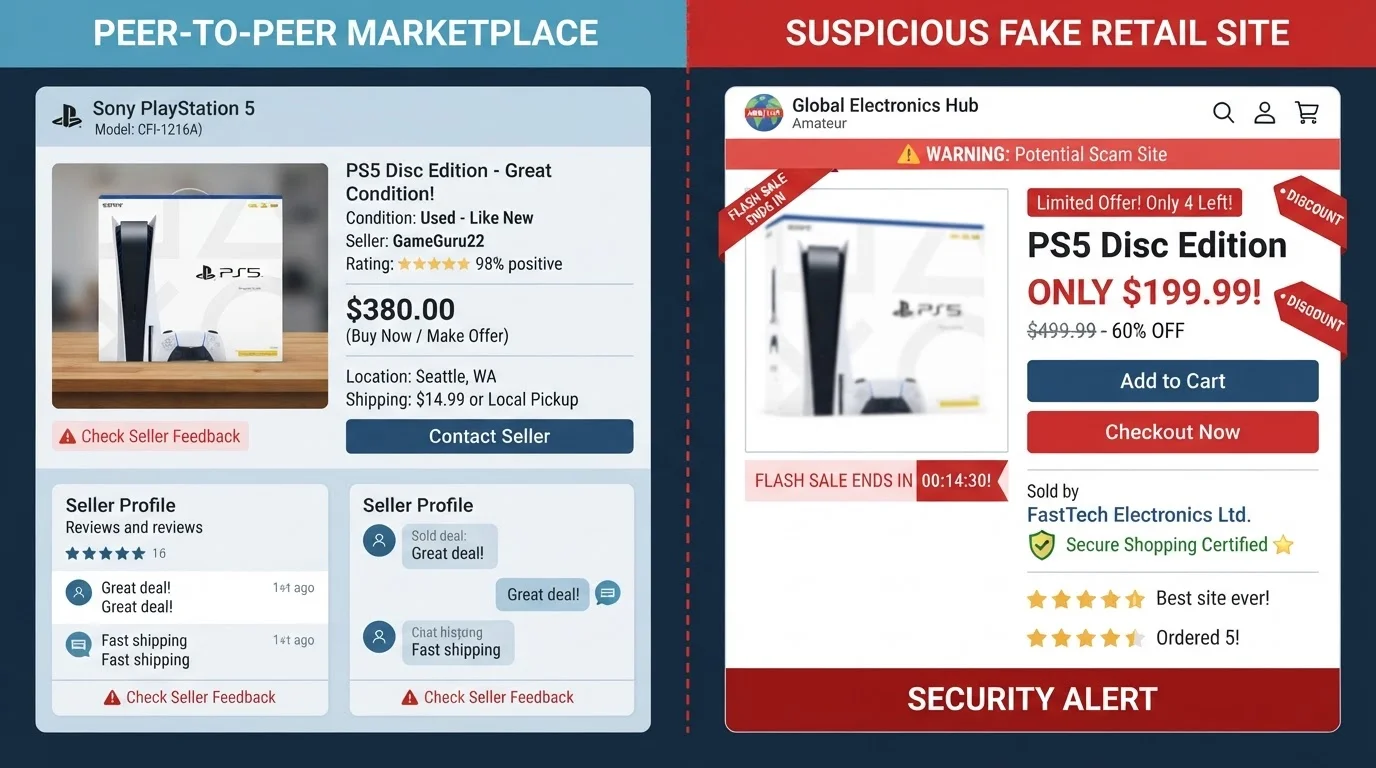
Photo: FaqsDrive.com | Smart Way To Search editorial
—— In This Article
Key Takeaways
- Marketplace scams exploit seller trust on legitimate platforms; retail fraud builds entirely fake storefronts.
- Marketplace fraud often targets your payment method or your shipment; retail fraud steals payment data or ships nothing.
- Platform buyer protections vary widely — always verify what coverage actually applies before purchasing.
- Fake retail sites frequently mimic recognizable brand aesthetics to appear trustworthy at first glance.
- Red flags differ between both fraud types — knowing what to look for on each platform matters.
Two Different Threats, Two Different Playbooks
Online shopping fraud isn't one thing — it's a category with meaningfully different forms. The tactics a scammer uses on a peer-to-peer marketplace look quite different from those behind a fraudulent retail website. Treating them as the same problem leads to misplaced caution and missed warning signs.
On a peer-to-peer marketplace — think platforms where individuals list items for sale to other individuals — the platform itself is generally legitimate. The fraud comes from bad actors operating within it: fake listings, counterfeit goods described as authentic, or sellers who vanish after receiving payment. The platform's infrastructure is real; the person exploiting it is not acting in good faith.
Retail website fraud works differently. Here, the entire storefront is a fabrication. Fraudsters build convincing-looking websites — often copying the visual identity of known retailers — to collect payment or card data from shoppers who believe they're buying from a real business. There's no legitimate platform underneath; the deception goes all the way down. Understanding how these setups are constructed can make them much easier to spot before any money changes hands.
| Criterion | Marketplace Scams | Retail Website Fraud |
|---|---|---|
| Platform legitimacy | Platform is real; seller is fraudulent | Entire website is fabricated |
| Primary fraud goal | Steal payment or ship nothing/counterfeit | Collect payment or harvest card data |
| How shoppers find it | Browsing legitimate marketplace listings | Social media ads, search results, email links |
| Common red flags | Off-platform payment requests, urgency, vague listings | New domain, no real contact info, steep discounts |
| Buyer protection availability | Often available if paid through platform checkout | Depends on payment method; credit cards strongest |
| Scammer accountability | Platform may suspend or investigate accounts | Sites disappear quickly; limited accountability |
How Each Type of Fraud Actually Plays Out
Marketplace scams typically follow a handful of patterns. Overpayment scams involve a fake buyer sending a fraudulent check for more than the asking price. Non-delivery scams involve a seller collecting money and shipping nothing. Some scammers move buyers off-platform — to a private email or payment app — where the marketplace's dispute and refund systems no longer apply. Counterfeit goods fraud is common in categories like electronics, collectibles, and designer items.
A key risk factor in marketplace fraud is urgency. Scammers frequently push for quick decisions — claiming multiple interested buyers — to prevent shoppers from pausing to evaluate the listing carefully. Assumptions about seller legitimacy are often what scammers count on most.
Retail website fraud tends to focus on one of two outcomes: collecting your payment without sending anything, or harvesting your payment card details for use elsewhere. These sites often appear via paid social media ads or sponsored search results, lending them an air of legitimacy. They may offer steep discounts on in-demand items, use stock photography, and feature vague or nonexistent return policies. Contact information, if present at all, leads nowhere.
$392M+
Lost to online shopping fraud in a single year
The FTC reported over $392 million in consumer losses attributed to online shopping and negative reviews fraud in its Consumer Sentinel data.
~45%
Of fraud reports involved social media as contact point
FTC data has consistently shown social media — a primary channel for fake retail ads — as a top origination point for reported fraud cases.
One particularly telling sign of a fraudulent retail site is a very recently registered domain name. A site selling consumer goods but registered only weeks ago warrants serious scrutiny. Free domain-lookup tools (commonly called WHOIS lookups) let you check registration dates in seconds.
Where Protections Exist — and Where They Don't
On established marketplaces, buyer protection programs may offer recourse if a transaction goes wrong — but coverage varies significantly by platform, payment method, and the specific type of dispute. Payments made through the platform's official checkout typically carry more protection than payments made via wire transfer, gift card, or payment apps sent to a private account. When a scammer moves communication off-platform, they're often deliberately stepping outside the zone where any protection applies.
With retail website fraud, your primary recourse usually comes from your payment method. Credit card chargebacks — a process where your card issuer disputes the charge on your behalf — are a common first step. Debit cards and some payment apps offer weaker or slower dispute processes. If you entered card data on a fraudulent site, notifying your card issuer promptly matters more than anything else.
For a practical step-by-step approach before any purchase, a pre-purchase seller verification checklist can help you apply the right checks for the right context. And for a broader view of your legal rights and reporting options, this overview of consumer fraud protections covers what's available to American shoppers. A field guide to online shopping scam protection is also worth bookmarking for ongoing reference.
Gift Cards and Wire Transfers: A Universal Warning
Regardless of the platform, any seller or storefront requesting payment via gift card, wire transfer, or cryptocurrency should be treated as a serious warning sign. These payment methods offer little to no ability to dispute or reverse a transaction once sent. Legitimate retailers and marketplace sellers do not require these payment forms for standard purchases.

Smart Shopping Editorial Team
Smart Shopping Editorial Team is the collective byline for our editorial team and contributor network. Articles published under this byline or an editorial pen name are researched, written, and reviewed according to our editorial standards for clarity, consistency, and independence before publication.
View author profile