
Fixed Expenses, Variable Expenses, and Discretionary Spending: A Clear Breakdown
Not all spending works the same way. Learn the difference between fixed, variable, and discretionary expenses and why the distinction matters for budgeting.
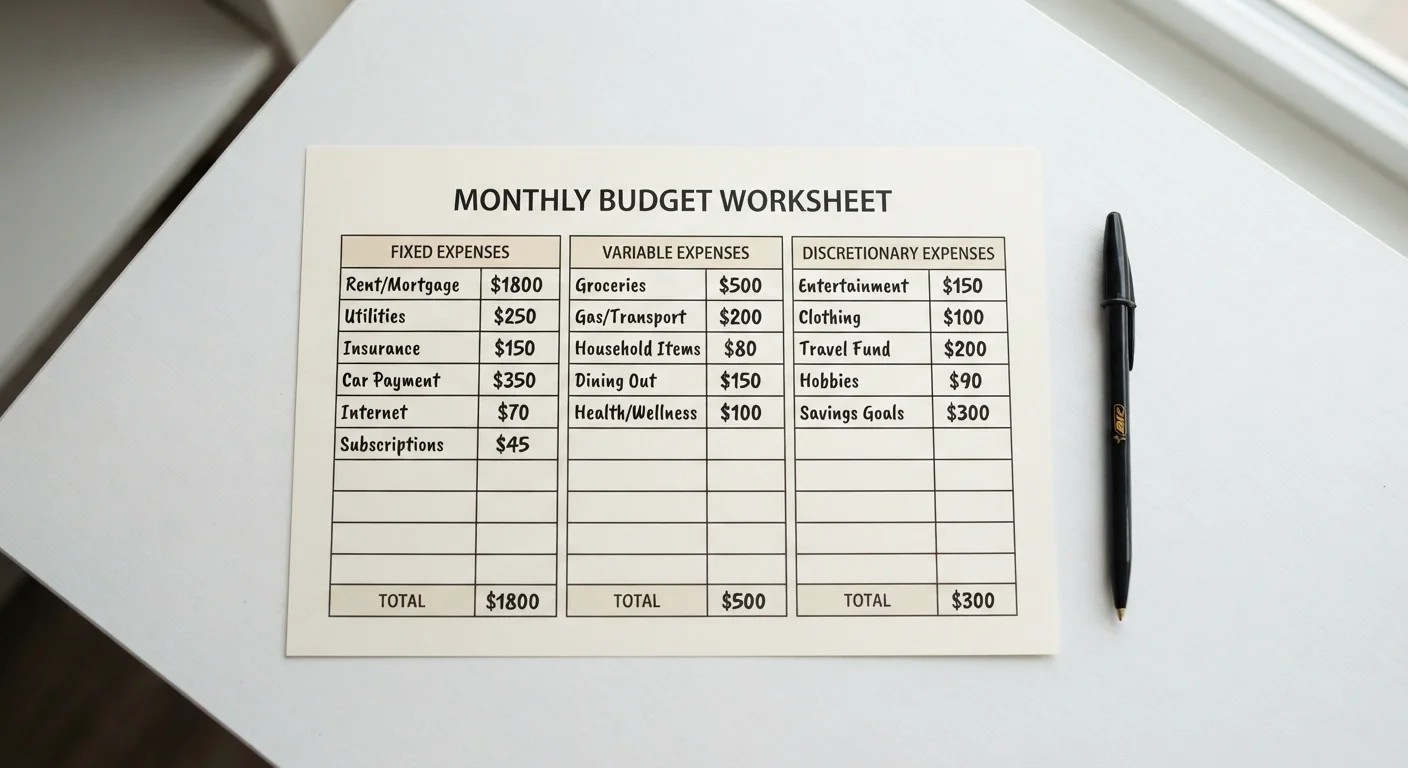
Photo: FaqsDrive.com | Smart Way To Search editorial
—— In This Article
Why Expense Categories Matter
Before you can build a working budget, you need to understand what kinds of expenses you're actually dealing with. Not all spending behaves the same way—some costs are locked in every month, some shift up or down, and others are entirely optional. Sorting your spending into categories gives you a clearer picture of where your money is truly committed and where you have real flexibility to adjust.
| Fixed expenses | Costs that stay the same every billing period |
| Variable expenses | Necessary costs that change in amount month to month |
| Discretionary spending | Optional expenses — wants rather than needs |
| Largest expense for most U.S. households | Housing (rent or mortgage) (U.S. Bureau of Labor Statistics, Consumer Expenditure Survey) |
| Most flexible budget category | Discretionary spending |
| 50/30/20 framework | ~50% needs, ~30% wants, ~20% savings or debt repayment (Widely cited personal finance budgeting guideline) |
Fixed Expenses — Predictable and Locked In
A fixed expense is a cost that stays the same from one billing period to the next. Your rent or mortgage is the clearest example—you owe the same amount whether the month went smoothly or not. Other common fixed expenses include car loan payments, health insurance premiums, and subscription services billed at a set monthly rate.
Because fixed expenses don't fluctuate, they're the easiest to plan for—you know exactly what they'll cost before the month even starts. The trade-off is that they're also the hardest to reduce quickly. Changing a fixed expense usually requires a significant decision, like refinancing a loan, canceling a service, or moving to a less expensive home.
See how fixed and variable expenses work in a budget for a closer look at managing each type effectively.
Variable and Discretionary Expenses — What Changes and What's Optional
Variable expenses are necessary costs whose amounts change month to month. Groceries, utilities, and gas are the most familiar examples. You need all of these, but what you spend isn't fixed—a cold winter raises your heating bill; a longer commute increases fuel costs. Because they fluctuate, variable expenses are worth tracking carefully. Even consistent, modest adjustments to variable spending can add up to meaningful savings over time.
Fixed Expense
A recurring cost that stays the same every billing period, regardless of how much you use a product or service. Rent, mortgage payments, and set-rate loan payments are typical examples.
Variable Expense
A necessary cost whose dollar amount changes from month to month based on usage or circumstances. Groceries, utility bills, and fuel are common examples.
Discretionary Spending
Money spent on optional goods or services—things you want but could live without. Often called "wants" in budgeting frameworks, as opposed to essential "needs."
Budget Baseline
The minimum amount you must spend each month to cover fixed and essential variable expenses. Knowing your baseline helps you see how much income is truly available for flexible use.
50/30/20 Rule
A widely cited budgeting guideline suggesting you direct roughly 50% of after-tax income to needs, 30% to wants, and 20% to savings and debt repayment. It is a framework for thinking, not a one-size-fits-all prescription.
Discretionary spending covers optional expenses—things you want but could go without. Dining out, streaming subscriptions beyond the basics, gym memberships, and hobby supplies all fit here. These are the "wants" in a budget, as opposed to the "needs." For a closer look at where that line actually falls in everyday decisions, see why the needs-vs-wants line is blurrier than it looks.
One practical note: the boundary between variable and discretionary isn't always sharp. A grocery bill is variable and essential—but one that regularly includes premium specialty items has some discretionary spending embedded in it.
Using These Categories to Build a Clearer Budget
Sorting expenses into these three groups gives you a practical map of your spending. Fixed expenses reveal your monthly baseline—the minimum you must cover no matter what. Variable expenses show where spending naturally shifts and where small, sustainable changes (like meal planning or adjusting your thermostat) can add up. Discretionary spending is typically the most flexible category and the first place to look when you need to free up cash.
A commonly referenced framework—sometimes called the 50/30/20 rule—suggests directing roughly half your after-tax income to needs (fixed and essential variable expenses combined), about 30% to wants (discretionary), and 20% to savings and debt repayment. Think of it as a starting point for thinking, not a rigid formula. Your actual numbers will depend on your income, location, and financial goals.
Explore related concepts in our personal finance glossary for beginners, or visit the Budgeting Basics hub to explore practical strategies for putting these ideas to work.
This article is for general informational and educational purposes only and does not constitute personalized financial advice. Consult a licensed financial professional for guidance specific to your situation.

Personal Finance Editorial Team
Personal Finance Editorial Team is the collective byline for our editorial team and contributor network. Articles published under this byline or an editorial pen name are researched, written, and reviewed according to our editorial standards for clarity, consistency, and independence before publication.
View author profile