
Keeping a Garden Through the Seasons: A Year-Round Maintenance Overview
A comprehensive look at what gardens need across spring, summer, fall, and winter — so beginners can plan and sustain momentum all year long.
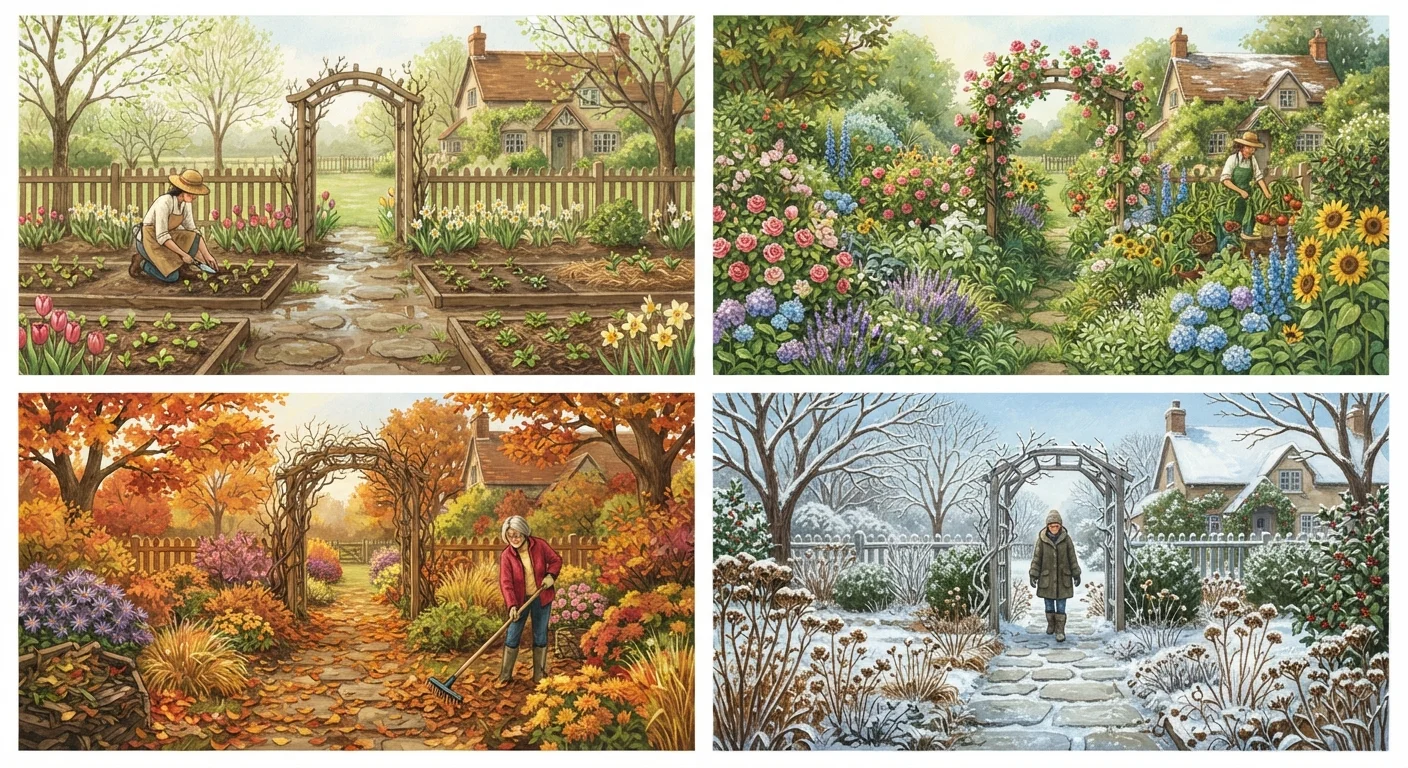
Photo: FaqsDrive.com | Smart Way To Search editorial
—— In This Article
Key Takeaways
- Each season has distinct tasks; skipping one makes the next harder.
- Soil health is the foundation — invest in it every fall and spring.
- Mulching in summer and fall reduces weeding and conserves moisture.
- Winter is the best time to plan, order seeds, and refresh your tools.
- Native plants can significantly reduce your year-round maintenance burden.
Why Year-Round Thinking Changes Everything
Most beginner gardeners focus intensely on spring planting, then slowly lose steam by midsummer. The secret that experienced gardeners share is that a garden is never truly dormant in your mind — even when it is dormant in the ground. Treating your garden as a year-round system rather than a single-season project leads to healthier plants, fewer pest problems, and far less frustration.
Think of each season as preparation for the next. What you do in fall directly shapes what you find in spring. What you do in winter — or don't do — determines how hard spring feels. This guide walks you through the core tasks of each season so you can stay ahead of your garden rather than constantly catching up.
77%
American households that garden
According to the National Gardening Association, approximately 77% of U.S. households participate in some form of lawn and garden activity.
6–8 weeks
Lead time for fall bulb planting
Spring-blooming bulbs need to be planted 6–8 weeks before the ground freezes to complete their required cold dormancy period.
3 inches
Recommended mulch depth
A 2–3 inch mulch layer is widely recommended by cooperative extension services to retain soil moisture and suppress weeds effectively.
Spring: Setting the Stage
Spring is the most task-dense season, and doing the groundwork properly pays dividends for months. Before you put anything in the ground, inspect your beds. Remove debris, dead annuals, and any weeds that have gotten a head start. Check your soil type and condition — compacted, clay-heavy soil needs amendment before planting, not after.
Once beds are clear, add 2–3 inches of compost and work it into the top 6–8 inches of soil. This single step improves drainage, feeds soil organisms, and gives roots room to establish. Test soil pH if you haven't in the past two years; most vegetables prefer a range of 6.0–7.0. Inexpensive test kits are widely available at garden centers.
Timing matters. Planting too early — before your last frost date — risks losing seedlings to a cold snap. Check your USDA hardiness zone and local frost date before sowing warm-season crops outdoors. See our step-by-step spring prep checklist for a thorough breakdown of every task before planting day.
Start Small to Stay Consistent
Beginning gardeners often overplant in spring, then feel overwhelmed by summer maintenance. A 4x8 foot raised bed or two is far easier to manage than a large in-ground plot. Master a small space first, then expand — your success rate and enjoyment will be much higher.
Summer: Sustaining and Protecting
Summer is about consistency. Your main tasks are watering, weeding, mulching, and watching for pests. Water deeply and less frequently rather than a little every day — deep watering encourages roots to grow downward, making plants more drought-tolerant. Early morning is the best time; leaves dry before evening, reducing fungal disease risk.
Apply 2–3 inches of mulch around plants to retain moisture and suppress weeds. Organic mulches like straw or wood chips also break down slowly, feeding the soil. Weed weekly before weeds set seed — one skipped week can mean hundreds of new weed seeds in your beds.
When weeding, pull after a rain or after watering — roots release from moist soil far more cleanly, reducing the chance of snapping the root and leaving regrowth behind.
Weeds left with roots intact will regrow quickly; complete removal is more efficient than repeated partial pulling.
Keep a small notebook or use your phone to photograph pest damage as soon as you notice it — the image and date help you predict when the same pest may appear next season and intervene earlier.
Many garden pests follow predictable seasonal cycles; early identification in year one makes year two significantly easier to manage.
Scout for pests regularly. Catching an aphid or caterpillar problem early keeps it manageable. Many issues can be handled by hand-picking, blasting plants with water, or encouraging beneficial insects. If your region allows it, planting native plants alongside vegetables can attract pest predators naturally.
Fall: Winding Down the Right Way
Fall is the season most beginners underestimate. After harvest, it's tempting to simply abandon the garden until spring. But fall cleanup and soil care are what make spring feel easy rather than overwhelming.
Pull spent annuals and compost disease-free plant material. Leave some seed heads on ornamental plants — birds will thank you. Cut back perennials selectively; some, like ornamental grasses, are better left until early spring to provide winter interest and wildlife habitat. Apply a fresh layer of compost to empty beds and consider planting a cover crop (such as winter rye) to prevent erosion and add organic matter over winter.
Soil Health Is Not Optional
The single most common reason beginner gardens underperform is poor soil. Nutrients, drainage, and microbial life in the soil determine whether plants thrive or struggle — no amount of watering or fertilizing compensates for compacted, depleted ground. Investing in compost and soil amendment each fall and spring is the highest-return action any gardener can take.
Fall is also the right time to plant spring-blooming bulbs like tulips and daffodils. These need a period of cold to bloom, so they go in while the soil is still workable but the air is cooling — typically 6–8 weeks before your first hard freeze.
Winter: Rest, Reflection, and Readiness
Even with snow on the ground, a gardener's work isn't finished. Winter is the ideal time to plan next year's garden layout, review what worked and what didn't, and order seeds before popular varieties sell out. Sketch out your beds, note any crop rotation needs (rotating vegetable families prevents disease buildup), and research any new plants you want to try.
Clean, oil, and sharpen your tools before storing them. Dull or rusty tools make spring prep harder than it needs to be. Check any perennials or shrubs after major storms for broken branches that could introduce disease. In cold climates, make sure young trees and shrubs have adequate mulch at their base — but keep it a few inches away from the trunk to avoid rot.
Mild Climates Follow Different Timelines
If you garden in a mild-winter region such as the Pacific Coast or the Deep South, many of the 'winter' tasks described here may apply in late autumn, and your growing season may extend well beyond what colder-climate gardeners experience. Always reference your USDA hardiness zone and local cooperative extension service for region-specific timing.
Use winter reading to expand your knowledge. Unfamiliar terms will come up constantly; keep a resource like A Gardener's Glossary bookmarked as a reference as you research new plants and techniques.
Building Habits That Carry You Forward
Year-round gardening isn't about doing more — it's about doing the right things at the right times. A short session of deadheading in July or raking compost in October prevents hours of remediation the following season. The gardeners who thrive long-term are those who treat each season's small tasks as investments rather than chores.
Keep a simple garden journal: jot down what you planted, when it germinated, what pest appeared and when, and what you'd do differently. This habit pays off faster than almost any other practice. Over two or three years, you'll have a personalized guide to your specific yard, microclimate, and soil — far more valuable than any generic advice.
“The best time to plant a tree was twenty years ago. The second-best time is now. The same logic applies to every garden task left undone — start where you are.”
— Common gardening proverb, Traditional horticultural wisdom
The Home Improvement hub has additional guides on maintaining the broader property around your garden — from drainage to fencing — that complement seasonal garden care.

Home & Garden Editorial Team
Home & Garden Editorial Team is the collective byline for our editorial team and contributor network. Articles published under this byline or an editorial pen name are researched, written, and reviewed according to our editorial standards for clarity, consistency, and independence before publication.
View author profile