
Reading a Vehicle Warning Light: A Driver's Quick-Reference Guide
A dashboard full of icons can feel overwhelming. This quick-reference guide identifies the most common warning lights and what each one signals.
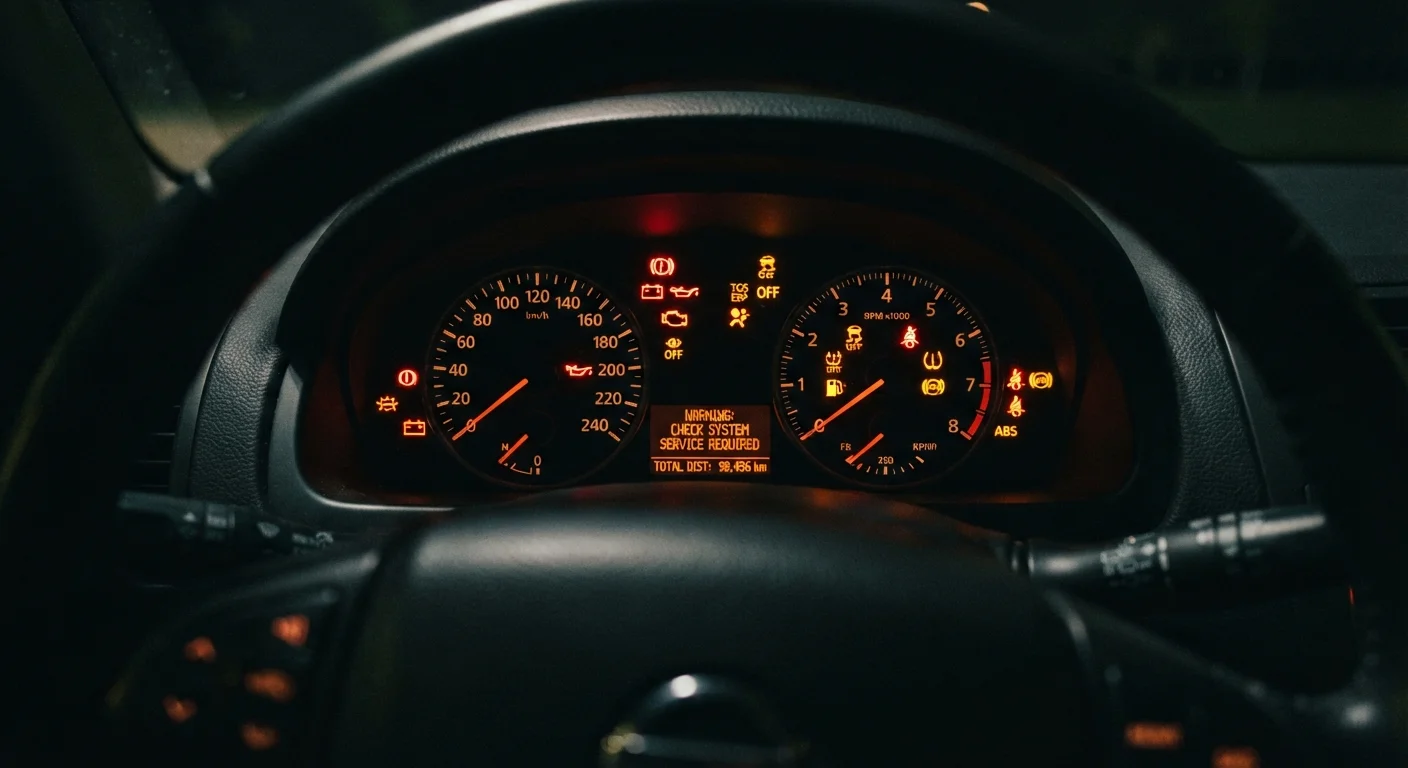
Photo: FaqsDrive.com | Smart Way To Search editorial
—— In This Article
Why Warning Lights Exist (and How to Read Them)
Your vehicle's dashboard warning lights are part of an onboard diagnostic system designed to alert you when something needs attention. Think of them as a direct line of communication between your car's sensors and you. Ignoring them - or misreading them - can turn a minor issue into a costly repair.
Most lights follow a straightforward color code:
- Red - Act immediately. Stop safely as soon as possible. These signals indicate potentially dangerous conditions.
- Yellow/Amber - Caution required. The system has detected something outside normal range. Schedule a check soon.
- Green or Blue - Informational only. A system is active (e.g., high beams, turn signal). No action needed.
For a deeper breakdown of individual light triggers, see our dashboard warning lights reference. Understanding these basics is also a core part of safe driving every driver should know.
| Color code for immediate danger | Red |
| Color code for caution/service needed | Yellow or Amber |
| OBD-II required since | 1996 (all U.S. passenger vehicles) (U.S. Environmental Protection Agency mandate) |
| TPMS required since | 2008 (all new U.S. passenger vehicles) (TREAD Act, National Highway Traffic Safety Administration) |
| First step when any red light appears | Pull over safely and shut off the engine if advised |
| Best source for model-specific symbols | Your vehicle's owner's manual |
The Most Common Warning Lights Decoded
While every vehicle is different, the following icons appear on nearly every modern car sold in the United States. Always consult your owner's manual for vehicle-specific guidance.
Malfunction Indicator Lamp (MIL)
The technical name for the check engine light. It illuminates when the vehicle's onboard diagnostics detect a fault in the engine or emissions system.
OBD-II Port
A standardized diagnostic connector found in all U.S. vehicles manufactured after 1996. Technicians plug a scan tool into this port to retrieve stored fault codes.
Diagnostic Trouble Code (DTC)
An alphanumeric code stored by the vehicle's computer when a sensor reading falls outside acceptable limits. Each code points to a specific system or component.
TPMS
Tire Pressure Monitoring System. A sensor-based system required on all U.S. passenger vehicles sold after 2008 that warns drivers when tire pressure drops significantly below recommended levels.
Coolant
A liquid mixture (typically water and antifreeze) that circulates through the engine to regulate temperature. Low coolant can trigger the engine temperature warning light.
Traction Control System (TCS)
An electronic system that detects and reduces wheel spin during acceleration, helping maintain vehicle stability on slippery surfaces.
Lights That Demand Immediate Action (Red)
- Oil Pressure Warning - Shaped like an old oil can. Low oil pressure can cause catastrophic engine damage within minutes. Pull over safely, shut off the engine, and check the oil level before driving further.
- Battery/Charging Alert - Looks like a rectangular battery with + and - symbols. The charging system has failed. Electrical accessories will begin shutting down. Drive directly to a garage if safe to do so.
- Brake System Warning - An exclamation mark inside a circle with parentheses. If the parking brake is off and this light is on, your brake fluid may be low or the system may have a fault. Do not drive - have it inspected immediately.
- Engine Temperature Warning - An icon resembling a thermometer in liquid. The coolant is overheating. Pull over, let the engine cool, and check the coolant level. See how to safely check your coolant.
Lights That Need Attention Soon (Yellow/Amber)
- Check Engine Light (MIL) - An engine outline. This light covers a wide range of faults, from a loose gas cap to sensor issues. A steady light usually means schedule a diagnostic soon; a flashing light means reduce speed and seek service promptly. Learn more at what your check engine light is actually telling you.
- Tire Pressure Monitoring System (TPMS) - A cross-section of a tire with an exclamation mark. One or more tires is significantly under-inflated. Check all four tires and inflate to the pressure listed on the driver's door jamb sticker.
- Traction Control / Stability Control - A car with wavy lines beneath it. The system is intervening to prevent wheel slip. If the light stays on steadily (not flashing), the system may be disabled or faulty.
What To Do When a Light Comes On
Seeing a new warning light can be stressful, but a calm, methodical response keeps you safe:
- Identify the color. Red means stop safely as soon as it's possible to do so. Amber means monitor and schedule service.
- Check your owner's manual. Every vehicle includes a section dedicated to dashboard symbols. The manual is the definitive source for your specific make and model.
- Do not ignore a flashing light. A flashing or blinking warning - especially a flashing check engine light - signals an active, ongoing fault that can damage components if driving continues.
- Have the code read. Most auto parts stores and all repair shops can connect a scan tool to your vehicle's OBD-II port and retrieve the specific diagnostic trouble code (DTC) causing the light. This narrows down the problem significantly.
- Keep up with fluids. Many warning lights are fluid-related. Regular fluid checks prevent several common triggers. Checking your fluids at home is a straightforward skill any driver can learn.
A Flashing Light Is Different from a Steady One
A steady warning light generally means a fault has been logged but conditions are not immediately critical - schedule service soon. A flashing or blinking light, by contrast, signals an active, ongoing problem that can cause real-time damage. If your check engine light is flashing, reduce your speed and seek service promptly rather than waiting for a scheduled appointment.
Understanding what's under your hood makes warning lights far less intimidating. A plain-English map of engine components can help you connect the icon on your dash to the actual system it monitors. For all essential upkeep tasks, visit our car maintenance hub.

Automotive Basics Editorial Team
Automotive Basics Editorial Team is the collective byline for our editorial team and contributor network. Articles published under this byline or an editorial pen name are researched, written, and reviewed according to our editorial standards for clarity, consistency, and independence before publication.
View author profile