
What Your Check Engine Light Is Actually Telling You
The check engine light doesn't always mean disaster. Learn what triggers it, how serious it can be, and what to do next.
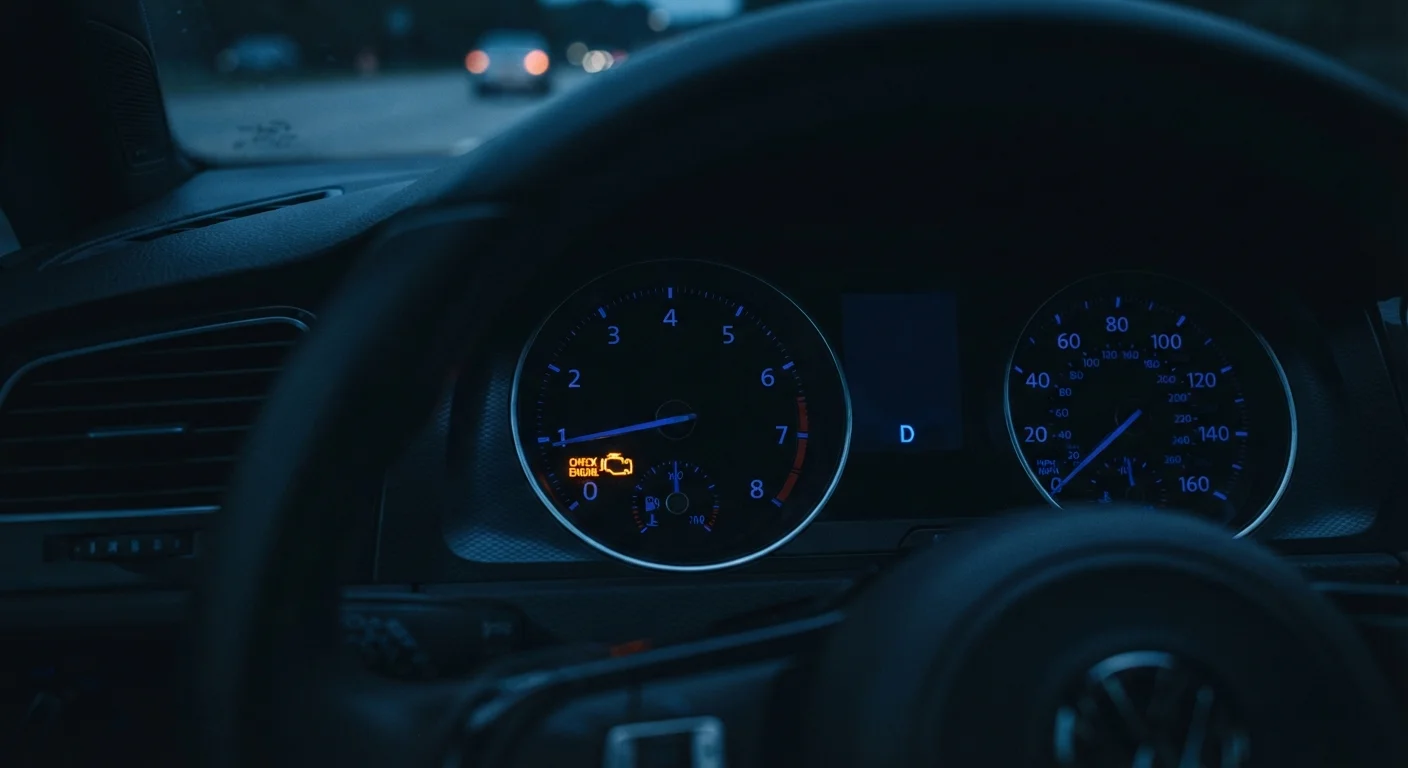
Photo: FaqsDrive.com | Smart Way To Search editorial
—— In This Article
Key Takeaways
- A solid check engine light usually means a non-emergency issue - a flashing light signals a more urgent problem.
- Over 1,400 possible diagnostic trouble codes exist, so the light alone can't tell you what's wrong without a scan.
- Common triggers include a loose gas cap, faulty oxygen sensor, or worn spark plugs.
- Ignoring the light can turn a minor fix into a costly repair over time.
- Auto parts stores often read diagnostic codes for free, giving you a starting point before seeing a mechanic.
What the Light Is Actually Monitoring
Your car's onboard diagnostic system continuously monitors dozens of sensors - from the oxygen sensors in your exhaust to the mass airflow sensor measuring intake air. When any reading falls outside acceptable parameters, the system logs a fault code and triggers the check engine light to alert you.
The light doesn't describe the problem. It's more like a notification badge on your phone - it tells you something needs attention, but you have to open the app to find out what. That's why getting a diagnostic scan is always the essential first step.
For broader context on how dashboard indicators work together, see our driver's quick-reference guide to warning lights.
1,400+
Possible OBD-II diagnostic trouble codes
The OBD-II standard defines over 1,400 fault codes across engine, transmission, and emissions systems.
#1
Most commonly replaced sensor tied to check engine light
Oxygen sensor failure is consistently among the top reasons check engine lights illuminate, according to automotive repair data aggregators.
~$0
Cost to read your check engine code at many auto parts stores
Many national auto parts retailers offer complimentary OBD-II code reading in their parking lots - no appointment needed.
Solid vs. Flashing: Why the Difference Matters
Not all check engine lights communicate the same urgency. A steady, solid light typically indicates a stored fault that isn't causing immediate harm - the system has detected something out of range, but your engine isn't in crisis mode. You should schedule a diagnostic scan soon, but an immediate roadside stop usually isn't required.
A flashing or blinking light is a different story. This indicates an active misfire - unburned fuel entering the exhaust - which can rapidly overheat and destroy your catalytic converter, an expensive component. If your check engine light is flashing, reduce your speed, avoid heavy acceleration, and have the vehicle inspected as soon as possible. Continuing to drive aggressively with a flashing light can turn a few-hundred-dollar repair into a much larger one.
A Simple Rule for Solid vs. Flashing
Think of a solid check engine light as a yellow flag - slow down and pay attention soon. Think of a flashing light as a red flag - take immediate, cautious action. When in doubt, reduce speed, avoid heavy loads on the engine, and get a diagnostic scan as quickly as possible.
The Most Common Causes
While the check engine light can reflect over 1,400 distinct fault codes, a relatively small set of issues accounts for the majority of triggers in everyday vehicles:
- Loose or faulty gas cap: Disrupts the evaporative emissions system. Often the simplest fix - re-tighten or replace the cap.
- Oxygen sensor failure: O2 sensors measure exhaust gas composition. A failing sensor affects fuel efficiency and emissions, and is one of the most frequently replaced parts.
- Catalytic converter issues: Often a downstream problem caused by neglected oxygen sensors or misfires. Replacing a converter is significantly more expensive than preventing the problem.
- Spark plug or ignition coil failure: Worn spark plugs cause misfires, rough idling, and reduced power - and will eventually trigger that flashing light.
- Mass airflow sensor fault: Affects the air-fuel mixture, leading to rough running and poor fuel economy.
These components all interact closely with your engine's overall health. A related issue worth understanding is how engine combustion byproducts affect your oil - our article on why engine oil turns black explains that connection clearly.
What To Do When the Light Comes On
Stay calm - the check engine light is a prompt to investigate, not a signal to panic. Here's a practical sequence to follow:
- Note your driving conditions. Is the car running differently? Any unusual sounds, smells, or loss of acceleration? This information helps a mechanic narrow down the cause.
- Check your gas cap. Remove it, inspect it for cracks or damage, reinstall it firmly, and drive a few days to see if the light clears. It's the easiest fix to rule out first.
- Get the code read. Many auto parts retailers will scan your OBD-II port at no charge. The code gives you a specific starting point - not a definitive diagnosis, but valuable context before talking to a mechanic.
- Consult a qualified mechanic. Fault codes point to a system or sensor, not always the exact failed part. A professional diagnostic evaluation confirms the root cause and appropriate repair.
While you're attending to your vehicle's health, it's also a good time to verify your fluid levels. See our practical walkthrough for checking your car's fluids to cover those basics at home.
Fault Codes Are a Starting Point, Not a Final Answer
A diagnostic trouble code tells you which system or sensor triggered the fault - it doesn't automatically identify the exact part that needs replacing. For example, a code pointing to an oxygen sensor could reflect a failed sensor, a wiring issue, or an exhaust leak. A qualified mechanic performs additional tests to confirm the true root cause before recommending a repair.
Frequently Asked Questions

Automotive Basics Editorial Team
Automotive Basics Editorial Team is the collective byline for our editorial team and contributor network. Articles published under this byline or an editorial pen name are researched, written, and reviewed according to our editorial standards for clarity, consistency, and independence before publication.
View author profile