
Highway Merging Done Right
Merging onto a highway is a common source of accidents. Learn the correct technique for safe, confident lane entry.
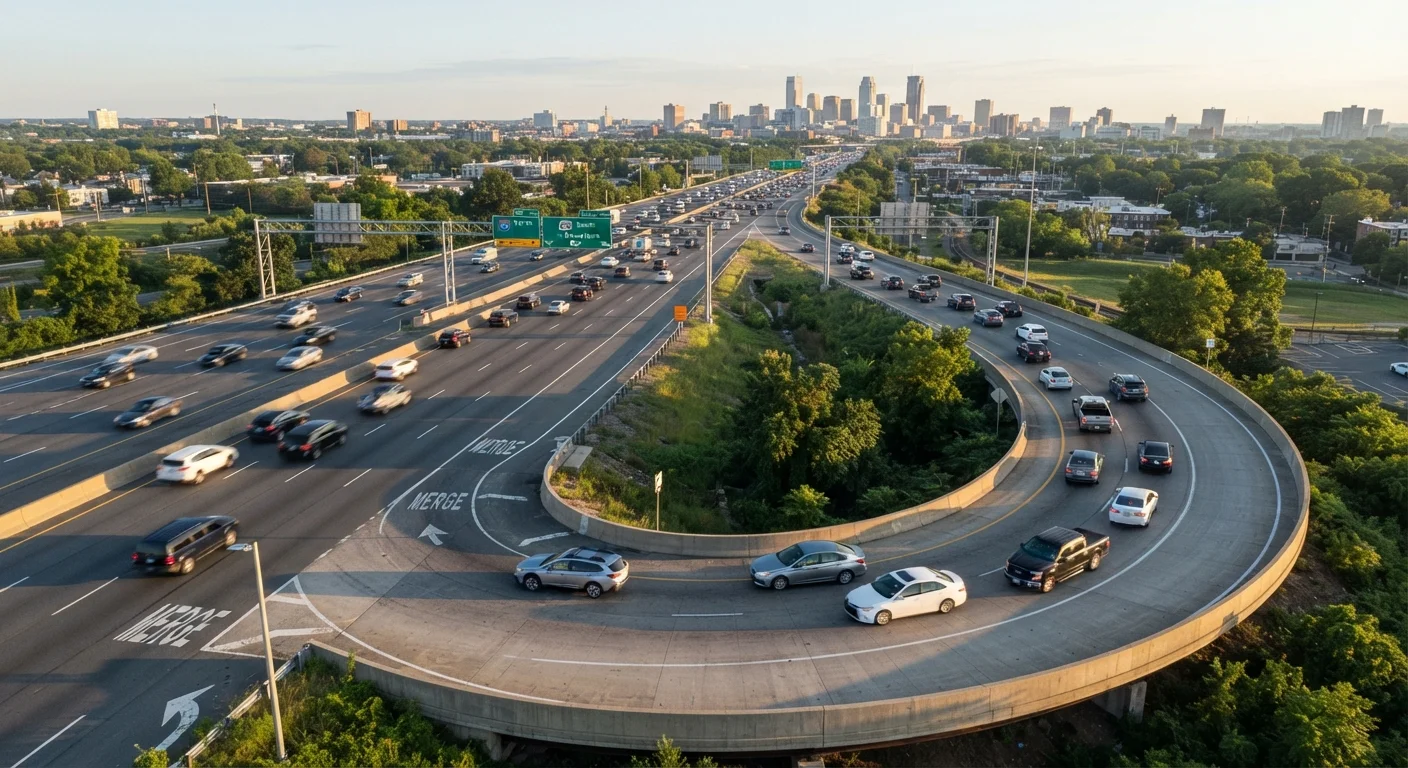
Photo: FaqsDrive.com | Smart Way To Search editorial
—— In This Article
Key Takeaways
- Match highway traffic speed before you reach the merge point - never stop on an on-ramp.
- Check mirrors and blind spots early and repeatedly, not just at the last second.
- Signal your intent and commit to the merge with smooth, deliberate steering.
- Hesitation and sudden braking on the ramp are leading causes of merge-related collisions.
- Highway drivers share responsibility - adjust speed or position to help merging traffic when safe.
Why Highway Merging Goes Wrong
Merging onto a highway is one of the most technically demanding maneuvers in everyday driving - yet most drivers treat it as routine. The core problem is a mismatch between the speed of the on-ramp and the speed of active freeway traffic. Drivers who enter too slowly force surrounding vehicles to brake or swerve, and drivers who merge without confirming a clear gap invite side-impact collisions.
Two additional factors amplify the risk. First, the time pressure is real: on-ramps have a fixed length, and hesitation quickly runs out of space. Second, many drivers don't know the true size of their blind spots, which can hide entire vehicles until a merge is already underway. Our breakdown of blind spot coverage explains what your mirrors actually miss and how to compensate.
Understanding these failure points is the first step toward building better habits. The steps below address each one directly.
What you will need
The Tools That Make Merging Safer
Safe merging doesn't require special equipment, but it does require that your standard equipment is in good working order and set up correctly before you reach the ramp.
Properly adjusted side and rearview mirrors
Maximize your field of view to detect gaps in traffic and monitor vehicles in adjacent lanes.
Working turn signal
Communicate your merge intention to highway drivers before and during the lane change.
Use the Ramp as Your Acceleration Lane
Most on-ramps are engineered specifically to give you time and space to reach highway speed before the merge point. Begin accelerating as soon as the ramp straightens out. Waiting until the dotted line to speed up wastes the advantage the ramp gives you and creates unnecessary urgency.
Step-by-Step: Merging Onto the Highway
Never Stop on an Active On-Ramp
Coming to a complete stop on a highway on-ramp is one of the most dangerous things a driver can do. It creates a rear-end collision risk from vehicles behind you who are accelerating to merge speed. Only stop if you are physically blocked with absolutely no alternative - and hazard lights on immediately.
Scan the highway while still on the ramp
As soon as you enter the on-ramp, begin looking ahead to the highway lanes. Identify which lane you'll be entering and start reading traffic density, vehicle spacing, and speeds. The earlier you gather this information, the more time you have to plan your entry point.
Accelerate to match the speed of highway traffic
Use the entire length of the on-ramp to build speed. Your goal is to reach a velocity that is close to - ideally within 5 mph of - the flow of traffic in the lane you're entering. A vehicle traveling significantly slower than surrounding traffic is a collision hazard, not a cautious choice.
Check mirrors and blind spots for a usable gap
Before committing to the merge, check your left mirror, then your left blind spot with a quick shoulder glance. You're looking for a gap of roughly three to four seconds of following distance - enough space for your vehicle to slot in without forcing nearby drivers to brake sharply. For a thorough understanding of what your mirrors actually cover, see our guide to blind spot coverage.
Signal, then merge smoothly into the gap
Activate your left turn signal before you begin moving laterally - not simultaneously. This gives highway traffic a half-second warning of your intention. Steer gradually into the lane using smooth inputs. Abrupt swerving destabilizes your vehicle and startles other drivers. Once your vehicle is fully in the lane, cancel your signal.
Establish a safe following distance and settle in
Once merged, immediately set a three-second following gap between you and the vehicle ahead. Avoid lingering in another driver's blind spot. If the on-ramp deposits you in the far-right lane, stay there briefly to get your bearings before considering any additional lane changes. Speed consistency after merging reduces rear pressure from vehicles behind you.
Common Mistakes - and How to Avoid Them
Even experienced drivers fall into predictable merge errors. Slowing down on the ramp is the most dangerous: it makes speed-matching nearly impossible and increases rear-end risk. Cutting across the merge line at an angle - rather than flowing into the lane - is another common fault that reduces reaction time for everyone involved.
Drivers also tend to look only once for a gap, then commit regardless of what's changed. Traffic at highway speeds moves roughly 100 feet per second; a vehicle that was distant when you first looked can be beside you by the time you steer. Repeated scanning through the merge sequence is not excessive caution - it's correct technique.
Finally, speed variance is underappreciated as a hazard. For more context on how speed differences between vehicles create collision risk, our article on common speed limit misconceptions covers the subject in detail.
Don't Rely on Other Drivers to Yield
Highway drivers are not legally required to make room for merging vehicles in most U.S. states. While courtesy is common, assuming someone will move over or slow down is a dangerous habit. See our guide to common driver assumptions for more on this mindset risk. Your merge must be based on confirmed gaps, not hope.

Automotive Basics Editorial Team
Automotive Basics Editorial Team is the collective byline for our editorial team and contributor network. Articles published under this byline or an editorial pen name are researched, written, and reviewed according to our editorial standards for clarity, consistency, and independence before publication.
View author profile