
DIY Car Maintenance: What's Safe to Do Yourself and What Isn't
Some maintenance tasks are beginner-friendly; others carry real safety risks. Here's an honest breakdown of where the line falls for most home mechanics.
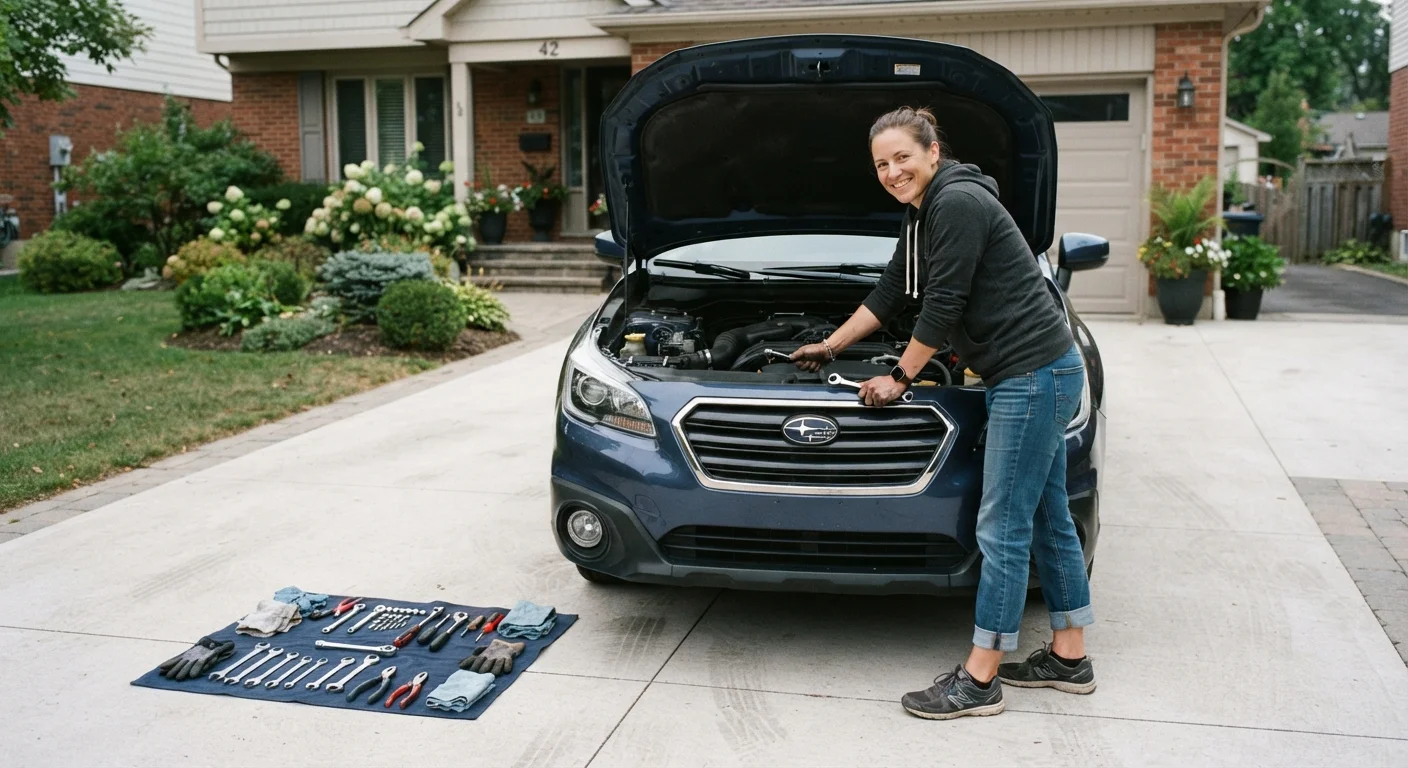
Photo: FaqsDrive.com | Smart Way To Search editorial
—— In This Article
Key Takeaways
- Many routine maintenance tasks - like air filter swaps and wiper blade changes - are genuinely beginner-friendly.
- Brake system work, suspension repairs, and anything involving fuel lines carry real safety risks and should go to a qualified mechanic.
- Skipping any maintenance task entirely is almost always more expensive than either DIYing it or paying a professional.
- Having the right tools and a reliable service manual for your specific vehicle makes DIY work significantly safer.
- When in doubt, a pre-repair consultation with a mechanic can help you decide what's within your skill level.
Saves money on routine, low-complexity tasks
Jobs like air filter swaps, wiper replacements, and fluid top-offs carry minimal parts costs and no labor fees when you do them yourself. Over a year, these small savings add up meaningfully.
Builds genuine understanding of your vehicle
Hands-on maintenance teaches you what normal looks and sounds like, making it easier to catch developing problems early - before they become expensive repairs.
Flexible scheduling with no shop wait times
You can address minor maintenance on your own timeline, in your driveway, without booking appointments or waiting for a bay to open up.
Sense of confidence and self-sufficiency
Successfully completing even a simple maintenance task builds mechanical confidence and reduces anxiety around car ownership for beginners.
Brake system repairs carry serious safety risk
Brake pads, rotors, calipers, and brake lines require precise installation and proper torque specs. Errors can cause brake failure - a potentially fatal outcome that justifies professional handling.
Fuel system work is a fire and chemical hazard
Working on fuel injectors, fuel pumps, or fuel lines involves flammable vapors and pressurized components. Improper handling can cause fires or fuel leaks that pose real danger.
Suspension and steering jobs need specialized tools
Components like struts, control arms, and tie rod ends require press tools and alignment equipment most home mechanics don't own. Incorrect reassembly affects vehicle handling and tire wear.
Airbag and electrical system work is high-voltage territory
Supplemental restraint systems (airbags) and modern vehicle electronics involve voltages and failure modes - including accidental airbag deployment - that make them unsuitable for DIY repair.
Wrong parts or torque specs can cause secondary damage
Using an incorrect part or under-torquing a fastener can damage surrounding components, turning a simple repair into a larger, costlier job.
Why DIY Maintenance Deserves a Serious Look
Car ownership in the U.S. comes with an ongoing stream of maintenance needs, and professional labor costs have risen steadily. For a beginner, the appeal of handling some of that work yourself is both financial and practical - you learn how your vehicle actually works, and you're not entirely dependent on a shop for every small task.
That said, "DIY car maintenance" isn't a single category. It covers everything from swapping a cabin air filter (a five-minute job requiring no tools) to replacing brake pads (a task where a mistake can cause brake failure). Treating all of it the same way is where beginners get into trouble. The goal isn't to do everything yourself - it's to know confidently what you can do, and what you shouldn't attempt without professional help.
If you're new to thinking about your car as something you can understand rather than just operate, our plain-language guide to vehicle systems is a solid starting point.
Saves money on routine, low-complexity tasks
Jobs like air filter swaps, wiper replacements, and fluid top-offs carry minimal parts costs and no labor fees when you do them yourself. Over a year, these small savings add up meaningfully.
Builds genuine understanding of your vehicle
Hands-on maintenance teaches you what normal looks and sounds like, making it easier to catch developing problems early - before they become expensive repairs.
Flexible scheduling with no shop wait times
You can address minor maintenance on your own timeline, in your driveway, without booking appointments or waiting for a bay to open up.
Sense of confidence and self-sufficiency
Successfully completing even a simple maintenance task builds mechanical confidence and reduces anxiety around car ownership for beginners.
Tasks That Are Genuinely Safe for Beginners
Several routine maintenance jobs require minimal tools, carry low risk if done slightly wrong, and are well-documented for most vehicle makes and models. These are solid starting points:
- Engine and cabin air filter replacement: Usually a matter of opening a housing, pulling out the old filter, and pressing in the new one. Your owner's manual shows the location.
- Wiper blade replacement: Most blades attach with a simple clip mechanism. Instructions are often printed on the packaging.
- Checking and topping off fluids: Coolant, windshield washer fluid, and power steering fluid can be inspected and topped off safely at home. See our practical fluid-checking walkthrough for step-by-step guidance.
- Battery terminal cleaning: Corrosion on terminals is common and cleanable with basic tools. For understanding battery health more broadly, our car battery basics guide covers what to watch for.
- Tire pressure checks and inflation: A quality gauge and access to an air source is all you need - and correct tire pressure affects both safety and fuel economy.
Always Use Your Owner's Manual First
Your vehicle's owner's manual specifies the correct fluid types, filter part numbers, and service intervals for your exact make, model, and engine. Generic online guides are useful, but your manual is the authoritative source. If you've lost yours, most automakers make digital versions available through their official websites.
Where the Line Falls: Tasks to Leave to a Professional
Some jobs look approachable in online tutorials but involve real consequences if performed incorrectly. These are areas where professional service is the responsible choice for most home mechanics:
Brake system repairs carry serious safety risk
Brake pads, rotors, calipers, and brake lines require precise installation and proper torque specs. Errors can cause brake failure - a potentially fatal outcome that justifies professional handling.
Fuel system work is a fire and chemical hazard
Working on fuel injectors, fuel pumps, or fuel lines involves flammable vapors and pressurized components. Improper handling can cause fires or fuel leaks that pose real danger.
Suspension and steering jobs need specialized tools
Components like struts, control arms, and tie rod ends require press tools and alignment equipment most home mechanics don't own. Incorrect reassembly affects vehicle handling and tire wear.
Airbag and electrical system work is high-voltage territory
Supplemental restraint systems (airbags) and modern vehicle electronics involve voltages and failure modes - including accidental airbag deployment - that make them unsuitable for DIY repair.
Wrong parts or torque specs can cause secondary damage
Using an incorrect part or under-torquing a fastener can damage surrounding components, turning a simple repair into a larger, costlier job.
The common thread in jobs to avoid is consequence severity. A misinstalled air filter is a nuisance; a misinstalled brake caliper can cause a crash. Whenever a repair directly affects steering, stopping, or structural integrity, the risk calculus changes significantly.
If you're unsure how to evaluate a repair before committing to it, our guide on how to talk to a mechanic without getting overcharged can help you ask better questions and understand the answers you get.
The Real Cost of Both Paths
DIY isn't always cheaper when you account for the full picture. Buying a specialized tool for a one-time job, purchasing the wrong part, or causing secondary damage during a repair can easily exceed what a shop would have charged. Before starting any job, it's worth asking:
- Do I have - or can I reasonably borrow - the right tools?
- Is a reliable service manual or verified guide available for my specific vehicle?
- What happens if I make a mistake - is it a minor inconvenience or a safety issue?
On the other side, skipping maintenance entirely because you're unsure whether to DIY or go to a shop is almost always the most expensive outcome. Our article on the real cost of skipping routine maintenance breaks down what that neglect looks like in dollars over time.
~$100
Typical shop labor cost per hour
Average hourly labor rates at U.S. independent repair shops generally range from $80 to $120, making labor the dominant cost in most service visits.
30%+
Of new-car owners unfamiliar with basic checks
Industry surveys have consistently found that a significant share of drivers are unsure how to check their own tire pressure or engine oil level.

Automotive Basics Editorial Team
Automotive Basics Editorial Team is the collective byline for our editorial team and contributor network. Articles published under this byline or an editorial pen name are researched, written, and reviewed according to our editorial standards for clarity, consistency, and independence before publication.
View author profile