
Road Trip vs. Fly-and-Explore: Choosing the Right Format for Your Next Vacation
Not sure whether to drive or fly? This comparison breaks down cost, flexibility, time, and experience so you can choose the right approach.
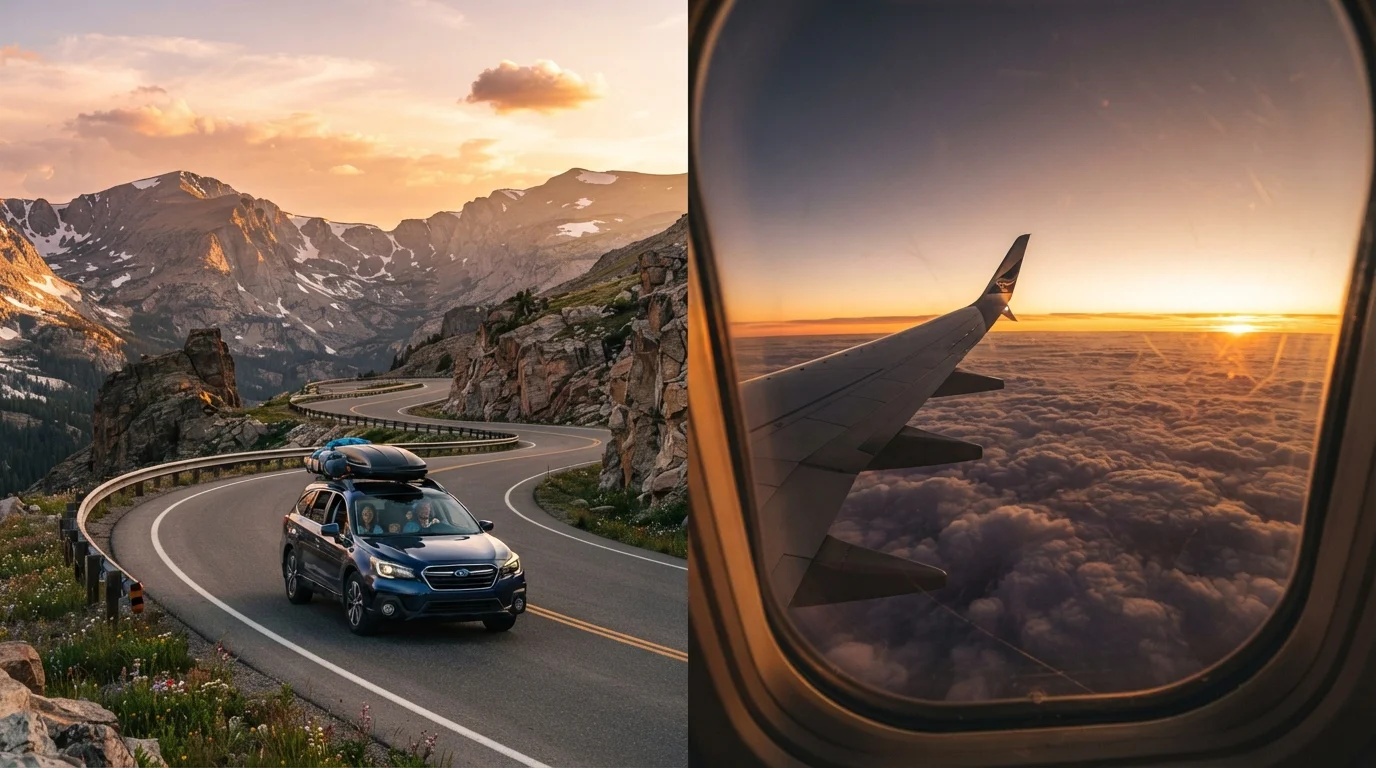
Photo: FaqsDrive.com | Smart Way To Search editorial
—— In This Article
Key Takeaways
- Road trips are generally more cost-effective for families or groups traveling shorter to medium distances.
- Flying saves significant time for distances over 500 miles but adds baggage fees and airport logistics.
- Road trips offer unmatched flexibility — you can change plans, detour, and stop wherever you like.
- Fly-and-explore trips often require more upfront planning around flights, car rentals, and lodging.
- Neither format is universally better — the right choice depends on your distance, group size, and travel style.
How Distance Changes Everything
The single biggest factor in choosing between a road trip and fly-and-explore format is distance. A rule of thumb among experienced travelers: driving tends to make more sense for trips under 400–500 miles one way. Beyond that threshold, the time spent behind the wheel starts competing seriously with your vacation days.
For example, a 300-mile drive from Chicago to Traverse City, Michigan takes about 4.5 hours — completely manageable. That same trip by air, once you factor in getting to the airport, security, boarding, a likely connection, and baggage claim, could easily take 5–6 hours. Flying simply doesn't win at that distance.
Flip the scenario to a trip from Dallas to San Francisco — roughly 1,750 miles — and driving suddenly means three or more full travel days each way. For most people with a standard one-to-two week vacation, that's not sustainable. Flying preserves your time for actually being there. For a deeper look at how distance affects overall trip cost, see our full cost comparison of flying vs. driving.
| Criterion | Road Trip | Fly-and-Explore |
|---|---|---|
| Best distance range | Under 500 miles one way | 500+ miles one way |
| Upfront cost | Fuel, tolls, snacks | Airfare, baggage fees |
| Hidden costs | Overnight stays en route, vehicle wear | Car rental, airport transfers |
| Group size advantage | Gets cheaper per person as group grows | Cost multiplies with each ticket |
| Flexibility | High — change plans anytime | Lower — bookings lock in the itinerary |
| Time efficiency | Slower; journey is part of the trip | Faster; arrive ready to explore |
| Luggage freedom | Pack as much as the car fits | Limited by airline restrictions and fees |
| Planning required | Moderate; more room to improvise | Higher; book ahead for best prices |
The Real Cost Picture
Cost comparisons between road trips and fly-and-explore trips are rarely straightforward. Driving feels cheaper because there's no single ticket price staring you down — but fuel, wear on your vehicle, tolls, overnight stays en route, and meals on the road add up quickly.
Flying, meanwhile, looks expensive upfront, but for solo travelers or couples, airfare can sometimes be surprisingly competitive once you account for everything driving requires. The calculus shifts dramatically when group size enters the picture. Four people flying typically means four tickets; four people driving still means one tank of gas at a time.
~$0.21/mile
Average fuel cost per mile driven
The U.S. Energy Information Administration tracks average gasoline costs that, combined with typical vehicle fuel economy, yield rough per-mile driving costs useful for trip budgeting.
2–3 hrs
Average added time per flight (airport overhead)
TSA and airline guidance generally recommends arriving 2 hours before domestic departures, and baggage claim adds time on arrival — costs that road trips avoid entirely.
4–5 people
Group size where driving typically wins on cost
Travel cost analysts generally find that once a travel party reaches four or more people, the per-person driving cost drops well below comparable airfare for most domestic routes.
Once you've landed at your destination, fly-and-explore trips often require renting a car or relying on rideshares — an added cost road trippers don't face. If you're planning to stay mostly in one city or a walkable area, that's manageable. But if your itinerary involves scattered attractions across a region, a rental car is usually unavoidable, which narrows the cost gap considerably.
Lodging choices also interact with your travel format. Road trippers have more flexibility to stay in smaller towns or campgrounds between stops, which can stretch a budget meaningfully. For more context on how lodging fits into your overall travel budget, check out our comparison of vacation rentals and hotels.
Flexibility, Planning, and the Traveler Experience
Beyond cost and time, there's a genuine experiential difference between these two travel formats — and it matters more than most beginners expect.
Road trips reward spontaneity. You can pull off the highway because a state park sign looked interesting, stay an extra night in a town you love, or skip a stop that didn't appeal on arrival. That kind of flexibility is nearly impossible to replicate when you've booked flights and hotels weeks in advance. If your travel personality leans toward discovery over itinerary, road tripping tends to feel more fulfilling. Whether you're eyeing a Pacific Coast Highway adventure or a meandering Midwest loop, the road format fits that exploratory mindset naturally.
Fly-and-explore trips require more upfront structure — flights, accommodations, and often ground transportation need to be booked ahead to get reasonable prices. Once you're there, though, the experience can be richly focused. Arriving in a city or region and spending several days going deep rather than wide suits travelers who want to really understand a place rather than collect a checklist of stops.
Your destination type also matters. Heading somewhere coastal or mountainous? The journey itself through varied landscapes can be a highlight of a road trip. For destination inspiration, explore how coastal and mountain getaways differ in experience and logistics, or browse top US destinations for every travel style to start narrowing your focus.
Traveling in a Group? Planning Changes
Whether you drive or fly, group travel introduces a layer of coordination that solo or couples trips don't require — from agreeing on stops to splitting costs fairly. Our guide on how group trips differ from solo travel covers what shifts in the planning process when more people are involved.
If you're still building out your first trip plan, our beginner's roadmap to affordable domestic travel walks through the full planning process from scratch.

Travel & Trips Editorial Team
Travel & Trips Editorial Team is the collective byline for our editorial team and contributor network. Articles published under this byline or an editorial pen name are researched, written, and reviewed according to our editorial standards for clarity, consistency, and independence before publication.
View author profile