
Coastal vs. Mountain Getaways: Choosing the Right American Escape for Your Travel Style
Not sure whether to head to the beach or the hills? Explore how coastal and mountain destinations differ in cost, climate, activities, and pace.
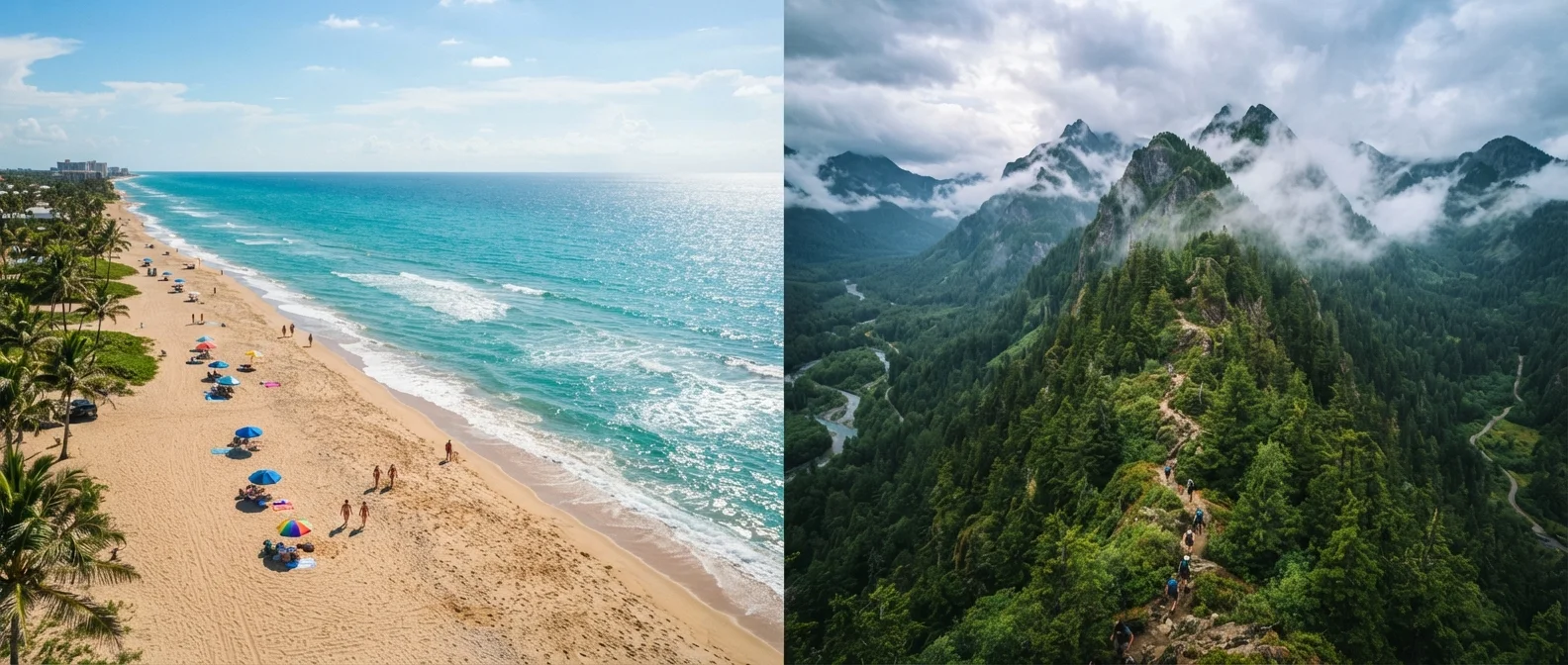
Photo: FaqsDrive.com | Smart Way To Search editorial
—— In This Article
Key Takeaways
- Coastal destinations tend to peak in summer, while mountain destinations can offer great value in shoulder seasons.
- Mountains generally offer more year-round flexibility, especially for hikers, skiers, and leaf-peepers.
- Coastal trips often cost more at peak season due to high accommodation demand near the water.
- Both destination types have affordable entry points when you plan around crowd patterns.
- Your ideal choice depends on climate preference, activity type, and how much downtime you want.
The Core Appeal: What Each Destination Type Delivers
American coastal destinations — think the Outer Banks of North Carolina, California's Pacific Coast Highway corridor, or Florida's Gulf shores — are synonymous with warm breezes, swimable water, and a pace of life that actively discourages rushing. The beach vacation is deeply embedded in American travel culture for good reason: it requires almost zero planning once you arrive. Show up, find sand, repeat.
Mountain destinations operate on an entirely different energy. Places like the Smoky Mountains in Tennessee, Colorado's Rocky Mountain towns, or the Cascades of the Pacific Northwest reward curiosity and physical engagement. Trails, overlooks, waterfalls, and wildlife create a kind of natural itinerary that unfolds as you explore. For travelers who feel restless on a beach towel, the mountains provide almost unlimited structure without feeling forced.
Neither type is objectively better — they serve genuinely different travel moods. The real question is which mood you're in. For a broader look at how domestic travel styles compare, see our city break vs. nature retreat comparison.
| Criterion | Coastal Getaways | Mountain Getaways |
|---|---|---|
| Peak season | Summer (June–August) | Summer & winter (ski) |
| Typical climate | Warm, humid, sunny | Cooler, variable, drier |
| Primary activities | Swimming, watersports, relaxing | Hiking, skiing, wildlife, scenic drives |
| Physical demand | Low — very accessible | Variable — moderate to high |
| Gear required | Minimal (swimwear, sunscreen) | More (layers, hiking boots) |
| Budget pressure at peak | High (beachfront premium) | Moderate to high (ski towns) |
| Off-season value | Good (May, September) | Strong (spring, fall) |
| Best for families | Yes — very family-friendly | Yes — with older children |
Cost, Crowds, and Timing
Coastal destinations can get expensive fast, particularly during summer. Beach-adjacent hotels and vacation rentals in popular spots routinely command a significant premium from June through August. Shoulder seasons — May and September — offer a more relaxed experience with better pricing and fewer crowds. If the beach is your goal, traveling just outside peak weeks can make a real difference to your budget.
Mountain destinations tend to have two distinct peaks: summer hiking season and winter ski season. Spring and fall are often the sweet spot — lower costs, thinner crowds, and genuinely spectacular scenery. Fall foliage in the Appalachians or Rockies, for example, rivals any beach sunset for sheer visual drama.
327M+
Annual US national park visits
According to the National Park Service, US national parks — predominantly mountain and wilderness sites — recorded over 327 million recreational visits in 2023.
~50%
Americans who vacation at the beach
Survey data from the American Recreation Coalition suggests roughly half of American leisure travelers include a beach trip among their annual vacations.
12.5M
Great Smoky Mountains annual visitors
Great Smoky Mountains National Park consistently ranks as the most visited national park in the US, drawing over 12 million visitors most years, per National Park Service records.
Understanding how peak and off-season timing affects your overall trip cost is worth researching before you book. Our guide on peak season vs. off-season travel breaks down the real trade-offs in detail. And once you've settled on a destination type, your accommodation choice matters just as much — our vacation rental vs. hotel guide can help you decide which lodging approach fits your style and budget.
Activities, Accessibility, and Who Thrives Where
Coastal travel is highly accessible. Most beach activities — swimming, shell collecting, watching sunsets, visiting boardwalks — require no special fitness level, gear, or prior experience. That accessibility makes coastal trips an easier lift for families with young children, older travelers, or anyone who simply wants to decompress rather than exert themselves.
Mountains ask a bit more of you — but reward that effort generously. Hiking even a moderate trail delivers views and a sense of accomplishment that's hard to replicate. Many mountain areas also have paved scenic drives, visitor centers, and accessible overlooks that make the landscape available to people who can't hike long distances. National parks like Great Smoky Mountains (the most visited in the US, per National Park Service data) offer a range of access levels precisely because they serve such a diverse visitor base.
If you're unsure how to get to your destination, your choice of transportation affects the experience too — check out our road trip vs. fly-and-explore comparison to think through your options. And if mountains are calling you toward the desert Southwest specifically, our overview of the American Southwest explores what makes that region's landscapes uniquely compelling.
Coastal Options Vary More Than You Might Think
Not all coastlines feel the same — the Gulf Coast offers calm, warm, emerald-green water, while the Atlantic Coast brings more wave action and a different regional character. If you're leaning coastal but unsure which shore fits your vision, our Gulf Coast vs. Atlantic Coast comparison can help you narrow it down. Regional differences in water temperature, crowd density, and local culture can meaningfully shape how a beach trip feels.

Travel & Trips Editorial Team
Travel & Trips Editorial Team is the collective byline for our editorial team and contributor network. Articles published under this byline or an editorial pen name are researched, written, and reviewed according to our editorial standards for clarity, consistency, and independence before publication.
View author profile