
How Consumer Reviews Can Mislead You — and How to Use Them Wisely
Star ratings hide as much as they reveal. Understand review manipulation, selection bias, and the patterns that point to genuine feedback.
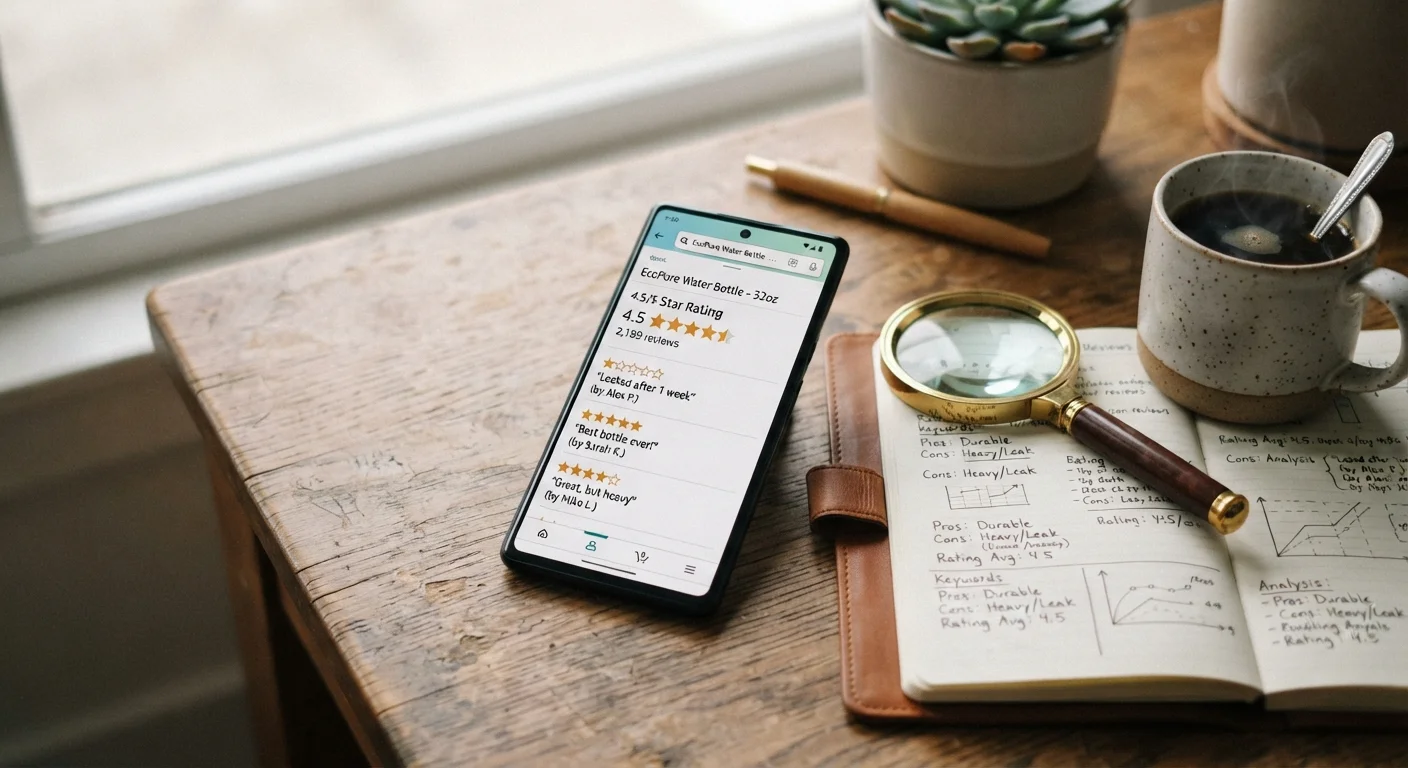
Photo: FaqsDrive.com | Smart Way To Search editorial
—— In This Article
Key Takeaways
- A high average star rating can mask a skewed or manipulated distribution of individual reviews.
- Fake and incentivized reviews are widespread across major shopping platforms, not just obscure sites.
- The most useful signals in reviews are specific, detailed complaints — not glowing praise.
- Sorting by lowest-rated and most recent reviews reveals problems that aggregate scores hide.
- Third-party review analysis tools can help flag suspicious rating patterns before you buy.
Why Star Ratings Hide More Than They Reveal
A product's star rating is one of the first things your eye lands on — and that's exactly the problem. Aggregate scores compress a complex picture into a single number, stripping away context about who is reviewing, when they reviewed, and why their experience may not match yours.
Review manipulation is not a niche concern. Sellers have financial incentives to inflate ratings through coordinated campaigns, refund-for-review arrangements, and in some cases outright purchased testimonials. Even when reviews are genuine, selection bias plays a role: customers with deeply negative or enthusiastically positive experiences are more motivated to write than those with middling ones — skewing the pool before manipulation even enters the picture.
For a deeper look at how deceptive tactics work across the shopping landscape, see how scammers make fraudulent offers look legitimate.
Fake Reviews Are More Common Than You Think
Studies from consumer advocacy researchers have found that a significant share of reviews on major retail platforms show signs of manipulation — including incentivized posting, coordinated five-star campaigns, and outright fabrication. This isn't a fringe problem limited to obscure sellers. Treating any review section as fully trustworthy without scrutiny puts your purchasing decisions at risk.
Common Mistakes Shoppers Make With Reviews
Most review-reading errors come from shortcuts that feel reasonable in the moment. Understanding where those shortcuts go wrong is the first step to reading feedback more accurately.
Trusting the average star rating without examining the distribution.
Why it happens: A 4.3-star badge looks reassuring at a glance, and most shoppers don't scroll past it. Platforms display the aggregate prominently because it drives clicks.
Ignoring low-rated reviews because they seem like outliers.
Why it happens: It's psychologically easy to dismiss a handful of 1-star reviews as coming from unreasonable customers, especially when the overall score is high.
Accepting vague, enthusiastic reviews as evidence of quality.
Why it happens: Short, positive reviews ('Love it! Works great! Five stars!') feel friendly and relatable, making them easy to accept without skepticism.
Not checking the review date range relative to product changes.
Why it happens: Most platforms display overall ratings that include reviews going back years — even if the product's formula, materials, or manufacturing source changed significantly.
Relying solely on one platform's reviews.
Why it happens: Shoppers tend to stay within the platform where they intend to buy, assuming its review ecosystem is comprehensive.
For hands-on strategies when you can't evaluate a product in person, the online shopping without the guesswork guide covers how to assess quality from a product page alone.
How to Use Reviews as a Genuine Research Tool
Approached with the right framework, reviews still offer real value — you just need to extract signal from noise deliberately.
~30–40%
Estimated fake or incentivized online reviews
Consumer research organizations and platform audits have estimated that a substantial minority of online product reviews show signs of inauthenticity, though exact figures vary by category and platform.
67%
Shoppers who consult reviews before buying
Multiple consumer behavior surveys consistently find that a large majority of U.S. online shoppers read product reviews before making a purchase decision.
Start with the critical reviews. Sort by one- and two-star ratings and read for patterns. Repeated mentions of the same flaw — a lid that cracks, a battery that degrades quickly, seams that separate — tell you about the product's actual failure modes, not just someone's bad day.
Use third-party tools. Browser extensions and independent sites analyze review patterns, flag suspicious rating spikes, and identify products with unusually homogeneous language — a common sign of coordinated posting. These tools don't catch everything, but they're a useful filter.
Read forum and community discussion. Product subreddits, enthusiast communities, and independent consumer boards aren't connected to seller incentives the way platform reviews can be. Candid, long-form discussion from repeat users tends to surface durability and reliability information that brief reviews miss.
Beware the Verified Purchase Label
A 'Verified Purchase' badge confirms someone bought the item — it does not confirm the review is honest or uninfluenced. Sellers have been documented purchasing their own products through third parties specifically to generate verified-looking praise. Use verified status as one signal, not a guarantee of authenticity.
See also: spotting fake feedback before it misleads you and red flags hidden in plain sight on product listings for complementary tactics that work alongside smarter review reading.

Smart Shopping Editorial Team
Smart Shopping Editorial Team is the collective byline for our editorial team and contributor network. Articles published under this byline or an editorial pen name are researched, written, and reviewed according to our editorial standards for clarity, consistency, and independence before publication.
View author profile