
Reading Reviews the Right Way: Spotting Fake Feedback Before It Misleads You
Manipulated star ratings and paid testimonials are rampant. Learn the tells that distinguish genuine reviews from manufactured ones.
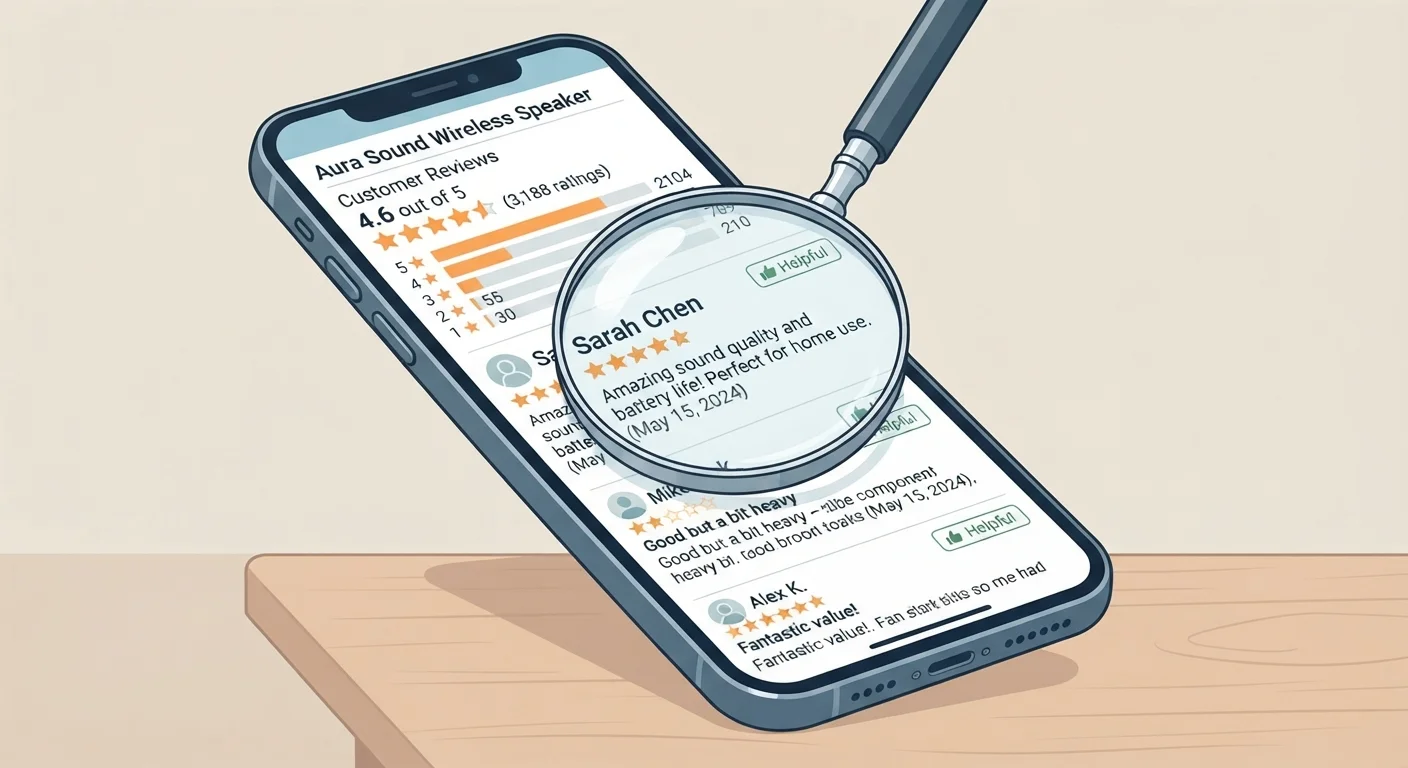
Photo: FaqsDrive.com | Smart Way To Search editorial
—— In This Article
Key Takeaways
- Fake reviews often cluster around the same posting date and use vague, generic language.
- A suspiciously high star average with few written reviews is a major red flag.
- Cross-referencing reviews on independent platforms helps verify genuine feedback.
- Reviewers with no purchase history or only one review deserve extra scrutiny.
- Negative reviews that were never responded to can reveal how a seller actually operates.
- Review quantity and recency matter as much as the overall star rating.
Why Fake Reviews Are Such a Widespread Problem
Online reviews shape billions of dollars in purchasing decisions every year. That kind of influence attracts manipulation. According to research from consumer watchdog organizations, a significant portion of product reviews on major e-commerce platforms are either incentivized, fabricated, or systematically suppressed — meaning the five-star average you're reading may bear little relationship to the actual product experience.
The problem isn't limited to shady pop-up sites. Fake review ecosystems operate across major retail platforms, travel booking sites, and app stores. Understanding how this manipulation works — and what genuine feedback actually looks like — is one of the most practical skills a shopper can develop. For more on how deceptive sellers construct convincing-looking storefronts, see our guide to consumer scam anatomy.
~30–40%
Estimated share of online reviews that may be fake or incentivized
Various consumer research organizations and academic studies have estimated that a substantial minority of product reviews across major platforms may be manipulated, though exact figures vary by category and platform.
4.3 stars
Average rating of products later found to have manipulated reviews
Analysis by consumer advocacy researchers has found that artificially boosted products tend to cluster in the 4.2–4.5 star range — high enough to look credible, not so high as to appear implausible.
The Tells That Separate Real Reviews from Manufactured Ones
Spotting fake reviews doesn't require technical expertise — it requires slowing down and knowing what patterns to look for.
Check the review date distribution, not just the overall rating.
Legitimate products accumulate reviews gradually over time. A sudden spike of five-star reviews posted within a few days — especially around a product launch — often signals a coordinated campaign. Platforms don't always make this easy to see, but filtering by 'most recent' and scanning the dates quickly reveals unnatural clustering.
Read the three-star reviews first.
One-star and five-star reviews are the easiest to game in opposite directions — suppressed negatives, paid positives. Three-star reviews tend to be written by real customers who found the product acceptable but not exceptional. They're less emotionally charged and more descriptive, making them higher-signal for honest assessment.
Look for specificity and verified purchase status in written reviews.
Genuine reviews describe a specific use case, mention particular features, or note real-world conditions. Vague praise like 'great quality, fast shipping' could describe anything. Combined with unverified purchase status, generic language is a reliable signal that the reviewer may not have used the product at all.
Examine the reviewer's profile history before trusting their opinion.
Fake reviewers often have thin profiles: one or two reviews, all five-star, all for unrelated product categories, posted within a short timeframe. Genuine reviewers tend to have a mixed history across different categories and ratings. A reviewer who has only ever given five-star ratings to a diverse range of products is worth skepticism.
Pay attention to how sellers respond to negative reviews.
A seller's response pattern to one- and two-star reviews reveals their actual customer service posture. Defensive, dismissive, or accusatory responses — or no responses at all — are informative. Professional sellers typically acknowledge complaints and offer resolution, even when they disagree with the review.
Using Platform Tools and Outside Sources to Verify
You don't have to rely solely on your own pattern recognition. Several third-party tools analyze review metadata and flag statistically suspicious distributions. Browser extensions — freely available for major platforms — can overlay a review quality score directly on product pages, highlighting when a listing's review history looks manipulated.
Beyond tools, your most reliable cross-check is comparing reviews across platforms that the seller doesn't control. If a product has glowing feedback on the retailer's own site but middling or negative comments on independent forums, review aggregators, or enthusiast communities, that gap is informative. Look especially at detailed, photo-accompanied reviews from verified purchasers — these are harder to manufacture at scale.
Our article on how consumer reviews can mislead you goes deeper into selection bias and the structural quirks that distort star ratings even when no outright fraud is involved.
Use the Review Histogram as a Quick Diagnostic
Most platforms display a bar chart showing the breakdown of one- through five-star ratings. A legitimate product usually has a roughly bell-shaped or J-shaped distribution. If you see a product with 90% five-star ratings and almost nothing in between, that's abnormal — real customer experiences are rarely that uniformly positive. A missing or suppressed middle also suggests selective review management.
Quick Habits That Make You a Smarter Review Reader
Building a skeptical-but-fair approach to reviews is less about paranoia and more about developing a fast, repeatable reading habit. The goal isn't to distrust all feedback — it's to weight the right signals.
For a broader framework on vetting sellers before you hand over payment details, the seller verification checklist covers the full pre-purchase process. And if you're evaluating product quality more broadly — not just reviews — the Product Evaluation hub is a useful starting point.

Smart Shopping Editorial Team
Smart Shopping Editorial Team is the collective byline for our editorial team and contributor network. Articles published under this byline or an editorial pen name are researched, written, and reviewed according to our editorial standards for clarity, consistency, and independence before publication.
View author profile