
Your First Rabbit: What Life With a House Bunny Actually Looks Like
Rabbits are social, curious, and surprisingly complex. Here's an honest look at daily rabbit care before you bring one home.
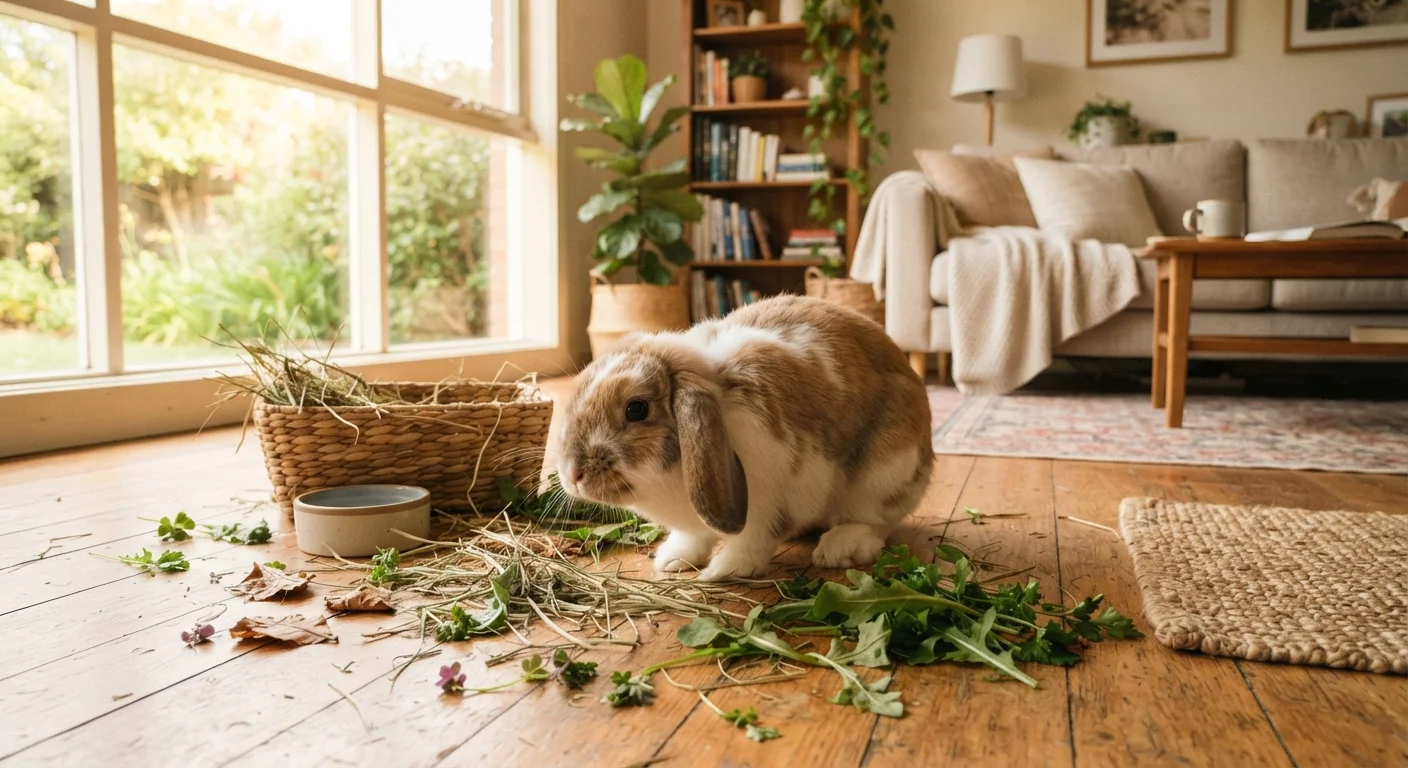
Photo: FaqsDrive.com | Smart Way To Search editorial
—— In This Article
Key Takeaways
- Rabbits are social, long-lived animals — not low-maintenance starter pets.
- They need several hours of free-roaming exercise outside a hutch or enclosure every day.
- A rabbit's diet should be 80% high-quality grass hay, supplemented with leafy greens.
- Rabbits require a specialized exotic-animal vet, not a standard dog-and-cat practice.
- Most rabbits don't enjoy being picked up, but they do bond closely with patient owners.
- Spaying or neutering significantly improves both health outcomes and temperament.
What Rabbits Are Really Like as Pets
Rabbits are often marketed as easy, hands-off starter pets. The reality is quite different. They are intelligent, social animals with distinct personalities — some are bold and outgoing, others are shy and cautious — and they communicate through subtle body language that takes time to learn.
Most rabbits do not enjoy being picked up and held the way a cat or dog might tolerate it. They are prey animals by nature, so being lifted off the ground can feel threatening to them. That doesn't mean they aren't affectionate; a well-bonded rabbit will nudge your hand for pets, flop contentedly beside you, and even seek you out for interaction. The relationship just develops on their terms, at floor level.
Rabbits are also crepuscular, meaning they are most active around dawn and dusk. Expect energetic running, jumping, and what rabbit owners call binkying — spontaneous mid-air twists and kicks that signal pure happiness — during those windows. This is worth knowing before you assume a quiet rabbit during the afternoon means something is wrong.
If you're comparing rabbit ownership to other small pets, it helps to understand that rabbits are considerably more complex than hamsters. Our guide to hamster types covers what makes smaller rodents a genuinely different experience.
Space, Setup, and Bunny-Proofing Your Home
A rabbit needs far more space than a single cage provides. Housing your rabbit in a small enclosure 24 hours a day is not adequate care. Rabbits need a large base enclosure — many experienced owners use pet exercise pens rather than traditional hutches — plus a minimum of three to four hours of free-roaming time in a bunny-proofed area each day. Many owners allow free-range access to one or more rooms entirely.
Bunny-proofing is non-negotiable. Rabbits chew constantly, and they cannot distinguish between a cardboard box and an electrical cord. Before giving your rabbit roaming access, do the following:
- Route or cover all electrical cords with cable conduit or cord protectors.
- Block access to houseplants — many common plants are toxic to rabbits.
- Protect baseboards and furniture legs with plastic guards or deterrent covers if needed.
- Ensure no small gaps exist where a rabbit could become stuck or escape.
Flooring matters too. Rabbits have no pads on their feet and struggle on slick surfaces like hardwood or tile for extended periods. Area rugs or foam play mats in roaming areas provide traction and protect their joints.
Start Small With Free-Roaming Space
When you first bring a rabbit home, limit their roaming area to one fully bunny-proofed room rather than the whole house. This makes supervision easier and gives your rabbit a manageable territory to feel secure in. Expand access gradually as you learn their habits and as trust builds.
Feeding a Rabbit the Right Way
Diet is one of the most misunderstood parts of rabbit care. The foundation of a healthy rabbit's diet is unlimited grass hay — ideally timothy or orchard grass — which should make up roughly 80% of what they eat. Hay keeps the digestive system moving and wears down continuously growing teeth. A rabbit that stops eating hay is a rabbit headed for trouble.
Beyond hay, offer a measured portion of fresh leafy greens daily. Good options include romaine lettuce, cilantro, parsley, and dark leafy greens. Introduce new vegetables slowly to avoid digestive upset. Pellets, if offered at all, should be plain, high-fiber grass hay-based pellets in small quantities — they are a supplement, not a staple.
Contrary to popular imagery, carrots and most fruits are high in sugar and should be given only as rare treats in very small amounts. For a deeper look at common feeding misconceptions, see our article on rabbit care myths that could harm your pet.
Fresh water must be available at all times, either in a heavy ceramic bowl or a sipper bottle — many rabbits show a preference for one over the other.
Health, Veterinary Care, and Red Flags
Rabbits are prey animals that instinctively hide signs of illness, which means by the time obvious symptoms appear, a health problem may already be serious. Knowing your rabbit's normal behavior, appetite, and droppings baseline is essential — any significant change warrants a call to your vet.
A critical fact many new owners don't know: most standard veterinary clinics do not treat rabbits. You will need to find an exotic-animal veterinarian — a vet with specific training in small mammals — before you bring your rabbit home, not after an emergency arises. Our guide to finding a vet for a small or exotic pet walks through exactly how to do this.
Common health concerns in rabbits include GI stasis (when the digestive tract slows or stops — a life-threatening emergency), dental disease caused by insufficient hay, and respiratory infections. Spaying or neutering is strongly recommended: it eliminates the risk of uterine cancer in females, which is otherwise extremely common, and reduces territorial or aggressive behavior in both sexes.
Watch for these red flags and contact your vet promptly if you observe them:
- Not eating or producing droppings for more than a few hours
- Labored or noisy breathing
- Head tilting to one side
- Teeth grinding (distinct from the gentle tooth-purring of a content rabbit)
- Hunched posture and reluctance to move
Is a Rabbit the Right Pet for You?
Rabbits can be deeply rewarding companions for the right household. They are quiet, can be litter trained, and a bonded rabbit that trusts you is genuinely delightful to live with. But they are not the right fit for everyone, and it's worth being honest about the demands before committing.
Consider rabbits a good match if you are home regularly, have space to let them roam safely, and enjoy patient, observational relationships with animals. They suit adults and families with older children who understand gentle interaction. If you are looking for a pet that tolerates being picked up and cuddled on demand, a rabbit will likely frustrate both of you.
For comparison, bringing a dog home for the first time involves a different but equally significant adjustment period — the key is matching the pet's social and physical needs to your actual lifestyle, not an idealized version of it.
If you go in with realistic expectations, the right setup, and a good exotic-animal vet already identified, a house rabbit can be one of the most engaging and entertaining animals you'll ever share a home with.
This article provides general educational information about rabbit care and is not a substitute for advice from a qualified exotic-animal veterinarian. Always consult a licensed professional for health, dietary, or behavioral concerns specific to your pet.
Frequently Asked Questions

Pets & Animals Editorial Team
Pets & Animals Editorial Team is the collective byline for our editorial team and contributor network. Articles published under this byline or an editorial pen name are researched, written, and reviewed according to our editorial standards for clarity, consistency, and independence before publication.
View author profile