
Debt Consolidation: What It Is, How It Works, and Who It Actually Helps
Debt consolidation can simplify repayment and lower interest costs—but it isn't a fix for every situation. Learn the full picture.
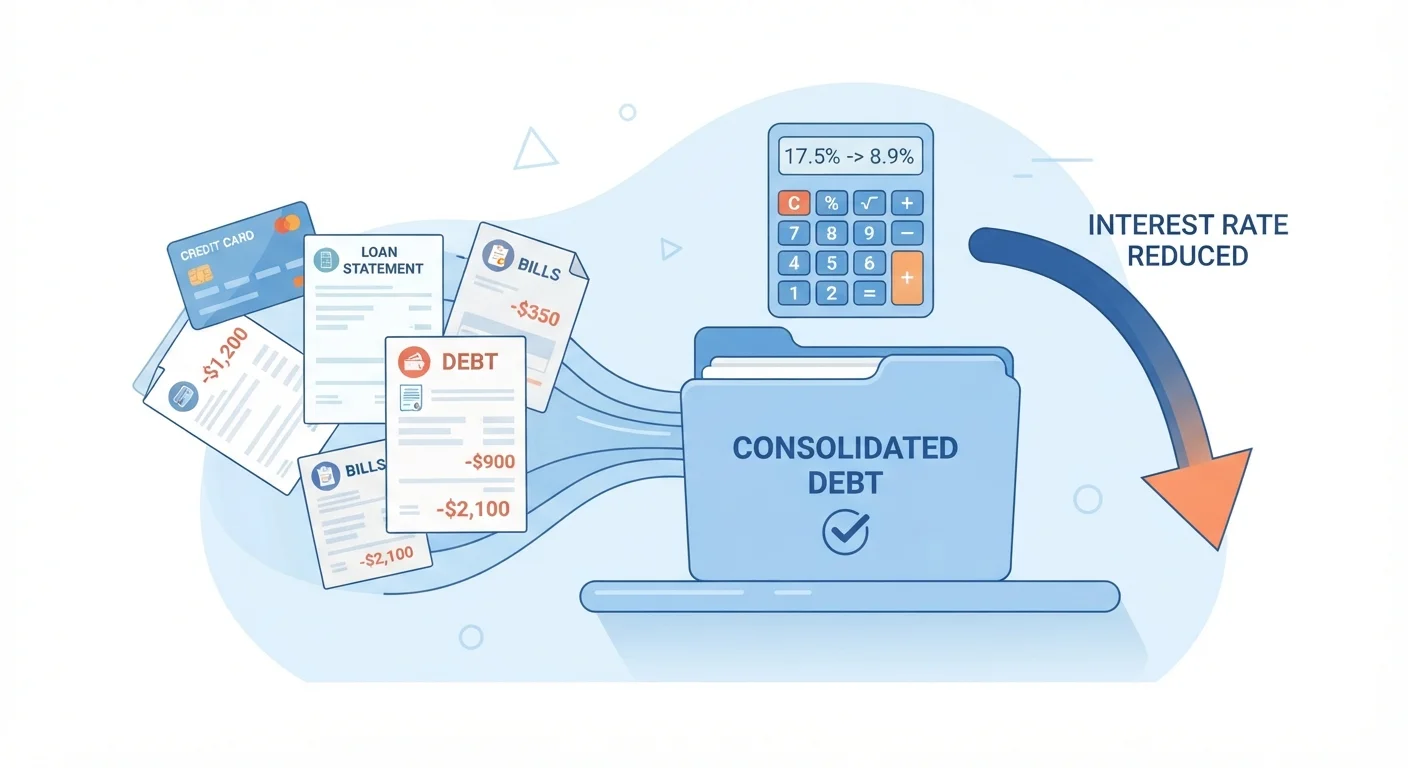
Photo: FaqsDrive.com | Smart Way To Search editorial
—— In This Article
Key Takeaways
- Debt consolidation combines multiple debts into one payment — it does not reduce the total amount you owe.
- A genuinely lower interest rate is the primary financial benefit; without one, consolidation may not save money.
- Your credit score and debt type determine which consolidation methods are realistically available to you.
- Home equity consolidation can offer lower rates, but converts unsecured debt into debt secured by your home.
- Consolidation works best alongside changed spending habits — it restructures debt but doesn't address what caused it.
- Always compare total costs including fees, not just interest rates, before committing to any consolidation option.
How Debt Consolidation Works
Debt consolidation means combining multiple debts into a single new account. Instead of sending separate payments to several creditors each month, you make one payment — ideally at a lower interest rate than your current balances carry. The goal is to simplify repayment and, in the right situation, reduce the total interest you pay over time.
This is not a debt forgiveness program. The amount you owe doesn't change; it's reorganized under new terms. Whether consolidation actually saves money depends on the rate you qualify for, the fees involved, and how long your repayment period will be. Understanding how secured and unsecured debt differ is a useful starting point, since your debt type affects which consolidation options are available to you.
20%+
Average U.S. credit card interest rate
Federal Reserve data indicates average credit card interest rates have exceeded 20% annually in recent years, making carried balances increasingly costly over time.
3–5%
Typical balance transfer fee
Most balance transfer credit cards charge a fee equal to 3–5% of the transferred balance, a cost that should be factored into any savings calculation.
2–7 years
Common personal consolidation loan term
Personal consolidation loans typically come with repayment terms of 2 to 7 years; longer terms reduce monthly payments but increase the total interest paid.
Common Consolidation Methods
There's no single way to consolidate debt. Each approach works differently and suits different financial situations:
- Personal installment loans: A lender pays off your existing balances, and you repay one fixed-rate loan over a set term. This works best when the new rate is noticeably lower than your current average rate.
- Balance transfer credit cards: You move high-interest card balances to a new card with a low or 0% introductory APR. Most introductory periods run 12–21 months, and a balance transfer fee — typically 3–5% of the transferred amount — usually applies.
- Home equity loans or HELOCs: Homeowners can borrow against home equity at lower interest rates. The trade-off is significant: unsecured debt becomes debt secured by your home, and missing payments puts your property at risk.
- Debt management plans (DMPs): Offered through nonprofit credit counseling agencies, a DMP consolidates your payments — not the debt itself — and negotiates reduced interest rates with creditors. No new loan is required.
Run the Full Numbers Before You Commit
Don't stop at comparing interest rates. Add up origination fees, balance transfer fees, and any prepayment penalties on your current loans. A lower rate isn't always a lower total cost — especially if the new loan term is significantly longer. Calculate the total you'd pay under each option — existing debts versus the consolidation loan including fees — to see which actually costs less.
Who Debt Consolidation Tends to Benefit
Consolidation tends to work best when three conditions align: you have a credit score strong enough to qualify for a meaningfully lower interest rate, a reliable income that makes the new monthly payment manageable, and multiple high-interest debts — particularly revolving credit card balances — that are genuinely costing more than necessary.
If you're trying to balance debt payoff and building savings at the same time, simplifying your debt picture can make that effort more workable. Fewer accounts mean fewer due dates to track and a lower risk of accidentally missing a payment.
When It Might Not Be the Right Move
Consolidation doesn't fix the spending habits that created the debt. If you continue using credit the same way after consolidating, you risk building new balances on top of the consolidation loan — ending up further behind than when you started. The common mistakes that slow down debt payoff often continue after consolidation unless there's a deliberate plan to change course.
It may also not help if your credit score is too low to qualify for a rate better than what you currently carry. Be alert to common debt myths — including the assumption that consolidation automatically saves money. It can, but only when the math works out in your favor. The factors that shape your overall debt strategy — including interest rates, income stability, and debt type — may point toward a different approach entirely.
This article is for general informational and educational purposes only. It does not constitute personalized financial, tax, legal, or investment advice. Consult a qualified financial professional for guidance specific to your circumstances.
Frequently Asked Questions

Personal Finance Editorial Team
Personal Finance Editorial Team is the collective byline for our editorial team and contributor network. Articles published under this byline or an editorial pen name are researched, written, and reviewed according to our editorial standards for clarity, consistency, and independence before publication.
View author profile