
The Factors That Determine Whether to Save or Pay Down Debt First
Interest rates, income stability, and loan type all influence which move makes more financial sense. Here's how to think it through.
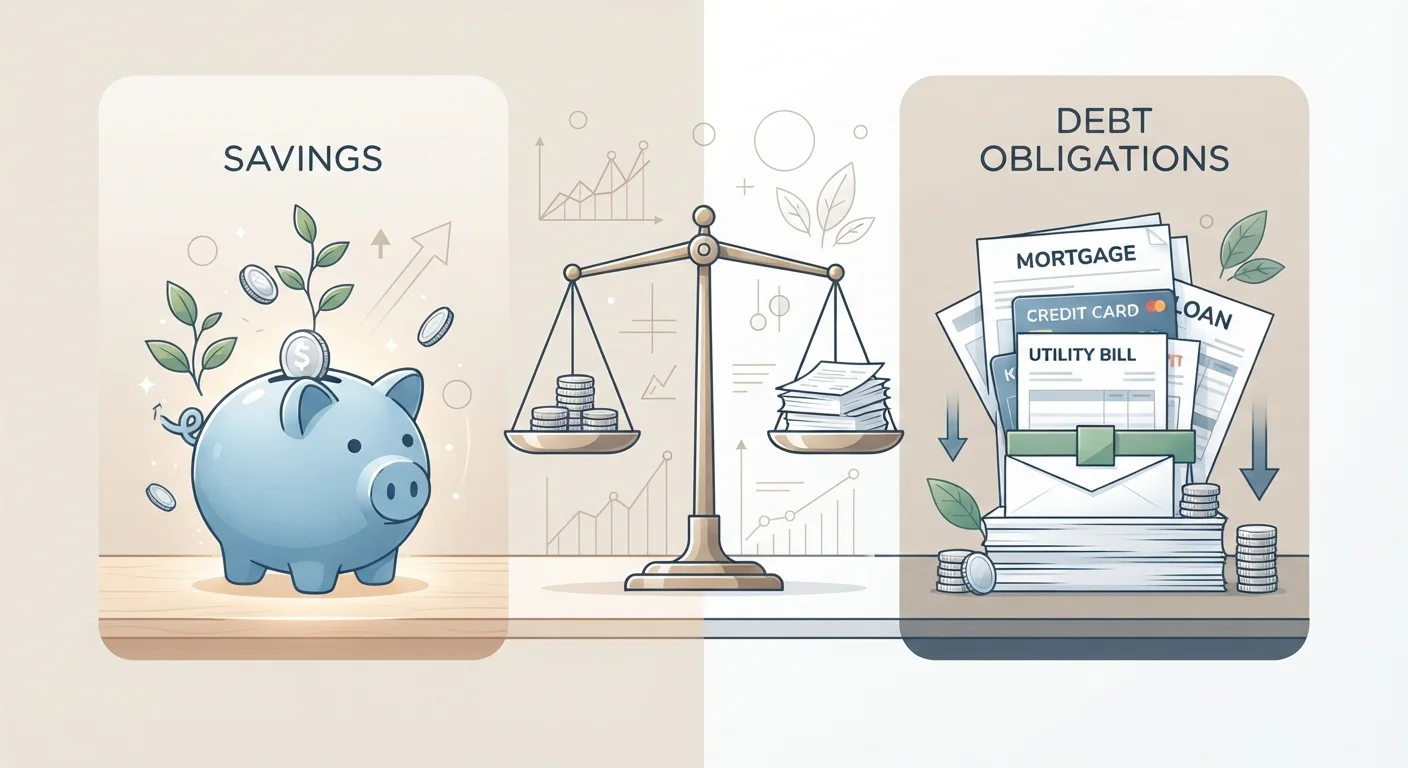
Photo: FaqsDrive.com | Smart Way To Search editorial
—— In This Article
Key Takeaways
- High-interest debt, like credit cards, usually costs more than savings can earn — paying it down first often makes mathematical sense.
- An emergency fund, even a small one, can prevent new debt when unexpected expenses arise.
- Employer 401(k) match is essentially free money — contributing enough to capture it is rarely a bad move.
- Income stability and loan type both shift the math significantly between saving and debt payoff.
- Most people benefit from doing both simultaneously in some proportion rather than choosing one exclusively.
Why This Decision Is More Than Simple Math
When you have both debt and a desire to save, you're facing a real trade-off. Every dollar has only one job at a time. Put it toward debt and you reduce what you owe. Put it in savings and you build a cushion. The financially "correct" answer depends on several variables that look different for every household.
This article is general financial information — not personalized advice. For decisions specific to your situation, a licensed financial professional can help you think through the details.
The good news: understanding the core factors makes the decision a lot clearer. See our beginner's roadmap to saving and debt for the foundational concepts behind both goals.
The Key Factors That Shift the Balance
Four factors carry the most weight in this decision:
- Interest rate on your debt: If you're paying 20% APR on a credit card but a savings account earns 4–5%, every dollar kept in savings costs you the difference. High-interest debt generally deserves priority because the cost of carrying it outpaces what savings can earn.
- Whether you have an emergency fund: Without any savings buffer, a surprise expense — car repair, medical bill, job disruption — can push you right back into debt. A small emergency fund of one to three months of essential expenses provides a floor that protects your debt payoff progress.
- Employer retirement match: If your employer matches a portion of your 401(k) contributions, not contributing enough to capture that match means leaving compensation on the table. That match represents an immediate, guaranteed return that is hard to beat even against high-interest debt.
- Income stability: A steady paycheck allows more aggressive debt payoff because the risk of a sudden income gap is lower. Variable or unpredictable income argues for keeping more liquid savings available.
| Factor | Favor Saving | Favor Debt Payoff | |
|---|---|---|---|
| Debt interest rate | Below 5–6% | Above 7–8% | |
| Emergency fund status | No fund exists yet | Fund already in place | |
| Employer 401(k) match | Not yet captured | Already fully captured | |
| Income stability | Variable or uncertain | Steady and reliable | |
| Debt type | Low-rate mortgage or student loan | High-rate credit card or payday loan | |
| Financial stress level | High anxiety about no cushion | Motivated by reducing debt burden |
Beyond these four, the type of debt matters too. Federal student loans and mortgages tend to carry lower rates and may have tax implications — factors that reduce their urgency compared to consumer debt like credit cards or payday loans.
When Paying Down Debt Should Come First
Prioritizing debt payoff makes the most sense when the interest rate on your debt is high — typically above 7–8% — and you already have at least a minimal emergency fund in place. The math is straightforward: reducing a 22% APR balance produces a guaranteed "return" equivalent to that rate, which savings or investments rarely match reliably.
Common scenarios where debt should lead:
- Credit card balances with double-digit interest rates
- Payday loans or cash advances
- Personal loans with rates above 10%
If you're unsure which debt to tackle first, our comparison of the avalanche and snowball payoff strategies breaks down the two most common approaches. Also watch for common mistakes that slow debt payoff — small errors can extend repayment by years without you realizing it.
Start With a Small Emergency Buffer
Even if you're aggressively paying down debt, having $500–$1,000 set aside in a separate savings account can prevent you from reaching for a credit card when something unexpected happens. Think of it as insurance for your debt payoff plan. Once high-interest debt is cleared, you can grow that buffer into a full three-to-six-month emergency fund.
When Building Savings Should Come First
Saving takes priority when you have no financial buffer at all. Going straight to debt payoff without any savings reserve is risky — one unplanned expense can force you to borrow again, often at a high rate, undoing your progress.
Prioritizing savings also makes sense when:
- Your income is irregular or your job feels uncertain
- Your debt carries a low interest rate (under 5–6%)
- You have an employer match you aren't yet capturing fully
Once a basic emergency fund is in place, you can shift more cash toward debt. And before you consider pulling from existing savings to pay debt faster, our checklist for raiding your savings is worth reviewing first.
~40%
Americans who couldn't cover a $400 emergency
Federal Reserve research has consistently found that a large share of U.S. adults lack sufficient liquid savings to handle a small unexpected expense without borrowing.
20%+
Typical credit card APR in the U.S.
Average credit card interest rates have been above 20% in recent years, according to Federal Reserve consumer credit data, making high-rate balances costly to carry.
The Case for Doing Both at Once
For most people, the choice isn't strictly binary. A split approach — directing some money to debt and some to savings each month — addresses both needs simultaneously and avoids the emotional burnout of an all-or-nothing strategy.
A simple starting framework:
- Contribute enough to your employer retirement plan to capture any match.
- Build a starter emergency fund of $500–$1,000.
- Direct remaining available cash toward high-interest debt aggressively.
- Once high-interest debt is gone, grow your emergency fund to three to six months of expenses.
If you want a structured plan that handles both goals at the same time, paying off debt while saving money walks through how to build a workable system. Understanding core money fundamentals can also help you prioritize with more confidence.
This article is for general informational and educational purposes only and does not constitute personalized financial, tax, or legal advice. Consult a qualified financial professional before making decisions specific to your situation.

Personal Finance Editorial Team
Personal Finance Editorial Team is the collective byline for our editorial team and contributor network. Articles published under this byline or an editorial pen name are researched, written, and reviewed according to our editorial standards for clarity, consistency, and independence before publication.
View author profile