
Secured vs. Unsecured Debt: How the Difference Shapes Your Repayment Options
Whether your debt is secured or unsecured affects your risk, your options, and what happens if you fall behind. Here's what to know.
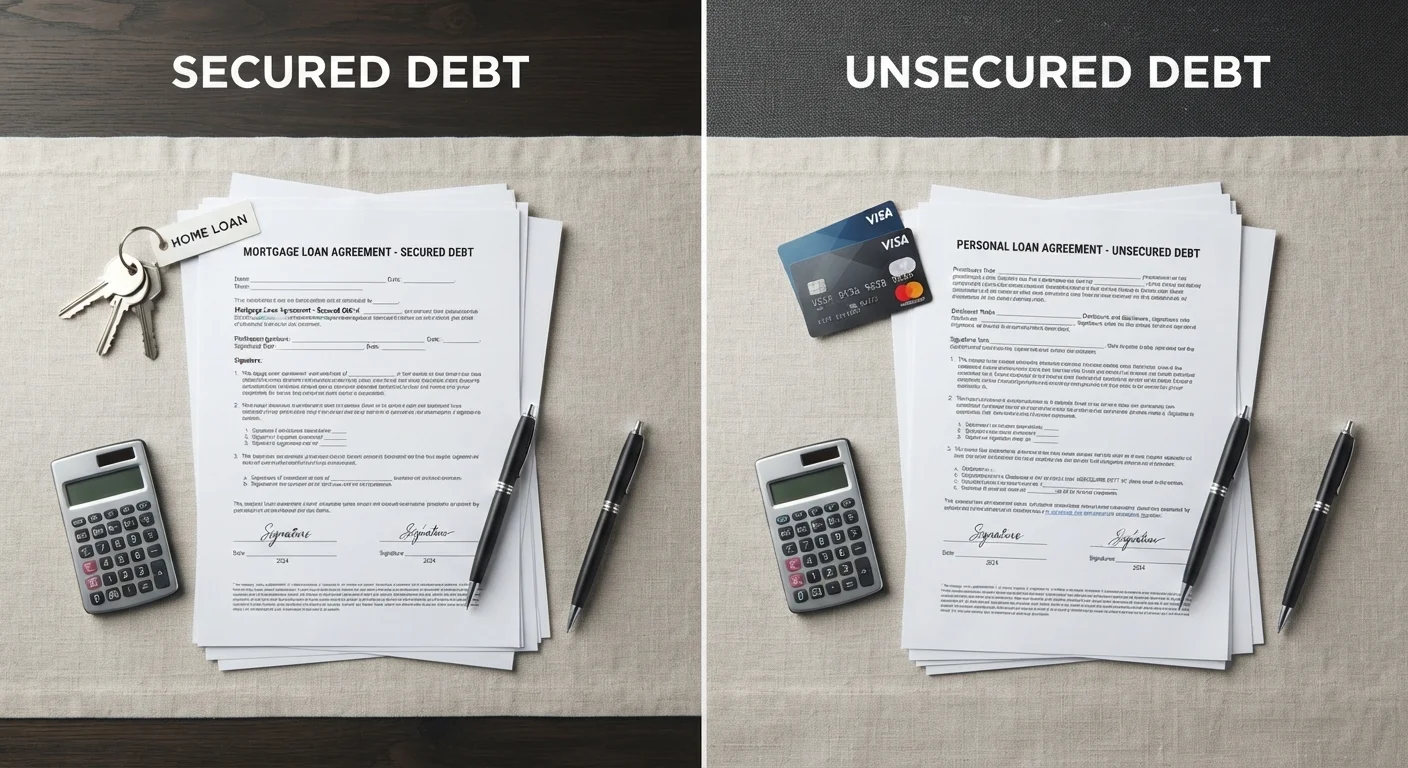
Photo: FaqsDrive.com | Smart Way To Search editorial
—— In This Article
Key Takeaways
- Secured debt is backed by collateral like a home or car; unsecured debt has no such backing.
- Missing payments on secured debt puts your physical assets at direct risk of repossession or foreclosure.
- Unsecured debt typically carries higher interest rates because lenders take on more risk.
- Knowing your debt type helps you prioritize payments and understand your options in a hardship.
- Both types can affect your credit score, but the consequences of defaulting differ significantly.
What Makes Debt Secured or Unsecured
The core difference between secured and unsecured debt comes down to one word: collateral. Collateral is an asset — like a home, car, or savings account — that you pledge when you borrow money. If you stop making payments, the lender has a legal right to take that asset to recover what they're owed.
Secured debt is tied to collateral. Common examples include mortgages (backed by your home), auto loans (backed by your vehicle), and home equity loans (backed by the equity you've built in your property). The asset acts as the lender's safety net.
Unsecured debt has no collateral attached. Credit cards, personal loans, medical bills, and student loans (in most cases) fall into this category. If you don't pay, the lender can't immediately take a physical asset — but they do have other ways to pursue what they're owed, including sending the debt to collections or pursuing a court judgment.
For a broader look at how debt fits into your overall financial picture, see the Saving and Debt Management beginner's roadmap.
How Interest Rates and Risk Differ
Because secured loans give lenders a fallback option, they generally come with lower interest rates. A mortgage, for example, typically carries a much lower rate than an unsecured personal loan for the same amount. From the lender's perspective, the collateral reduces their risk — so they charge less for that lending arrangement.
Unsecured debt works the opposite way. Without collateral, lenders take on more risk, and they price that risk into the interest rate. Credit cards, for instance, often carry double-digit annual percentage rates (APRs). This means unsecured debt tends to grow faster if you're only making minimum payments.
20%+
Average credit card APR in recent years
The Federal Reserve tracks average credit card interest rates, which have climbed significantly, illustrating the cost of unsecured borrowing.
~6–7%
Typical 30-year mortgage rate range (historically)
Mortgage rates, backed by home collateral, have historically been far lower than unsecured lending rates, reflecting reduced lender risk.
Understanding this difference matters when you're deciding which debts to tackle first. Higher-interest unsecured debt can quietly cost far more over time. See common mistakes that slow down debt payoff to avoid letting interest compound unchecked.
What Happens When You Fall Behind
The consequences of missing payments are where the secured vs. unsecured distinction really hits home.
With secured debt, the stakes are direct and concrete. Miss enough mortgage payments, and foreclosure becomes a real possibility — you could lose your home. Fall behind on auto loan payments, and your vehicle may be repossessed, sometimes with very little warning. These outcomes can happen relatively quickly depending on your lender and state laws.
With unsecured debt, the process is less immediate but still serious. Lenders will typically report missed payments to credit bureaus, hurting your credit score. After a period of nonpayment, the debt may be sold to a collections agency. In some cases, creditors can sue you and, if they win a judgment, potentially garnish wages or freeze bank accounts — though this varies by state.
Don't Ignore Secured Debt in a Crisis
When money is tight, it can be tempting to pay whoever calls the loudest — often a collections agency chasing unsecured debt. But letting secured debt slide can lead to losing your home or vehicle far faster than you might expect. In most financial hardship situations, keeping up with secured payments should be the first priority.
This is why most financial educators suggest prioritizing secured debts during a financial crunch. Losing your home or car can disrupt your entire life in ways that take years to recover from.
Repayment Options and Flexibility
The type of debt you're carrying also shapes what repayment options are available when you're struggling.
| Secured Debt | Unsecured Debt | |
|---|---|---|
| Collateral required | Yes — home, car, or asset | No collateral needed |
| Typical interest rate | Generally lower | Generally higher |
| Risk if you default | Asset repossession or foreclosure | Collections, credit damage, possible judgment |
| Common examples | Mortgage, auto loan, home equity loan | Credit cards, personal loans, medical bills |
| Hardship options | Forbearance, loan modification, deferment | Hardship plans, debt settlement, bankruptcy discharge |
| Bankruptcy treatment | Must pay or surrender collateral | Often eligible for discharge |
With secured debt, lenders often have formal hardship programs — mortgage forbearance, loan modifications, or deferment — because they'd generally rather work with you than go through the costly process of repossession or foreclosure. However, these options typically require you to contact the lender proactively and meet certain criteria.
Unsecured debt offers a different kind of flexibility. Credit card companies may offer hardship plans with temporarily reduced rates or waived fees. More significantly, unsecured debts are generally eligible to be discharged (wiped out) in bankruptcy proceedings like Chapter 7, while secured debts are more complicated — you often must keep paying or surrender the collateral.
If you're weighing how to balance paying down debt while still building savings, strategies for paying off debt while saving money can help you structure both goals at once.
And if you're deciding whether to focus on debt or savings first, the answer often depends on the type of debt involved — the factors that determine whether to save or pay down debt first breaks down that decision in plain terms.
This article is for general informational and educational purposes only and does not constitute personalized financial or legal advice. Consult a qualified financial professional for guidance specific to your situation.

Personal Finance Editorial Team
Personal Finance Editorial Team is the collective byline for our editorial team and contributor network. Articles published under this byline or an editorial pen name are researched, written, and reviewed according to our editorial standards for clarity, consistency, and independence before publication.
View author profile