
How Fixed and Variable Expenses Work in a Budget
Understanding the difference between fixed and variable costs is the foundation of every effective budget. Here's what each term means.
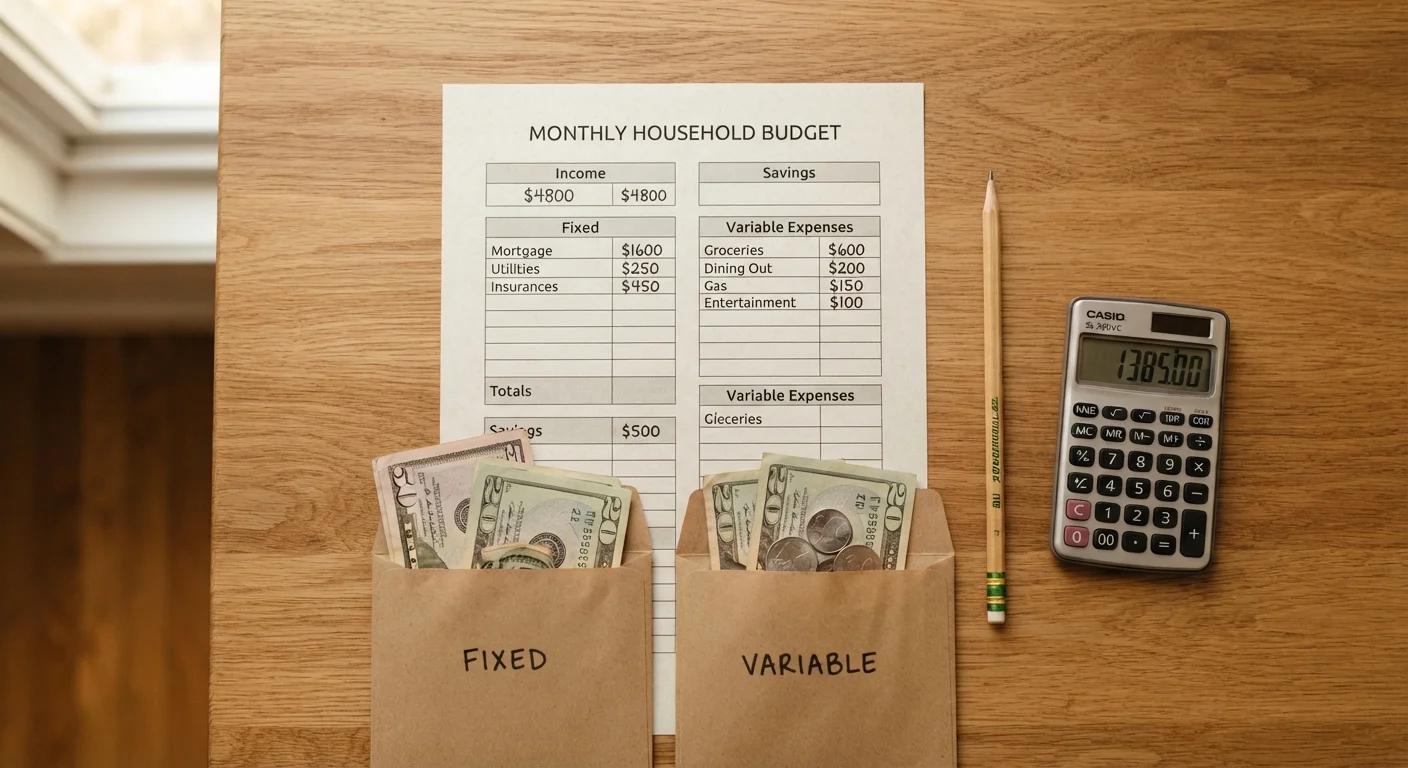
Photo: FaqsDrive.com | Smart Way To Search editorial
—— In This Article
Key Takeaways
- Fixed expenses stay the same each month and are easy to predict in a budget.
- Variable expenses shift based on your habits and choices, giving you more control over them.
- Knowing both categories helps you spot where you can cut spending if money gets tight.
- Semi-variable expenses blend fixed and variable traits and can catch budgeters off guard.
- Most effective budgets plan fixed costs first, then allocate what's left for variable spending.
The Two Building Blocks of Every Budget
When you sit down to build a budget, every dollar you spend belongs to one of two basic categories: fixed or variable. Getting comfortable with these two ideas makes budgeting far less intimidating — and far more useful.
A fixed expense is any cost that bills you the same amount on a regular schedule. Your rent, mortgage, auto loan, and renter's insurance premium are textbook examples. Because these amounts don't shift, you can slot them into your budget with confidence before the month even begins.
A variable expense is any cost that changes based on your behavior or consumption. Think groceries, gas, dining out, or your electric bill. These are harder to predict precisely, but they also give you more flexibility — if money is tight, variable spending is usually where you have the most room to adjust.
For a broader look at these and related terms, see the budgeting vocabulary glossary that covers key personal finance definitions for beginners.
~33%
Average share of income spent on housing
The U.S. Bureau of Labor Statistics Consumer Expenditure Survey consistently finds housing absorbs roughly a third of average household spending — making it the single largest fixed expense for most Americans.
3–4 months
Recommended look-back for variable expense averages
Many personal finance educators suggest reviewing at least three months of past spending to get a stable average for variable categories like food and transportation, smoothing out one-off spikes.
Why the Distinction Actually Matters
Treating all expenses as one big pile makes it nearly impossible to understand where your money goes — or where you can trim. When you separate fixed from variable costs, a clearer picture emerges.
Fixed expenses tell you the floor of your monthly spending — the minimum amount that goes out the door no matter what. If your fixed costs alone consume most of your income, that's a signal worth paying attention to.
Variable expenses, on the other hand, reveal your habits. Reviewing three months of bank statements and averaging your variable spending gives you a realistic baseline — not a wish, but a real number to work with.
There's also a third category worth knowing: semi-variable expenses. These have a fixed base charge plus a portion that fluctuates, like a utility bill with a flat monthly service fee and a separate usage charge. They don't fit neatly into either box, which is why irregular and overlooked costs can throw off even careful budgeters.
Use Past Statements, Not Guesses
When estimating variable expenses, pull up your actual bank or credit card statements from the last two or three months rather than guessing from memory. Most people underestimate what they spend on food and entertainment. Real numbers lead to a budget you'll actually stick to.
How to Apply This in a Real Budget
A simple approach: list your fixed expenses first. These are non-negotiable in the short term, so they take priority. Once you know your fixed total, subtract it from your monthly take-home income. What remains is what you have available for variable spending and savings.
Next, review your last two to three months of variable spending. Add up groceries, gas, entertainment, and similar costs for each month, then divide by the number of months to find your average. That average becomes your variable spending estimate for the month ahead.
If you find your fixed and variable totals together exceed your income, variable expenses are where to look first for cuts — since fixed costs are contractually locked in until you can renegotiate them.
This same logic applies beyond household finances. If you're planning a trip, understanding which travel costs are fixed (like a nonrefundable flight) versus variable (like daily meals) helps you budget more accurately. See how travel costs break down for a practical example of this in action.
For a deeper look at how these two categories shape your overall financial picture, understanding how fixed and variable expenses interact can help you go further.
Frequently Asked Questions

Personal Finance Editorial Team
Personal Finance Editorial Team is the collective byline for our editorial team and contributor network. Articles published under this byline or an editorial pen name are researched, written, and reviewed according to our editorial standards for clarity, consistency, and independence before publication.
View author profile